

Patience with Ourselves, Others, and Life
Episode 76 of the Secular Buddhism Podcast
Welcome to another episode of the Secular Buddhism Podcast. This is episode number 76. I'm your host, Noah Rasheta, and today I'm talking about patience—patience with ourselves, others, and life.
As always, keep in mind the Dalai Lama's advice: "Do not try to use what you learn from Buddhism to be a Buddhist. Use it to be a better whatever you already are."
A Quick Note: Who Is Mindfulness For?
Before jumping into the topic, I want to share something that's been on my mind.
I recently returned from teaching a mindfulness workshop in a corporate setting in Toronto, Canada. A regular podcast listener named Jon reached out to me and arranged for me to teach this workshop at his company. It was a really neat experience to be able to share these ideas and concepts in a corporate setting.
But honestly, my favorite part of the whole thing was meeting Jon in person, meeting his family, and developing that friendship. We were sitting on his back patio one day after the workshop, and I was struck by something: every single event that has taken place in my life and in his life led to that moment. We were sitting there like old friends, even though we'd only known each other through the podcast. It was really cool to see worlds collide like that.
Now, teaching mindfulness in a corporate setting is interesting because it's different from a dedicated mindfulness workshop. When people sign up for a workshop specifically about mindfulness, they're there because they want to learn. But in a corporate setting where mindfulness is just one option among many, people might show up for all sorts of reasons—maybe it was the least boring option available.
During this workshop, there were definitely people who were fascinated by the material. But there were also others who were there thinking, "What is all this stuff? Why does any of this matter to me?" And I actually brought this up during the workshop, because I think it's important to highlight.
Here's the truth: mindfulness isn't for everyone.
I share it because I gain a significant amount of joy and contentment from my practice, and others do too. When I share these concepts, a lot of people benefit from them. But it should go without saying that none of this is being preached as "Hey, you need this. You need mindfulness in your life." Some people do need it, but this isn't something you can compel onto someone. You can't force people to practice mindfulness.
I like to equate this to my other hobby: paragliding. I spend a lot of time flying and paramotoring, and I recognize that it's not for everyone. If someone were to say, "Hey, this hobby you have brings you so much joy—I guess I need to get into it," I would ask them, "Are you afraid of heights?" And if they say yes, I'd say, "Well then, don't do it. Why on earth would you get into paragliding if you're afraid of heights?" I understand that it's not for everyone.
And I think mindfulness is the same way. It can absolutely benefit everyone who practices it. Anyone who practices will benefit from it. But that doesn't mean everyone has to do it. So if you're not interested in being more mindful in your life, why would you want to get into this practice? It should never be forced onto others.
I remember reading something from Gyomay Kubose, a Buddhist teacher I admire. He wisely said, "Never preach Buddhism." His son emphasized this through the lay ministry program I participated in—they always emphasized: don't preach Buddhism. And this is why—because it's not for everyone. Why would you preach something that isn't applicable to everyone?
I would say the same thing: never preach mindfulness. Never preach anything, really. I never preach paragliding to anyone. I share the joy I get from the sport, and sometimes people will say, "Hey, I want to learn to do that. How can I learn? Where do I go?" And then they get into the sport and later they're like, "Man, this is the coolest hobby I've ever had. Thanks for getting me into it."
I've had the same thing happen with mindfulness. I'm sharing what I enjoy and what's worked for me, and others will benefit from it. They'll email me and say, "Oh, I'm so glad you started this podcast or shared this topic because it's had such a profound impact on my life and my circumstances." And I think that's wonderful. But that doesn't mean it's for everyone.
So keep that in mind as we dive into this episode on patience. This isn't about preaching that you need to be more patient with yourself, with others, and with life in general. Instead, like all the topics here, it's meant to be an invitation to become more aware of ourselves and to understand ourselves a little bit more.
What Is Patience?
So, let's talk about patience. What is it?
If you Google the definition, you'll find that patience is "the capacity to accept or tolerate delay, trouble, or suffering without getting angry or upset." That's a start, but I think to really understand patience, we need to dig a little deeper.
The Merriam-Webster Dictionary offers this definition: "remaining steadfast despite opposition, difficulty, or adversity." And I think that's getting closer to how I understand patience in the context of mindfulness practice.
In fact, couldn't that be the very definition of meditation as a practice? Could it be that meditation is the art of practicing patience? It's remaining steadfast despite difficulty. Think about sitting meditation. No matter how good you are or how long you've been practicing, if you sit there long enough, at some point you'll experience difficulty. Your legs start to fall asleep. Your lower back starts to hurt. You might start thinking about all the millions of other things you could be doing instead of sitting here.
And yet, the practice of patience is to remain steadfast despite all of that. You keep sitting there. You acknowledge the discomfort, you feel it, but you don't let it pull you away from your intention to sit in meditation.
I think this is a really important insight into what patience actually is. It's not about being okay with everything that happens. It's about being able to remain steadfast and centered despite what arises.
Pema Chödrön and Patience
I was listening to an interview with Pema Chödrön, a Buddhist teacher and author I really respect, and she said something that stuck with me. She was talking about patience, and she mentioned that patience is often misunderstood. We think it means we have to grin and bear it—you know, just smile and pretend everything is fine.
But that's not what patience is.
Pema distinguished between two things: patience that comes from a place of spiritual bypassing—where we're just suppressing our feelings—and patience that comes from a place of true understanding. She said that true patience is more about being willing to stay with difficulty rather than just tolerating it with gritted teeth.
This really resonated with me because it changes how I think about patience. It's not about pretending things don't bother us or suppressing our natural reactions. It's about being willing to sit with difficulty, to look it in the eye, and to remain steady in the face of it.
Patience with Ourselves
Now, I want to talk about patience with ourselves specifically, because I think this is often the hardest form of patience to practice.
Think about your own inner dialogue. How do you talk to yourself? Do you ever say things to yourself that you would never say to a close friend? If your best friend made a mistake, you'd probably be compassionate and understanding. But when you make a mistake, do you beat yourself up? Do you get angry with yourself? Do you judge yourself harshly?
This is one of the ways we're least patient with ourselves. We set impossibly high standards, we compare ourselves to others, we judge ourselves for not being further along in our practice or our lives. And this creates a lot of suffering.
I was thinking about this recently, and I realized something: patience with ourselves is actually the foundation for everything else. When we practice patience with ourselves—when we learn to be kind and understanding toward ourselves—that naturally extends to how we treat others and how we relate to life.
Think about meditation again. When you're sitting in meditation and your mind wanders—which it will, constantly—what's your natural reaction? Do you get frustrated with yourself? Do you judge your mind for being "bad" at meditation? Or do you gently bring your attention back to the breath without judgment?
The practice of patience with ourselves in meditation is so simple but so profound. Each time we notice we've been distracted and we gently return to the breath, we're practicing patience. We're saying to ourselves: "It's okay. This is what minds do. Let's try again."
And here's the thing—if you can practice that patience with yourself on the meditation cushion, you start to carry that into your daily life. When you make a mistake at work, you don't spiral into self-criticism. When you lose your temper, you don't spend hours beating yourself up about it. You simply notice what happened, feel whatever you're feeling, and gently bring yourself back to center.
Patience with Others
Now let's talk about patience with others. This is tricky because we can't control how others behave. We can only control how we respond to their behavior.
Here's something important to remember: everyone is seeing the world through their own filtered lens. Their past experiences, their beliefs, their fears—all of these things shape how they perceive us and the world around them.
When someone gets frustrated with you or misunderstands you, they're not perceiving the real you. They're perceiving a version of you filtered through their own lens. And here's the hard truth: there's nothing you can do to change that. You cannot make someone perceive you exactly as you want to be perceived. It simply cannot be achieved.
But it's helpful for me to know that. It reminds me to be patient with how others perceive me, because they're perceiving me through their own filtered lens. That's just how the human mind works.
And the same goes the other way. When I perceive someone else, I'm also filtering that perception through my own beliefs, experiences, and fears. So I might misunderstand them just as easily as they misunderstand me.
This is where patience becomes essential. When someone does something that bothers me, I can pause and remember: they're doing their best with the resources they have. They're operating from their own understanding of the world. And just like I can't control how they perceive me, I can't control why they do what they do. What I can control is how I respond to it.
Patience with others means giving them the same grace we're learning to give ourselves. It means understanding that we're all confused, all struggling, all doing our best.
Patience with Life
Finally, let's talk about patience with life in general.
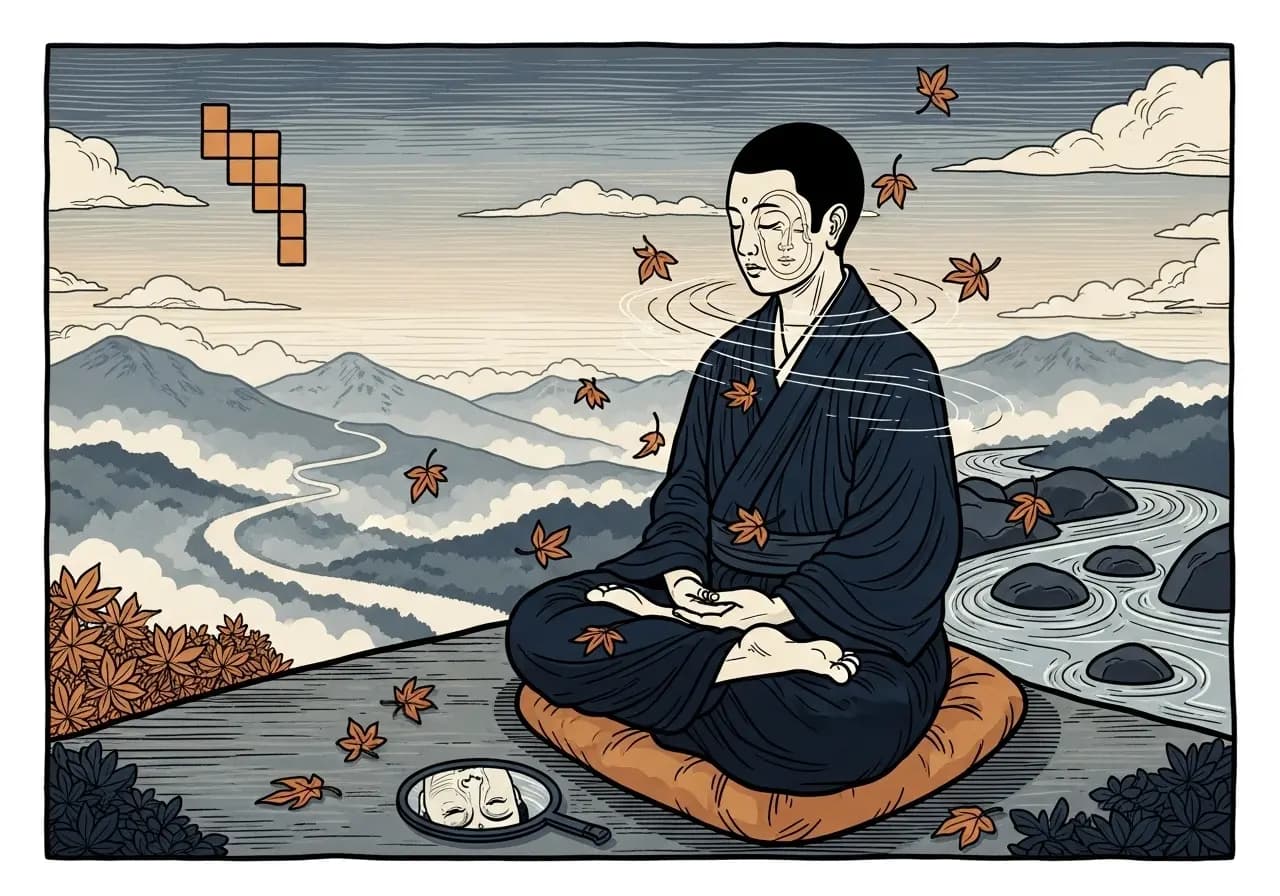
What would it look like to accept life just as it is? To really look around and see the Tetris pieces that pop up and recognize the discomfort that certain pieces bring to our lives? To be able to remain steadfast despite the difficult emotions that arise with some of those pieces? That's the definition of patience right there.
And remember what Pema said: we don't have to grin and bear it. We can try to be skillful. We can do what we can, where we can, when we can to make things better for ourselves and for others. But that takes a lot of practice. It takes skill.
This is the invitation that's constantly being echoed: become a better whatever you already are. And I think it's helpful to remember that difficulties arise in life. It's part of the journey. We can try to learn to handle these difficulties with as much skill as possible, while at the same time knowing that sometimes life is going to feel like it's not okay.
Sometimes it takes patience to recognize that it's okay to feel that it's not okay.
We don't practice mindfulness with the intent of accepting everything so completely that nothing will ever bother us. That's not how it works. The very nature of reality is that things change. And when they do, difficulties arise. When they do, I don't like how it feels to experience them. And I can stop there.
I can just sit with the discomfort, which to me is the very practice of patience. Rather than getting caught up in the feeling I have about the discomfort—thinking "This is an unpleasant feeling and I don't like that I'm feeling what I'm feeling"—I can just be with the discomfort itself. That's the practice.
This is what we're working with in mindfulness. We're learning to sit with whatever arises, whether it's pleasant or unpleasant, whether it feels good or doesn't feel good. We just sit with it and we observe it. In that way, we're learning to befriend ourselves.
And to me, that's where patience toward yourself really fits in. The core of what a lot of these practices and teachings are about is developing a sense of patience toward the person we're often least patient with—ourselves.
Acceptance Isn't Resignation
What would it feel like to truly accept ourselves just as we are without getting caught up in the judgment that the present version of me is somehow superior or inferior to a past or future version of myself?
You know, I think about this sometimes. I think about how I judge my current self against my future self. "Oh, if I'm more physically fit, that'll be a better version of me. If I practice mindfulness long enough and hard enough, I'll one day be truly mindful, and that version of me will be better than this me right now—this version that still gets angry and loses his temper."
But this is an act of aggression that we inflict on ourselves. And I think it's important to remember: acceptance is not the same as resignation.
This isn't about resigning to the idea that "Oh, this is how I am and I'll never be fit or kind enough or mindful enough." No. This is about remembering that we're constantly changing. This opens us to the invitation that we can try to become more introspective and understand ourselves better. We can more skillfully navigate the constant change that we're undergoing.
We're a continuous process of becoming. But we never actually become something—we do, but in the context of impermanence, it happens now and then it's gone again because we're always becoming something new. Something different.
Each version of ourselves changes as we learn more, as we experience events in life, as we age in a physical way. I think aging is a great way to visualize this. As long as you're alive, you're aging. That's the whole point. But you can't pause it and say, "Okay, I've aged to this point and this is where I want to stay." Yet we act that way sometimes. We wish we could stay in our prime forever, but we can't. You get there and then you keep going. And then you get to where that is and you keep going and you keep going.
Just like Tetris, it goes and goes and goes until the game is over.
I think it's helpful to keep that in mind: we're always changing, always learning, adapting to the game of Tetris with each new piece that shows up. And that is the practice. That's the practice of understanding that the journey of change is the goal.
We never reach some final configuration where we say, "Okay, we're done. I don't need to change anymore." And that's the practice—adapting and changing and learning and unlearning and going with the flow of the game.
Closing Reflections
So that's the concept I wanted to share, and I hope you'll take some time to really think about these ideas. Ask yourself: Am I patient with others? Am I patient with life? And perhaps most importantly—am I patient with myself?
Could you be more patient with yourself? How would you practice that?
I think patience with ourselves is a great place to start with this practice. The more patient I am with myself and with the thoughts, feelings, and emotions that arise in me, the more skilled I become at practicing patience toward others and toward life. And that's what mindfulness practice is exactly—the practice you practice and practice, but you never get there because the practice itself is the goal.
For those of you who do practice mindfulness, for those who do sit in meditation, meditating and sitting there is that practice. It's not like you're going to sit here until you can finally say, "I'm super comfortable meditating." If you're like me and you've been practicing for ten years, it's not like suddenly it becomes easy. It's the same battle every time. I'm sitting here and I don't want to sit here. I'm feeling this and I don't want to feel this. I want to feel that instead.
But what I'm becoming better at is just sitting with that. Sitting with the feeling of not wanting to feel what I'm feeling. What is that like? What happens when you befriend whatever arises—and oftentimes what arises is discomfort or some form of difficulty. You allow it to be there the same way you would if it was something pleasant—a pleasant thought or a pleasant feeling. You let it sit there too.
That's what I wanted to share, and that's what I have for this topic.
If you want to learn more about general Buddhist concepts and teachings, you can check out my book No Nonsense Buddhism for Beginners. It has sixty questions and answers around Buddhist history, concepts, teachings, and practices. You can learn about that by visiting everydaybuddhism.com.
If you enjoyed this podcast episode, please share it with others. You can write a review or give it a rating on iTunes. You can also visit our online community at secularbuddhism.com/community to find the Facebook group and join us there, where we often continue the discussion around these episodes or other topics in general.
And as always, if you'd like to make a donation to support the work I'm doing with the podcast, feel free to visit secularbuddhism.com and click the donate button.
That's all I have for now, but I look forward to recording another podcast episode soon. Thank you for your time and for listening, and until next time.
For more about the Secular Buddhism Podcast and Noah Rasheta's work, visit SecularBuddhism.com