

Sitting With Sadness
Episode 69 of the Secular Buddhism Podcast
Welcome to another episode of the Secular Buddhism Podcast. This is episode number 69. I'm your host, Noah Rasheta, and today I'm talking about sitting with sadness.
If you're listening to this podcast, it's probably safe for me to assume that you're also interested in the essential concepts of Buddhism and how they relate to your daily life. One of the goals with this podcast is to take Buddhist concepts and teachings and then explain them in a way that's easy to understand and practical for everyday life.
In addition to this podcast, I've also written a book to help with this process. With my book, No-Nonsense Buddhism for Beginners, you'll gain a fundamental understanding of Buddhism and how to apply the philosophies in your everyday life through a simple four-part structure. It addresses the different aspects of Buddhism, the Buddha, key concepts, the Buddhist teachings, and current Buddhist practices, along with straightforward questions and answers that simplify the vital concepts of Buddhism into easy-to-understand ideas. The book includes everyday Buddhism sidebars that make Buddhism less abstract by offering down-to-earth examples from everyday life. Presented in a simple, conversational style, the information and guidance in No-Nonsense Buddhism for Beginners provides the groundwork necessary for building or continuing your own Buddhist practice. You can learn more about the book by visiting EverydayBuddhism.com.
A Important Clarification
Before jumping into today's topic, I do want to clarify something important. After my last podcast episode, "Never Enough," I talked about the topic of emotional abuse. I received an email from a good friend of mine, and she brought up a few points that were really important. I wanted to pass them along to anyone listening, not just for this podcast episode but for any future topics and teachings about Buddhism.
My friend asked me to consider the following: sometimes the language and terminology used in Buddhism may seem to encourage people to tolerate their current situations. We use words like "acceptance," expressions like "go with the flow," "let things go," and "let things be." These are never intended to imply that people should tolerate abuse in any way.
She went on to note that it's important to understand that many people who seek Buddhism or Buddhist teachings do so because they're going through something difficult. This was absolutely the case for me. I was going through a really difficult stage in my life, experiencing a lot of suffering, and that's what led me down the path to research Buddhism and to practice meditation.
I want to clarify that while Buddhism teaches us to be introspective and to seek the source of our suffering within ourselves—and yes, that's an internal process—it's also important to understand that these teachings are meant to equip us with more skillful means of addressing our external sources of suffering as well. Buddhism is not about being passive. It's not about sitting still and allowing things to take place around us. It's about not being reactive.
It's much more difficult for us to be skillful with our actions when we're reactive. So one of the most important teachings in Buddhism is to help us understand where and how we tend to be reactive in our minds. And here's something important to understand: passivity is a form of resignation. Passivity can also be a form of reactivity.
My Own Struggle With Avoidance
It may be that our habitual form of reactivity to conflict is to not say anything, to be quiet. That's been the case for me. One of my strongest forms of reactivity was to avoid confrontation at all costs, and I paid a price for this in my own marriage.
Four years into my marriage, this became a really difficult thing for us. If there was anything that was going to cause conflict, I didn't want to address it. My wife wanted to move at one point to live closer to her family. That was a topic I wouldn't address. I was very dismissive of the idea of moving, and in large part, I think it was because I knew it was going to be a difficult conversation, and I didn't like having difficult conversations. So my form of reactivity in that case was to avoid talking about it.
Looking back now, I can see that was a form of reactivity. So it's my hope that these teachings and concepts will feel more like an invitation to be more skillful with navigating the difficulties that arise in life. They're an invitation to learn to take skillful action to address those difficulties. Because sometimes, having that difficult conversation and addressing the difficult situation at hand can be the start of a beautiful new chapter in life. But in order to get to that, we have to address the situation at hand. We can't sit passively and resign to the situation that's causing us unnecessary suffering and then just expect it to go away.
The Difference Between Acceptance and Resignation
For example, if somebody is in an abusive relationship, their form of reactivity may feel like avoiding getting out of that situation. It's very likely that if you're in an abusive relationship and you need to get out of it, you're going to have to weigh the price that you pay for staying against the price of going. Imagine if you had children in the equation—that's something that has to be weighed when considering leaving. And that's not to say that you should justify staying in a harmful situation. What I'm saying is that yes, it's going to be difficult to get out of that situation, but that's the only way out of it: you have to go through the difficulty.
You have to recognize, "Okay, we're all going to have to make changes here. This is going to affect our children, but I simply cannot stay in this situation." That takes skillful action. That takes recognizing reality for what it is.
I guess what I'm really trying to get at here and clarify is that Buddhism is in no way encouraging you to stick with your suffering, to sit through your suffering passively. I want to talk about that because today's podcast is about sitting with sadness, but again, this is an invitation to be with a situation the way that it is, with an emotion the way that it is, with the end goal of being able to be more skillful in how we handle that emotion. It's not an invitation to sit with that emotion and be passive and never do anything about it.
I want to be very clear about this: expressions like "acceptance" and "being like water," learning to "go with the flow" and "let things be" are never insinuating that external circumstances like being in an abusive relationship should be tolerated. I hope these teachings won't encourage you to stick with a situation like that. What I'm hoping is that these teachings will allow you to be much more keenly aware of reality.
What is really happening? And what do I need to do to change that? That's the whole point. By being more mindful, we have a much clearer picture of reality, and then that allows us to be more skillful with that crucial question: "Now, what do I do with it? What comes next? Do I stay? Do I go? How am I going to get out of this situation that's causing me suffering?"
This is about skillful action, not about passive resignation.
If you have anything else you want to add to this, feel free to comment when I post this on the Facebook group or wherever you find this posted. Email me too, because I think this is a very worthwhile conversation that can keep going.
Sitting With Sadness: A Real-Life Experience
What I want to share today in terms of sitting with sadness is an experience I had two weeks ago with my son, Rajko, who's nine years old now. For me, it's important to take these concepts that are taught in Buddhism and then explain how they're actually applied in normal, day-to-day situations in real life.
I had this experience with my son that I wanted to share with you. Now, in my case, I have younger kids, but I think this is relevant to any situation. This conversation could have unfolded differently with a spouse, a sibling, or a friend. It could have happened in a lot of different ways. In this case, it happened with my son.
What happened is that it was bedtime—and most kids resist wanting to go to bed, so they have their excuses: "I'm hungry" or "Now I'm thirsty" or whatever it is. Several minutes into this process of bedtime, and by several I mean like the other kids had all fallen asleep, my wife was already in bed, and I was staying up because Rajko tends to take a long time to go to sleep. I'm sitting on the couch when I start hearing the sounds of crying. So I walked into the room and said, "Rajko, what's the matter?"
I'm kind of frustrated because by now this is the third or fourth time I've gone in there, and I'm thinking, "He just needs something. He always needs something to avoid going to sleep." But this time I walked in and said, "Rajko, what's the matter?" He said, "I'm just sad."
I said, kind of frustrated, "Why are you sad?"
He said, "I just miss our old house."
In that moment, I thought, "This is one of those crucial moments where I often talk about learning to sit with your emotions." And here there are two emotions going on. One is that he's crying and is legitimately sad. But the other one is that I'm sitting with an emotion of frustration. I want things to be other than they are. I want him to go to sleep.
I thought, "I'm going to sit with my emotion too. I'm going to sit with this frustration and talk to him about this for a moment."
So I climbed up into his bed and sat down with him. I said, "Tell me why you're sad. Let's talk about this a little bit."
As he started to talk to me, I realized right away that this was genuine. He really was just sad because he was thinking about our old house, the house where he grew up. He's a very tender-hearted and sensitive kid, so as he explained why he misses the old house—the big tree in the backyard, the track we had around the house that he used to ride his bike on—it all made sense. He said, "I just want to go back to our old house," and he's crying, kind of uncontrollable crying at that point.
I noticed the tendency in myself to want to dismiss the emotion, to say something like, "Oh, you don't need to be sad. Think about all the toys you have here," or something to divert his attention from sadness to something else. I didn't say any of that, but I thought it. And as I was thinking about that, I thought, "Why do we do that? Why is there a tendency to shy away from these emotions?"
I was really glad that I was able to think through this as the situation was unfolding with him, because I was able to pause and see the reactivity happening in my own mind—my aversion to the situation. So instead of reacting, my response to him was: "Let's talk about sadness for a little bit. Why do you think we feel sad sometimes?"
And then we started talking about that. Then I turned the conversation. I said, "Did you know I feel sad and I cry sometimes too?"
He looked at me almost like I was incredulous. Like, "What? Dad cries?"
I said, "Yeah. If I sit and think about things, it'll make me sad too. For example, if I were to think about my home where I grew up."
Sharing My Own Sadness
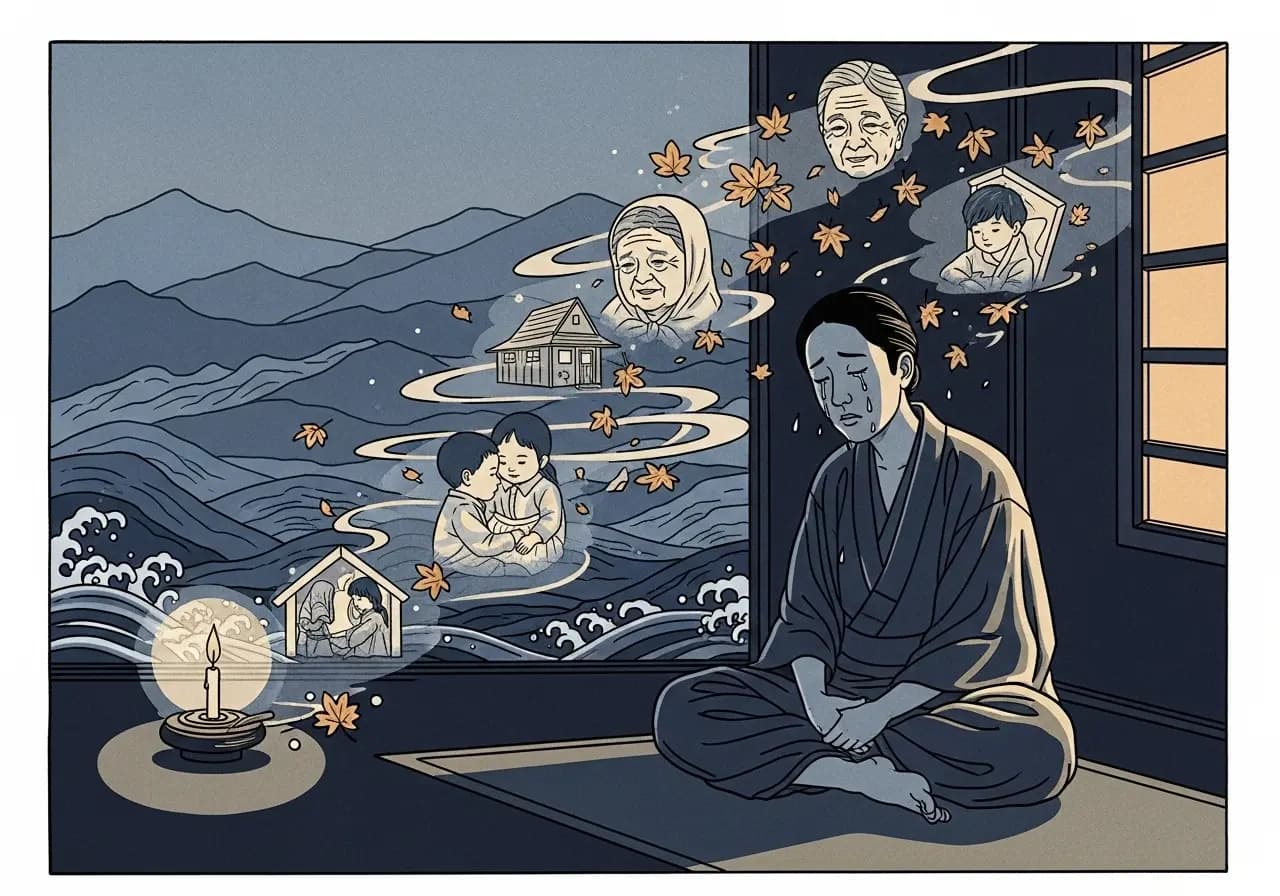
So I started describing the house in Mexico where I lived and telling him about Sundays—how my grandma would come over and we would always have a big meal. I started sharing stories about my youth and the house where I grew up. The funny thing is, as I'm telling him these things, I'm starting to feel real nostalgia in that moment, and I started to feel genuinely sad too.
Then I started telling him a few more stories about my grandma, and that triggered a memory of a time when my grandma was really sick and had to go to the hospital and needed blood. The only people in the family who had her blood type were my twin brother and I, so we went in and gave her blood.
When she came out of the surgery and woke up and found out that she had our blood now, my twin brother and I—I think we were 15 or 16 at the time—we were both very adventurous. By then, we were already into extreme sports. I think we had already been skydiving and scuba diving at a young age. You can do that in Mexico. But as she woke up, she said, "Oh, I feel like I want to go skydiving," joking with us and saying, "Now that I've got your blood, I'm going to be more adventurous in life." And then joking, "I think I can speak English now," though she could never speak a word of English. It was such a sweet moment.
As I'm telling this story to my son Rajko, I'm emotional and I'm crying, thinking back to these memories. It was a touching moment to share with my son and to show him what it's like to sit with sadness. For a moment, we were both teary-eyed as we were both recalling these fun memories of our past.
Then I said, "Rajko, it's natural to feel this way. Look at me—I'm crying too." And he gave me a big hug. I said, "It's normal for us to feel this way. We feel this way because we cherish those memories."
Then I said something really important: "What's really important though is to understand that those memories you miss—that's happening right now. One day in the future, you'll look back and you may be sad, missing this house, the house where we're living now."
Then I said, "One thing I can promise you, if you can remember this, is that one day you might be sitting in your bed talking to your son or to your daughter about what it is to feel sadness. And you're going to remember, hopefully, this memory. You'll remember the day that your dad talked to you about it. And you might actually cry."
There we were, sharing in this really tender moment. It was a neat experience to help him understand how okay it is to feel sad.
What "Sitting With Sadness" Really Means
So when I talk about the title of this podcast—"Sitting With Sadness"—really, it's that we're sitting with whatever is. In this case, there was sadness, and we were sitting with it. I hope this teaches my son, just as it taught me in that moment, that whatever we're experiencing is okay. It's just what is. And the whole object of learning to sit with whatever is is that we can become more skillful in how we deal with that.
Like I mentioned in the introduction to this podcast, it's about the ability to act skillfully with life as it unfolds. That's really what we're after here.
I think one of the greatest misconceptions about mindfulness is that it's a form of passivity or that it's just sitting with something until you're okay with it. That's not what it is at all. What we're trying to do is stop the reactivity. Because when you're not reactive and you can see something for what it really is—an emotion, a memory, a thought, or a situation you're in—you can be more skillful with the all-important question: "Now, what do I do with this? What comes next?"
I experienced this with my son the other night. There was that brief moment of feeling reactive. I wanted him to just quit crying and go to bed. But I saw that reactivity in me, and I paused. I said, "This could be a teaching moment. This could teach him that emotions are normal, that they're healthy, and that even if they're uncomfortable, they can be beautiful. They can evoke feelings and memories that cause you to cherish the present moment with a little bit more tenderness than before."
With this experience that I had with my son, I saw that in him and in me as we were sitting there talking. I was really cherishing that moment.
It was fascinating how quickly that moment went from being a moment of frustration—where I'm trying to just get my kid to go to sleep so I can go back to watching TV or whatever—to "Wow, this is a moment I'm not going to forget." That little conversation that lasted 10 or 15 minutes? I'm not going to forget that. It's very possible he won't forget it either. Maybe he will. He's still young. I don't know.
But I'm hoping that the lesson that carries on with him for a while at least is that it's okay to cry, it's okay to feel sad, it's okay to feel whatever you're feeling. And to be able to sit with that emotion for a little bit and explore it—"Why do I feel this? What makes us feel this way?"—and to hopefully lose that aversion that we seem to develop for certain emotions.
I'm hoping he won't feel that aversion to sadness because of that one experience. I know that in many instances in my own life, sadness specifically is one of those emotions that we seem to have a natural aversion to. We don't want to be sad, so we try to divert our energy to something else. We distract ourselves. And distraction from emotion can actually aggravate the whole situation. So why not just sit with an emotion?
Bringing It Back to Skillful Action
This is where it comes back to what I was expressing with the disclaimer at the beginning of this. If you're experiencing a difficult emotion or a difficult situation—for example, an abusive relationship—this is absolutely not an invitation to be passive or to resign. That resignation or passivity could be the very reactivity that we're trying to discover here.
You would want to be able to sit with that emotion and sit with that situation in the sense that you can gain a clear understanding: "What's really happening here? Why is this happening? Why do I tend to not be vocal and get out of this situation? Why am I not acting in a way that would remove me from this harmful situation?"
You may find that it's because your reactivity is passivity, or your habitual reactivity is to avoid confrontation. That was like me in my marriage.
I used to really struggle with any difficult conversation I was going to have with my wife. I would avoid it at all costs, and I paid a heavy price for that. We really struggled, and at one point in our marriage, it seemed like it was all but over. We started going to marriage counseling, and what I learned was to communicate effectively.
But what I learned through practicing mindfulness and studying Buddhism was that my form of reactivity was avoiding difficulties, avoiding difficult conversations in my marriage. Once I recognized that, it changed drastically. Now, it doesn't matter what the topic is. If it's something that needs to be addressed, I feel much more skillful with it. It's not reactive anymore.
I might give it some time. I might write it out for myself and really think it through, and then say, "Hey, could we talk about something tomorrow night or right after dinner?" Then we can bring up difficult things. We've gone through very difficult conversations as a married couple.
We were part of the same faith, and I'm going through a faith transition away from an orthodox or fundamental type belief system—and I mean that in the sense of a faith system that is not flexible, one that doesn't say "All paths are good." When you belong to a rigid faith system that says "This is the only right way, the only true way," imagine the difficulty in having a conversation to tell your spouse, "I no longer share this view."
If I had not already been studying mindfulness and learning to be skillful with my own reactivity, that could have been a disaster in our marriage. But it wasn't because we were able to navigate that much more skillfully.
Acceptance Versus Resignation
I bring this up because I do want to be very clear about the difference—and I've clarified this in other podcast episodes—between acceptance and resignation. I'm kind of pointing to that again here in this conversation.
Sitting with sadness is not a form of resignation. Sitting with sadness, like the other night I was with my son, to me, that was a very skillful action that took place. It was a very skillful conversation that I don't think would have been possible had I not been practicing mindfulness in my own life and trying to be more skillful with my own emotions and my own experiences.
That's the topic I wanted to share today in this podcast episode: sitting with sadness. You may be going through some kind of experience or situation in your own life. Maybe it's something at work, something related to the dynamics with a co-worker or a boss. You may be sitting with some kind of discomfort and avoiding addressing that discomfort.
It could be happening in a relationship. It could be happening with just sitting with whatever emotions you're experiencing, kind of like what my son was experiencing. He could have been taught in that moment to push away those feelings: "You're not supposed to feel sad. Quit being sad." That could have been the message. But that's not the message that he got.
So yeah, I hope that this podcast episode and all future ones, and all the concepts and teachings that you take from Buddhism or from podcast episodes that I share, will feel like an invitation. An invitation to learn to be more skillful with navigating the difficulties that arise in life. An invitation to be willing to take skillful action to address all of the difficulties—whether they're internal or external situations that you may be going through.
That's the goal of this. That's what I'm trying to accomplish with this podcast. These are just tools—tools to help you be more skillful with how you navigate life. We're all just navigating life, trying to do our best. And there are certain teachings and perspectives that could be powerful tools to help you do that. That's really what I'm after here.
Closing
That's all I have to share in this podcast episode. If you enjoyed this podcast episode, feel free to share it with others. Write a review. Give it a rating on iTunes. If you want to join the online community, you can visit SecularBuddhism.com/community, or we have links to the Facebook groups. If you'd like to make a donation to support the work I'm doing with this podcast, visit SecularBuddhism.com and click the Donate button. Or if you're interested in learning more about the book I mentioned, you can visit EverydayBuddhism.com.
That's all I have for now, but I look forward to recording another podcast episode soon. Until next time.
For more about the Secular Buddhism podcast and Noah Rasheta's work, visit SecularBuddhism.com