

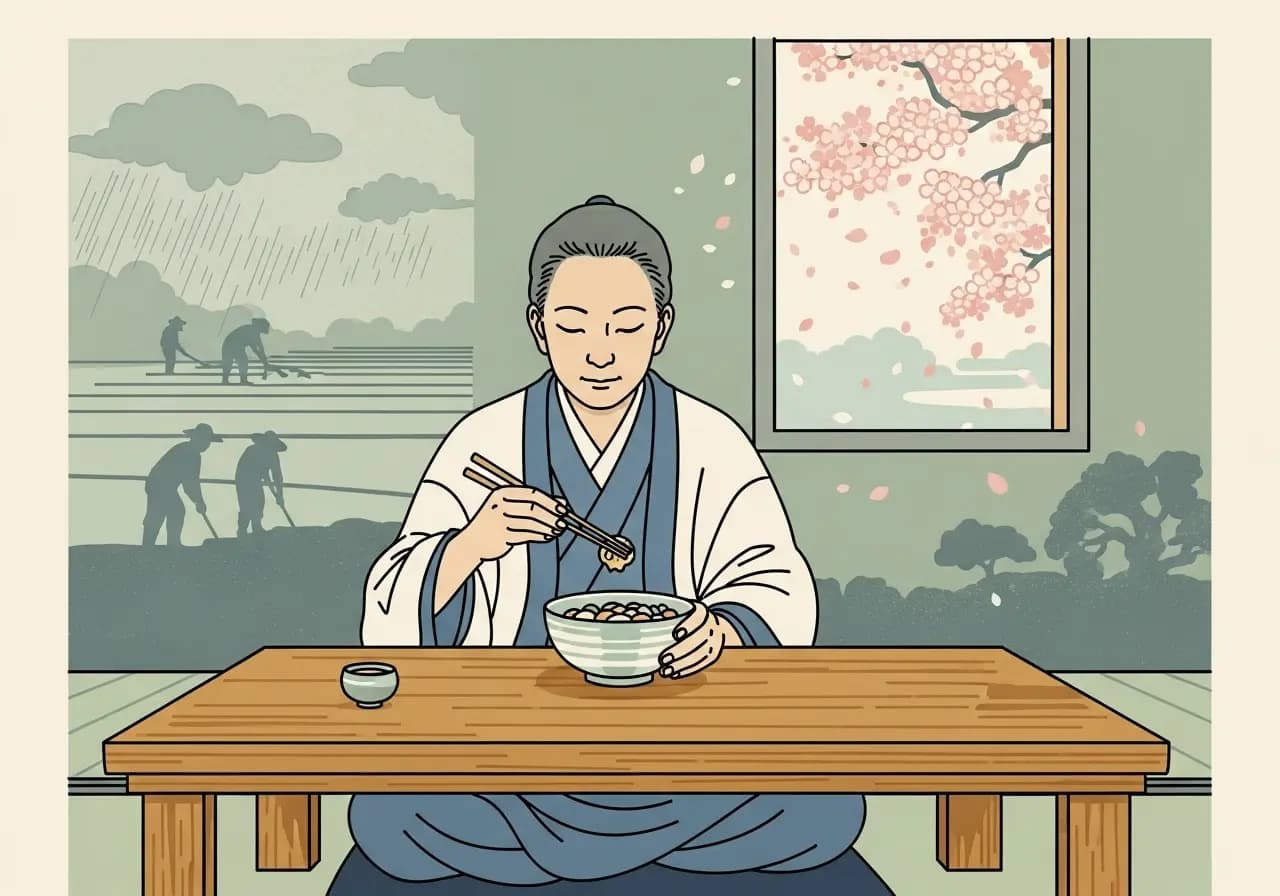
Mindful Eating with Paige Smathers
Episode 63 of the Secular Buddhism Podcast
Welcome to another episode of the Secular Buddhism Podcast. This is episode number 63. I'm your host, Noah Rasheta, and today I'm sharing the audio of an interview and discussion I had with Paige Smathers on the topic of mindful eating.
Paige is a registered dietitian nutritionist with a degree in dietetics, and she's the host of a popular podcast called Nutrition Matters. I wanted to speak with her on the topic of eating—specifically mindful eating—because eating, like breathing, is one of those things we just have to do. We do it oftentimes without really thinking about it because it becomes a mundane process.
Just as we can access breathing as a tool to become more mindful—something we do every day, all day, nonstop—we can focus our attention on eating and gain tremendous insight. That's why there are meditations all about breathing, focusing on your breath. Well, the same is true with eating. It's one of those things we have to do, we do it all the time, and we have a relationship with eating, whether we're aware of it or not. Sometimes it's a healthy relationship, and sometimes it's an unhealthy one.
Paige and I talk about mindful eating, what she calls intuitive eating, and the concept of weight neutrality—the idea that body image is something that is conceptual. We have an image in our mind that tells us this is how I should look, and we're working outside of just what is healthy or not healthy. We're talking about what is ideal, what is not ideal, and these are concepts. We talk about concepts a lot in Buddhist teachings because the moment we have a concept, an idea, a belief, it blinds us to all the alternative possibilities. We're focused on this thing that we think is how things should be, how life should be, how I should be, how I should look.
We also talk about healing our relationship with food. We have relationships with everything that we interact with, and food is not an exception to that. Beyond eating just to survive, there is an actual relationship we have with the process of eating. Some people enjoy the process, while others don't. We explore how we can gain insight about our relationship with food and how we can be more mindful as we eat.
I've had this experience, and I'm sure all of you have too, where you eat sometimes just because you know you need to, but you're not really focusing on it. You're on your phone, you're thinking about what's going to happen later in the day. It's just something you get done and get out of the way, and then you move on. But how often do we really pause and think about what's happening while we're eating? The process, the flavors, the textures. It's a lot like what we do with breathing, right? We just take it for granted, we do it, but we don't pause and really experience what is happening as we breathe. Or in this case, what is happening as we eat.
These are some interesting topics that Paige and I talk about in the podcast. Toward the end, we announce an exciting partnership we've developed to do a full-day workshop on mindful eating in Salt Lake City on April seventh. It's an all-day workshop, and you can learn more about it by visiting mindfuleatingworkshop.com.
In that workshop, we address several specific topics. We talk about the concept of suffering and dieting, the topic of impermanence and all-or-nothing thinking when it comes to food, and we practice eating meditation and mindful eating. We go over specific techniques, and you'll have the opportunity to practice them there during the workshop. Since lunch is included in the workshop, you'll be able to practice what you learn right away.
We also talk about interdependence and connection—how everything had to come together for that food to exist on your plate. And we finish the workshop with a module on the art of living and the art of eating, essentially exploring how to gain insight into our relationship with food and heal that relationship.
It's going to be a neat workshop that couples the concept of eating—something we all do every day—with mindfulness. So it's a mindfulness workshop, but it's centered around concepts like intuitive eating and mindful eating. If that's a topic you're interested in learning more about, you can visit mindfuleatingworkshop.com. You can also take $50 off the registration for that workshop if you use the coupon code "secularbuddhism" (all lowercase, all one word) when you check out to purchase a ticket.
This workshop is done by Paige Smathers, host of the Nutrition Matters Podcast, and I'm partnering with her. We will both be teaching and presenting at this workshop, and I'd love to see some of you there if mindful eating is a topic you're interested in learning more about.
So without further ado, enjoy the audio of the interview I had with Paige Smathers. I think you'll find some useful information in this exchange and discussion. Thank you.
Paige Smathers: Oh, Noah, thanks for having me. This is so fun. I love it.
Noah Rasheta: I think of all the podcast interviews I've done, you are the closest to me in distance. We're maybe less than an hour's drive away, but we're still doing this online because that's the easy way to do it.
Paige Smathers: It is the easiest way. I often tell local people I interview, "Let's just do it via Skype. It's just easier for whatever program."
Noah Rasheta: Cool. Well, I'm excited to have you on the show because this is a topic I think is really interesting—the idea of mindful eating. The work you do on your podcast and your individual consultations, you practice something called intuitive eating. Tell me a little bit about what that is and how you got into all of this.
Paige Smathers: It's sometimes not super intuitive to explain what intuitive eating is. Sometimes people don't really like the word, but it's the best way I have to describe sort of this non-diet approach to nutrition. You recognize that dieting doesn't really get you where you want to be. By dieting, I mean restricting certain things and only eating certain things, calling foods good and bad, and trying to manipulate your body. It creates a really chaotic relationship with food.
What I try to teach my clients that I work with individually and people who listen to my podcast is how to reconnect back to your body's innate wisdom when it comes to hunger cues and fullness. It's about really being able to connect with what feels good in your body and taking all the morality about nutrition out of the picture. The goal is to really try to connect with what's right for you in each moment.
There are so many principles of mindfulness that really connect well to what I teach for intuitive eating in my practice.
Noah Rasheta: Yeah, I was just going to say that's the first thing that stood out to me when I came across this concept and the first time you and I spoke about it. It parallels the mindfulness approach to happiness. You chase after one thing or chase away suffering or discontent, and it's the chasing that gets you into trouble. I like the wording you use about the morality of it—deciding this feeling is good, this feeling is bad, so I want more of this feeling and less of that feeling. And I think from what you're saying, we do the same thing with food and our approach to eating.
Paige Smathers: We totally do. Especially in our culture that's really diet-obsessed and thin-obsessed, or muscular-obsessed, whatever angle you want to take. There's just so many pressures on us to look a certain way, which you really can't talk about food without talking about body image. A lot of the ideas—whether you want to call it mindfulness or even acceptance and commitment therapy or secular Buddhism—come up in sessions with clients where we're talking about themes of acceptance and that happiness trap you mentioned. So many themes really resonate with secular Buddhism, the stuff that you do.
Noah Rasheta: Well, that's cool. What I like about eating in general is that the concept of being mindful about eating mirrors the idea of being mindful about breathing. With mindfulness, we start with breathing because that's the foundation of what keeps us alive. It's something so simple and so basic, and yet we're rarely mindful of breathing. What does it really feel like to breathe? It's like we're just on autopilot.
It seems like maybe we do the same thing with eating. Ironically, eating is the other thing that we have to do, that we cannot live without, and it's a foundation of survival. I think we approach it in the same way we do breathing sometimes—like it's just something we do but we don't think about it. Is that right?
Paige Smathers: Yeah. I think there are definitely people who don't really think about their eating, but then there are people who completely overthink their eating. I think the reason—or the way you can differentiate between something as natural as breathing and something as natural as eating—they're both necessary for survival. But with eating, there's all this shame and guilt, morality and failure associated with it. With breathing, you can do some of that if you're trying to work on your practice of mindfulness. You can feel a little bit guilty if you're not breathing as mindfully as you like. But I think the level of shame that one can experience with food and nutrition and body image is just a whole new level.
I often tell my clients that if we put that amount of pressure on ourselves about breathing, we'd probably develop as much chaos and dysfunction with breathing as we do with food itself. I think there are so many similarities, but so many interesting distinctions that really help you uncover why we get so weird about our nutrition. So much of it boils down to bodies and shame and guilt and morality.
Noah Rasheta: To me, it seems like the key is what you've mentioned with body image. From the mindfulness approach, when we're talking about being mindful and emotions like happiness being better than sadness, we call this a form of a conceptual prison. It's the idea or the belief itself that blinds us. And I think with food it's absolutely the same, but it stems from the idea of "here is an ideal body image" and "here is a not-ideal body image." Outside of healthy, right, because it's obvious there's healthy and not healthy. But the look of a body stems from a conceptualization that we inherit from societal views and maybe family views.
And those evolve over time because there was a time when having a really curvy body or extra weight would have been viewed as something desirable—like this person is well-to-do.
Paige Smathers: Exactly. And this is why so much of the work that I do, along with so many others who are in this space, is so body-image focused. We're kind of trying to target some of the systems that are in place that are sort of the root cause of some of our struggles with food. We think we need to look a certain way, therefore we feel like we need to eat that certain way. But all of a sudden, that expectation and pressure of eating that way creates all this dysfunction and chaos mentally, physically, emotionally—in every way.
So we're kind of targeting at the root by saying, "Wait a minute, maybe there is biological diversity and maybe that's something to be celebrated. No two bodies really look the same, and that's great." I've actually heard models say that they wish they looked the way they look in their pictures because that's not even real. So sometimes media literacy comes up when we're talking about consuming media in a critical way. It's all really important. And it's so interesting because we're talking about food, but you have to kind of take some big steps back and look at the whole thing.
Noah Rasheta: Do you find that rather than approaching the food as the problem, if you approach the idea or the belief behind it—like the body image—if you approach that first, does the food part of it just solve itself?
Paige Smathers: That's a great question, and I think it really depends on the person. Sometimes this struggle with food is so ingrained, it's been so many years that there really truly is some stuff with food that we need to work on. We need to work on establishing some regular, consistent meals. We need to work on what balance looks like. We need to work on giving yourself permission to enjoy food, to taste it, and to derive pleasure from it. So there is definitely a side of this that has to do with food.
But there's so much of it that's like it's not really about the food. That's why in my work I definitely refer to therapists and other people who specialize in helping people uncover things if there's some really deep stuff going on. But I think sometimes once people get that permission to just have their own experience with body image and have their own way that their body looks, and kind of feel free, then they're able to make choices about nutrition that kind of fall into place when there isn't all that pressure.
But I wouldn't say across the board that that's just cleanly how it works for every single person. It really is so messy, and everybody who deals with this deals with it in a different way and struggles in different ways.
But yeah, that's definitely something I've seen where it's like, "Oh, you're saying I don't need to seek after this ideal? Okay, maybe I'll just be cool with where I am and what I do and connect to my body. Then all of a sudden nutrition becomes way less of an issue."
Noah Rasheta: So from the mindfulness approach, one of the things we talk about is that being more mindful is—it's less energy going into trying to decipher what I'm seeing and more energy going into discovering how am I seeing. Is it a similar journey to be more intuitive with your eating or more mindful with eating? Is that part of the process—discovering how am I seeing my relationship with food versus trying to see it like an external thing?
Paige Smathers: So in terms of how am I approaching this or what is my paradigm or what are my assumptions... yeah, my paradigm, I think. Is it understanding my paradigm where I start versus changing my circumstances—is that right?
Noah Rasheta: Yeah, my paradigm, I think. Is it understanding my paradigm where I start versus changing my circumstances? Is that right?
Paige Smathers: Oh my gosh, yeah, totally. That's completely true. And that's hard work—to change your paradigm and to shift that after potentially decades of seeing food a certain way. People who do this type of work in their own lives, it often feels really countercultural. I'm sure you get it. You kind of feel like you're swimming upstream because here you are at Thanksgiving dinner, and everyone's talking about how delicious the food is but how bad it is. And you're just trying to be like, "No, it's not bad. It just is."
So yeah, this paradigm shift is tricky to do and then tricky to kind of stick with because it's not normal in our culture to not be really obsessed and rigid about food and nutrition and health and micromanaging things.
Noah Rasheta: So something that you talk about that I like is the idea that we have a relationship with food. Because sometimes it doesn't occur to us that we have a relationship with everything we interact with, but especially something like food. Let's talk about that a little bit. How do we discover what our relationship with food is, and what is a healthy versus an unhealthy relationship?
Paige Smathers: That's a great question. So the first one you asked—how do you discover what your relationship with food looks like—I think that really ties into the work that you do, Noah. It's trying to start to pay attention. Start to pay attention to the thoughts you're having about food and nutrition. Start to pay attention to your cues of hunger and fullness. Are you honoring those, or are you consistently denying them, pushing them down, or numbing them? Do you have rigid rules about food that lead to ultimate peace and well-being and feeling good, or do you have a relationship with food that generates a lot of chaos or anxiety?
I think some people will really just immediately know, like, "Yeah, my relationship with food is strained." Often a big red flag is if you've spent a lot of your life dieting. There's a good chance that things have gotten kind of thrown off. There's a good chance that if you haven't spent time dieting in your life, you're probably doing okay. But maybe there are some elements that you could look into that might help create more energy or just help you feel better in terms of providing your body with nourishing, balanced foods—with the occasional fun indulgence here and there that's no big deal.
But yeah, I think creating some awareness, starting to take inventory of thoughts and becoming aware of them, and then doing what you do with mindfulness—which is okay, I'm going to experiment, I'm going to be curious, I'm going to look at if I shift this, what are the results, kind of non-judgmentally—that's sort of what the process often looks like.
Noah Rasheta: Yeah, that's interesting. I'm just kind of processing this in my mind. The four foundations of mindfulness. We start with the understanding that there's the sense organ and then there's what's being sensed. And the moment that there's an interaction between those two, that's the start of mindfulness. I'm thinking with food, I go sit down and I start to eat something, and there's the immediate sensation of the sense organ—maybe my taste buds, right—tasting what I'm eating. And it happens really quickly that I jump a layer deeper. Now my mind is interpreting that experience, and it's deciding I like this or I don't like this.
This introspection can get deeper and deeper. Why do I like this? The mind is pulling all these mental index cards. Oh yeah, we tasted this before, we didn't like this, or it reminds us of this other thing. I'm thinking about this process with eating. I don't know that we ever really spend much time being with that experience because most of us—I'll just grab my phone to show—most of us sit down and we're just eating, eating, eating, and then we're done eating, and that was it.
I think there's a very non-mindful interaction with the process of eating. I know I'm guilty of this all the time. It's like, I just want to eat as quick as I can so I can go on to the thing that mattered more in my mind, which was hurrying up and answering that email or something like that. So let's talk about this a little bit. The idea of mindful eating and taking advantage of the process of eating to understand the relationship we have with our food. Do you have any ideas, tips, or techniques in that process?
Paige Smathers: Yeah, I think that's a great question. My head goes toward thinking about the people that I work with and some of the feedback I get from people when I introduce this concept. I introduce the idea of let's start to generate some awareness and let's try to be mindful and be in the present moment and really taste and experience your food. I'm a really practical person, so I don't want people to ever feel like they're not living up to what we're talking about with mindful eating and therefore feel a bunch of shame and guilt about that. That's not leading anybody in a good direction.
So I think when we're talking about mindfully eating, we want to make sure that it feels balanced, it feels sustainable, and it feels like something that's practical and something that you can continue to do.
From a practical perspective, a lot of my clients will kind of pick maybe one meal that they know they might be more vulnerable to overeating, emotional eating, or being a little bit less connected to their body, and maybe work on that meal. Breakfast maybe is just quick, you gotta get out the door. Maybe lunch is rushed because things are going on. Ideally, you would stop and sit down and eat your meal at a table on a plate and think about it.
But whenever we're talking about mindful eating, we need to remember that the process of mindful eating means you've got to make sure you can engage with the people around you because part of food is for connection. Yes, it's for nourishment. Yes, it's for pleasure. But it's also for connecting you to the people that you love. I would hate for someone to think, "Okay, I have to be a mindful eater, so I'm going away from family. I'm just going to sit here and experience this food."
But that's not to say that you can't experiment with what it's like to really tune in. I just think there's a delicate balance that we have to find in each person to find what's right for them. Does that make sense?
Noah Rasheta: Yeah, for sure. And I'm glad you brought that up because when I picture mindful eating, I'm not picturing it like every time you eat, you're zoned out and paying attention. That's just not sustainable. What I'm thinking is—do you ever do that? Maybe you do it once a month, once a week, that you really sit there and think about what you're eating. Because it can be a profound experience.
We were having dinner the other night with my wife and kids, and we were eating mushrooms. One of my kids said, "I hate mushrooms." With mindfulness practice, we're always trying to uncover or discover this concept of self, untangle the self. Who is the "I" that hates the mushroom?
As this expression came out, I had this thought—man, I love mushrooms because mushrooms are one of my favorite meals. I correlated that expression to a time in my life when I hated mushrooms, and I thought, how fascinating. Who was the "I" that didn't like mushrooms, and who is the "I" that does like mushrooms now? In the context of impermanence, in the context of interdependence.
And then I had this thought: Is it really me that likes mushrooms, or is it just my taste buds? They work well with my taste buds, and I'm taking that and personalizing it, saying what my taste buds enjoy. I interpret that as me liking this or not liking that.
That was a profound little moment of connection where I thought, my taste buds enjoy mushrooms because of how they're configured—DNA, life experiences, all these causes and conditions make it so that it's a pleasant experience for me to eat a mushroom. While someone sitting next to me doesn't have a pleasant experience. But there's no real inherent difference between the two. It's just this is what is, and that's what is. It's not right or wrong. It was just a fun little moment.
And I thought, well, that was a neat little mindful moment of eating.
Paige Smathers: The experience of eating is a very physical thing that we do. We have to do it every single day, multiple times a day. It gives us a window into insight about some of these abstract concepts that are difficult to learn unless we have a physical thing to learn it with. So, for instance, like your relationship with food, the way that you feed yourself, the way that you take care of yourself with your nutrition, or just your mindful eating can give you insight into principles of interdependence, self-love, and connection. What do you value? What's important to you? There's so much wisdom to be gleaned from this very monotonous, never-ending task of feeding yourself.
So I think what I wanted to say—and I think I feel a little bit thrown off with the break we had to take—but I think that food offers you a very unique opportunity to have a window into learning a bunch of things about yourself that maybe in other ways are just harder to grasp or wrap your head around because they're so abstract. Does that make sense?
Noah Rasheta: Yeah, for sure. Some of the things that I like to do when I'm eating—and again, this isn't every time I eat. Most of the time I eat, I just eat while I'm talking or while I'm on my phone or something else. But every now and then when I try to purposely be mindful, one thing I do is really think about the experience I'm having while I taste something.
Another thing I do is correlate the mindfulness teachings of impermanence and interdependence. With impermanence, I think about what this is right now in the context of time—it's not what this was twenty minutes ago, a year ago, two years ago. I like to try to go back in time and just see this food I'm about to consume. What was it before it was this? And what was it before it was that? And what was it before it was that?
But then I think about the future as well. Understanding that this will be—components of this or parts of this will be in my muscles. If it's a certain food, like maybe it might be in my brain, and it contributes to my focus later this afternoon. So across the spectrum of time, I like to be mindful of that.
And then with interdependence, I'll sit there and look at the food for a second and think, what did it take for this to be here? What people were involved? What processes were involved? Those two questions can be pretty profound too. Do you have anything like that that you do from time to time?
Paige Smathers: Definitely. I love what you've already said. I think those are really great ways to feel grounded in the eating experience. Another thing that I really like to help my clients tap into is this idea of bodily cues. So just like we were talking about with breathing—it's just really natural to breathe in and out. You don't really have to think about it. But when you draw attention to it, it's actually a lot harder than you might think to be able to pay attention to your breath.
But food is very similar. You just kind of eat and then you stop, and you don't always really consider how were you feeling? What kinds of cues were you experiencing? What was your body sort of communicating in terms of what its needs were in that moment—in terms of hunger, maybe in terms of quantity of food, or what sounded good?
There's an element of this mysterious thing where if you really get still and quiet and pay attention, you can really start to discover what you're actually needing or wanting in that moment with food. I don't think that's true with every single situation, and I don't think you need to take that to the extreme either. But it's really worthwhile work to try to discover what hunger feels like to you, true hunger. And then what does satisfaction and fullness feel like to you?
So many of us are eating when we're not really hungry. Maybe we're stopping eating when we're not really satisfied, and then we're hungry again very soon. We're kind of always grazing or never really hungry and then getting way too full. I try to help my clients kind of come back to trusting these cues just like we trust our body when it communicates, "It's time to go to the bathroom." You go. You don't question it. But somehow with food, we kind of overthink it and create a bunch of chaos.
So part of the mindful experience, I think, is definitely thinking about the food that you're eating, the ideas of what had to come into play to make this food in front of you, and then what happened to it before it came to you and after. I love those ideas. But then I also love the idea of trying to get in touch with what is happening inside of your body and what the cues feel like to know how to take good care of yourself.
Noah Rasheta: I like that idea. I hadn't thought about the awareness of what your body is telling you while you're eating. For example, I've had many experiences where I'm eating, and when I'm done, I know that wherever that line was, I crossed it ten times ago. And that becomes very easy to be aware of. But it had never occurred to me that with each bite, if I was aware right now of what does it feel like, and then another bite, another, you know, you wouldn't necessarily reach that point. I hadn't thought that mindless eating is what gets me to the point where I realize I crossed that line a long time ago and I should have stopped, and now I'm feeling really sick or something.
Paige Smathers: Totally. And then also this idea of—there's degrees of hunger. There's slightly hungry, there's true hunger where you're kind of still feeling like you're going to make a good decision, where you're going to be able to be reasonable. And then there's a point beyond that where it's like, "I'm so hungry I don't really care what's in front of me, and I don't really care about nutrition. I just want to eat."
So part of this idea of mindfulness is trying to uncover what happens when I feel that desperate, primal hunger. How hard is it for me to tune in? Do I have to practice a little bit more slowing down and paying attention and being aware of my tendency to maybe go overboard when I get to that place?
So yeah, I think there are so many avenues you could take this. But one of the big ones that really hits home for a lot of people who struggle with food, or even are just curious about how to take better care of themselves, is this idea of starting to pay attention to the cues that your body gives you and trusting that those cues are worthwhile to listen to and pay attention to.
Noah Rasheta: Yeah, I like that. I would add that Robert says in the chat: "I've been making a mindful effort to notice food that I want versus food that my body needs." Yeah, that's a really important one. I'm always impressed with people who know their body and their relationship with food well enough that they can say something like, "Oh, I shouldn't eat that because it's going to..." They already know the consequence of it.
Paige Smathers: Like anticipating.
Noah Rasheta: A stomach upset or something. I think that requires a lot of awareness and mindfulness.
Paige Smathers: Definitely.
Noah Rasheta: I'd like to take a minute for those who are participating live on the Crowdcast platform. If you're watching us on Facebook, we're unfortunately not monitoring the comments there, but on Crowdcast, the platform we're using to stream this, if you're participating there we can interact with you live. So if you have a question now would be a good time to post those so we can start looking at them. Or if you just have comments that you want to throw out there, you can post those in the chat as well. So we'll be looking for those.
And then what I'd like to gear up for next, once we answer any questions that anyone might have or comments that they might have, I want to announce the exciting partnership that Paige and I have developed to do a full-day workshop on mindful eating.
Paige has so much information that she brings to the table with nutrition and intuitive eating, and we thought it would be a neat blend to incorporate her work with the work that I do with mindfulness in general. So the idea behind this workshop is that it's going to be in Salt Lake City. It's a full-day workshop, and we're going to have a few modules that we'll be addressing.
So the first one is suffering and dieting. Do you want to speak to that in a new way, Paige? Some of the things that we might be talking about there?
Paige Smathers: Sure, yeah. We've kind of touched on it a little bit—the idea that when I hear you talk about suffering, my dietician brain is thinking that's dieting. Dieting creates so much suffering in our life, and we chase after it as if it's the answer, meanwhile it's actually creating so much dysfunction in our lives.
The goal with this module and with the workshop in general is to teach the main ideas of mindfulness, but in the context of how that applies to your relationship with food and your body and self-care when it comes to nutrition.
And so this one, I think, is really important as a foundation to understand. Any of the other things that you're going to be doing with your nutrition—if it's coming from this dieting mindset where you're saying, "I want to manipulate my body," or there's morality around food or good food, bad food, right, wrong—all of these absolutes—it's not going to really lead to that ultimate peace. It's going to lead to lots more suffering.
The good news is it doesn't need to be this choice between dieting and complete and total not caring about your eating at all. There's this awesome middle ground where you can gently take really great care of yourself but not create so much suffering. I guess that's maybe my summary there.
Noah Rasheta: I love that, and I love the idea of the middle way, which is the path of mindfulness. And from the mindfulness perspective, when we're talking about suffering, we're talking about what arises when we want things to be other than they are. "This is how it is. This is how I want it to be." Because they don't match, I suffer or experience anguish, discomfort, discontent—there are a lot of words for it.
This is prevalent specifically in our relationship with food or with our body. Here's how I look, here's how I think I should look, and I'm going to experience suffering as long as there's a discrepancy between the two. So I think those are concepts and topics that we'll look at, that we'll peel the layers back on, the conceptualizations behind what may be causing the suffering. So that's what I was going to add with my perspective.
Paige Smathers: Perfect. That's great.
Noah Rasheta: The other one that we're going to address is the idea of impermanence and all-or-nothing thinking. So let's talk about that one a little bit.
Paige Smathers: Okay, I love this one. So often when you try to make some improvements with your nutrition, when you're trying to kind of work on taking better care of yourself with your nutrition, it can really turn into this all-or-nothing pursuit. You have a list of things to do and a list of things not to do, and inevitably we're all going to eat a slice of cake again, probably in our lives, or like a cookie or something that's on our list of maybe things we think we shouldn't be doing.
So the flaws of dieting—it's this all-or-nothing nature. We are not black-and-white beings. There's so much nuance and messiness. There's even a comment in here about how certain foods are bad for us and we shouldn't eat them. I agree that some foods we might want to eat maybe a little bit less often, and certain foods we maybe want to eat more often. But there's really interesting research around the idea that the more you take away the morality around food and really try to connect with providing your body regular, scheduled meals that are balanced and nutritious, you actually end up eating better when you don't have this all-or-nothing mindset. You actually have an overall healthier diet than when you put all these really strict rules that dieting brings.
So that's where I'm coming from with this idea of all-or-nothing thinking. And I love the idea of impermanence and how that really connects with this idea where you're able to say, "Okay, today I ate a cookie. That doesn't mean I need to eat twenty cookies. This next minute that I'm in after eating that cookie is a new minute, it's a new moment, and I get to make a choice of what I do right now."
So many dieters say, "Well, I ate the one thing that I told myself I shouldn't, so therefore I don't know when I'll eat it next, so I might as well eat twenty right now." There's so much flaw in that type of thinking. And I think the idea of impermanence really helps us see that we really truly are in each moment, and that's what we have, and we get to be a new person each moment.
Noah Rasheta: That happens on the mindfulness path as well. Someone decides, "I'm going to start practicing meditation because I want to be more peaceful." And then they'll sit there and experience contentment while they're meditating, only to be disrupted later that night. Something happens, an argument, and they lose their temper. And they're like, "Well, screw that. I'm not doing that again because it didn't help. I'm not a peaceful person."
Or you'll have someone who says, "I've been told on multiple occasions by people, 'Oh, you do meditation stuff.'" And they say, "Yeah, I can't do that. I'm not peaceful enough to be someone who meditates." And it's just funny—that all-or-nothing thinking. Like, unless I can be 100% then I'm not going to do it.
Paige Smathers: Yeah. And with food, guess what? There is no perfect. There's maybe your version of what's right for you. But like, there is no perfect eating. And so stop trying to—stop having those expectations that that's what you're trying to do. Just like with mindfulness, maybe there's no expectation of being able to be perfectly peaceful every moment. That sets you up for suffering, right?
Noah Rasheta: Exactly. Exactly. That's what we stress in mindfulness training—that's the wrong expectation to think, "Well, I'm going to do this, and now I'll never experience suffering again." We're saying no, you're going to develop greater comfort around being uncomfortable. You become more comfortable with discomfort. That's what starts to happen. It's not that you're going to eliminate discomfort.
Paige Smathers: And greater resilience, don't you think? Like just a greater ability to work through it when it comes up.
Noah Rasheta: Now, during the workshop, we will have lunch, and that will be an opportunity to learn how to practice a form of eating meditation. So we'll talk about techniques, and you'll have the opportunity to actually practice them there during the workshop. And again, this isn't so that from here on out this is how you will always eat when you go somewhere to eat. It's not that. But these techniques will help you from time to time to take a moment and be mindful while you're doing that thing that we do to live, right—eating. So that will be a fun part of the workshop.
Another module we're discussing will be interdependence and connection. From my perspective, I talked about that a little earlier with the idea of understanding that nothing exists independent of the other things that allow that thing to exist. Especially with food, it's so evident with food. How often do we sit and experience gratitude for either the hands that prepared it or, going far back, the hands that farmed it, that planted it, that transported it? There's a lot to it there. So let's talk a little bit about from your perspective, from your side of things, the interdependence and connection.
Paige Smathers: We did touch on this quite a bit in what we talked about earlier, I think. I think that a lot of the work we're trying to do when it comes to creating a healthier relationship with food and your body and self-care when it comes to nutrition is trying to sort of allow your mind and your body to be connected again. A lot of people kind of zone out, or numb, or don't really think about it, or maybe are afraid to experience pleasure and enjoyment from food. So there's so many aspects of connection that I think become so important in helping people really truly uncover their ability to connect to hunger as a cue or to fullness as a cue. It becomes so important to give yourself permission to enjoy eating.
I know that maybe sounds weird for some people, but for people who have dieted a bunch or who have tried to deny themselves with various plans throughout the years that maybe weren't right for them, you've developed this sense of shame or guilt if you're enjoying food. And so coming back to really being able to say, like, that's okay. That's an important part of this. That actually helps me tap into what's going on in my body and helps me connect to myself, helps me connect to other people, helps me connect to all the ideas of all the causes and conditions in this world that had to come together to make this meal—the people, the sun, the water, the soil, all of it.
I think that developing a sense of connection to all of those things is really important. And then also, developing a sense of connection to what your values are can really drive your eating experience. So connection is such a deep topic, and I could talk about it forever. But value-directed or value-guided eating, I think, is a really, really interesting way to approach food where you're trying to kind of think about what's important to you and try to make your relationship with food in line with those values.
And for me, one of the big things that I value is connection with other people. And so sometimes my decisions about nutrition will be kind of more weighted toward, "Well, does this connect me to other people?" For instance, like, I won't say no to an ice cream outing even though maybe I didn't really want it or didn't really feel like it or whatever. I think sometimes connection can be a really important part of how we experience food.
Noah Rasheta: Yeah, I love the idea of connection on multiple tiers—the connection with the processes, the causes and conditions, the connection with your own body as you're experiencing it, and the connection with people. And like you said, it's going to be its own module because there's so much to talk about there.
Paige Smathers: Yeah, yeah. There really is.
Noah Rasheta: So we have a lot in store for this workshop and great detail broken into modules and specific topics. If you're listening to this and you want to learn more about it, we set up a website called mindfuleatingworkshop.com. That's right, isn't it?
Paige Smathers: Yeah, that's right. Good job.
Noah Rasheta: I almost sent everyone to some other website. Mindfuleatingworkshop.com is the website where you can learn about where, when, how much—all that kind of stuff. And the date is in April. It's in Salt Lake City. Remind me of the date.
Paige Smathers: April seventh. It's a Saturday.
Noah Rasheta: That's a Saturday, right?
Paige Smathers: Yup.
Noah Rasheta: So it's a Saturday, April seventh. It's all day—nine to five, more or less. Lunch is provided. Feel free to reach out to either one of us if you have more questions about that, if you want us to answer any questions. We're both available on Facebook and social media and email.
Do you have anything else that you wanted to add about the workshop before we move on?
Paige Smathers: No, I think you did a great job kind of taking us through some of the main ideas. I guess maybe one thing I do want to stress is my hope is to kind of bridge the gap between these amazingly powerful and beautiful concepts of mindfulness and then these really powerful, life-changing, paradigm-shifting ideas about nutrition and kind of bridge that gap in a way that feels really practical. I think these broad, big concepts are really important, but I also really think that people walking away feeling like, "Okay, I know what I can do. I know what's really resonated with me, and I know where I can improve"—that's really important to me. So that's one of my big goals: to help people walk away with some really practical tools.
Noah Rasheta: Yeah, I'm glad you brought that up because that is an important part of it. It's not beneficial to just walk away from something thinking, "Wow, that left me feeling really good," and then go right back into the same old routine. And with mindfulness it's the same. Someone can come learn all the why and how about meditation and the benefits of it, but then go back to their habitual reactivity and nothing really changes.
Rather than just inducing an altered state of mind for the moment while you're there, we're looking at inducing altered traits—altered ways of being, altered habits that should have a profound effect on you from that moment on.
Paige Smathers: And the amazing thing about that, Noah—like, really, what really draws me to your work is that the stuff that you teach in your work is what makes it so that stuff sticks. Does that make sense? Like, if you can really work on acceptance and really wrap your brain around this idea of suffering and really work on these broad, big ideas that are so important, it's what makes it feel like, "Gosh, if I take one step in the right direction, I'm doing a good thing. I don't need to be 100% perfect today, here and now." And that's, I think, one of the biggest things that gets in people's way when it comes to nutrition or making any behavioral change.
So that's what I think is so valuable about taking this perspective—you're kind of setting yourself up for being able to implement these things because you're learning about the processes and the mindset that can really help you do that.
Noah Rasheta: And you know, that kind of goes to the final topic that we have in the workshop: the art of living and the art of eating. It's the transition from the mindset of "here's where I am, here's where I need to be, and once I get there then I'm happy," to realizing the path is the goal. With mindfulness, that's absolutely the case. It's discovering that the path itself is the goal—the moment of enlightenment, the moment of awakening, so to speak. Because there is nowhere to go. There's just where you are. You will only ever be where you are, right? You get there, and you realize there's no there there.
And I think that's the same with when we have eating habits. It's like, where do you finally get there? You get there, and then there's something else. So it's discovering the beauty of the path, the beauty of the process of eating. It's the process that's great, not the outcome or the goal, right?
Paige Smathers: So true. So true. Yeah.
Noah Rasheta: Yeah, we'll definitely focus on that in this workshop as well. So as far as the discussion that people are listening to live and the overall topic of mindful eating or intuitive eating, do you have any tips or hints—something that somebody could walk away with after having listened to this live interview with you that could start to have a change with their relationship with food?
Paige Smathers: That's such a good question. And I'm kind of long-winded, so that's an interesting thing to try to kind of distill into a quick, easy tip to implement. I often tell people that if I could sit down with them and provide like one piece of advice, it would be to teach people about hunger and fullness. And I know I've talked about that a lot already on this episode, but just to kind of reinforce that.
We complicate nutrition so much. We talk about macronutrients and we talk about whole grains, and I'm not here to say that that stuff doesn't matter. But we talk about all this stuff and we can lose sight of what is really important. And what eating is about is nourishing your body, providing your body with energy so that you can do the things in your life that are important to you. The more we complicate it, the more it tends to kind of detract from our quality of life.
Our health isn't the reason that we're here. It's something that we hope to have so that we can do the things we want to do. And so I like to think about any nutrition changes we're trying to make or anything we're trying to work on with our relationship with food as "Let's think about this as a tool to try to live our best life," rather than like the purpose of life.
So, hunger and fullness—if you can start to become aware of it, providing your body with regular nourishment throughout the day... Typically, three meals is a good place to start, and maybe some snacks if you feel like you need them. Trying to aim to show up to that meal decently hungry and finish that meal satisfied and full. If you could work on trying to become aware of that, trying to build some data in your mind about, "Am I never hungry in the morning? Does that mean I'm eating more at night than maybe I need? Or am I always showing up to the dinner table kind of full because I just snacked a bunch as I was cooking?"
If you can start to kind of look at these things, notice patterns, and in the meantime provide yourself with regular, balanced meals, you're going to learn a lot about yourself. There's going to be so much insight that you can gain about what you might be able to shift or experiment with or be curious about to improve your nutrition. I don't think it needs to be any one certain plan for every single person.
A little bit more fruits and veggies could be a good thing to try to work on too, which sometimes means you have to take some steps back and be like, "Well, that means I have to grocery shop. And if I have to grocery shop, that means I have to plan and think things through and kind of be organized in the kitchen."
But all of this stuff connects. You can't just separate nutrition from who you are or how you sleep or your stress level or anything else going on in your life. So I feel like I'm kind of rambling here a little bit, Noah, but what I'm kind of trying to get out is: if there's one thing you can work on and walk away with, it's to try to create some awareness around the cues that your body is trying to give you to help you take good care of it.
And my whole approach with people is that I believe that people have everything that they already need to be able to take good care of themselves. Just like a child is born kind of knowing how to communicate their needs with hunger and need to eat and then "Okay, I'm done"—we lose that as we get older. And so if we can try to kind of reclaim that and rediscover that in ourselves, rather than trying to go to some guru who teaches you how to eat, I think that's where the answers lie. So trying to tap into that, even on a beginner level with some of this hunger and fullness stuff, is a really great place to start for a lot of people.
Noah Rasheta: Yeah, I really like that. I would add, from my perspective, that the relationship with our food, through awareness, becomes our relationship with everything. Because it takes everything for our food to be our food. And I think when we gain that perspective and we have that awareness—and not just with food, anytime I'm interacting with anything, this microphone, for example—I'm interacting with everything that it took for this to be what it is.
And that's a profound relationship-changing experience, I think, when it comes to food. My wife talks about how if the kids aren't content eating what they're eating, in a way that is on her as the person who prepared it. And it takes awareness to realize, "Oh, I'm going to enjoy this meal because a lot of effort went into preparing it."
But then extending that on, realizing it took the sun and the rain and the clouds and everything for this salad to be what it is. And here I am eating as if it was no big deal. I'm interacting with all that, all of the processes that have ever taken place in time, so that this could be here on my table. Those can be profound moments. And like I said, we don't need to do that every time we eat. That's not realistic. But to have that happen once or to have it happen every now and then can be very grounding.
Paige Smathers: I love that.
Noah Rasheta: That would be the takeaway that I would want to mention as far as mindful eating—as a tool for feeling more connected with the world and connected with everything.
Paige Smathers: I love the idea that like food is everything. I can totally see what you're saying with that. Everything had to come together to make that food exist on your plate. The cool thing is too that it becomes a part of you. By extension, you're everything. There's so many places you can go with this mentally that's really profound. I love that idea.
Noah Rasheta: Well, I'm really looking forward to spending more time going deep into some of these topics with you in the workshop and maybe just in future conversations. One of the questions that somebody posted was—if they can't make it to this in person, is there going to be a way to participate either online or in a video? That's something that Paige and I have talked about, and we're still addressing. Whether it be this workshop or a future workshop, we'll find a way at some point for this content to be available. So we'll talk about that. We'll explore some of the options, whether it's an online workshop that's tied to this or offered later, or maybe even audio and video recording of this one that's made available later. We'll sort that out. We'll talk about that a bit because we do want this to be available to as many people as possible.
Paige Smathers: Oh, yeah. We're totally open to that idea. We just kind of haven't explored it fully yet. We're kind of working on one thing at a time.
Noah Rasheta: That's right. This is our first time to coordinate, so we're just excited to put something together and see how it goes.
Paige Smathers: I can't wait. I'm so pumped because I mean, I love how like, I explain the best I can do with my perspective, and then you come in and say, "Well, here's my perspective," and it gels. But it's so different, which I think is super valuable. Whether you're someone who's been practicing mindfulness for a long time—maybe my perspective will be a little bit new—or if you've been in my world a little bit, maybe your perspective will really help to kind of make those principles sink in on a different level.
I love that we're not this echo chamber, you know what I'm trying to say? We approach things differently, but in such a way that gels. And I think that brings a lot of value. I mean, even just to me. So I'm really excited to continue the process of putting this together.
Noah Rasheta: Yeah, absolutely. Well, great. Well, thanks again for taking the time to join me. For those who are listening who want to learn more about your work, where would you point people?
Paige Smathers: The podcast that I run is called Nutrition Matters Podcast, and that's a great thing to kind of discover more about this approach. My website is paigesmathersrd.com. You can also follow me on Instagram or Facebook at Paige Smathers RD.
Noah Rasheta: And for the podcast, those of you who will be listening to this audio on the podcast—you're familiar with how podcasts work. Just search for "Nutrition Matters" in your podcast app—iTunes or the podcast software that you use—and you'll find Paige's podcast. It's a great podcast with a lot of useful and helpful information on nutrition and having a more mindful approach to eating.
So again, thank you, Paige. It's been fun to discuss all this with you.
Paige Smathers: Thank you, Noah. Yes.
Noah Rasheta: We will be connecting after this to discuss more logistics and stuff. For those of you who are watching live, thank you for joining us. The audio of this recording will be uploaded to the podcast later today or tomorrow. And thank you. Until next time.
Paige Smathers: Thank you, Noah.
Noah Rasheta: Thank you, Paige.
Paige Smathers: Thank you.
For more about the Secular Buddhism Podcast and Noah Rasheta's work, visit SecularBuddhism.com