

Want to Be Happy? Practice Gratitude
Episode 26 of the Secular Buddhism Podcast
Hello. You are listening to the Secular Buddhism podcast, and this is episode number 26. I'm your host, Noah Rasheta, and today I'm talking about gratitude. So let's get started.
Welcome
Welcome back to the Secular Buddhism podcast. I'm recording this episode from a room in the Seattle airport while I'm waiting to catch a flight, so I want to apologize in advance if you hear any background sounds that you don't typically hear when I record these podcasts.
This is a weekly podcast that focuses on Buddhist concepts, topics, and teachings presented for a secular-minded audience. The Dalai Lama said, "Do not try to use what you learn from Buddhism to be a Buddhist. Use it to be a better whatever you already are." So please keep that in mind as you listen to this episode.
And as always, if you enjoy this podcast, please feel free to share it with others, write a review, or give it a rating on iTunes. If you're in a position to help, I would greatly appreciate it if you could make a one-time donation or become a monthly contributor to the podcast by visiting SecularBuddhism.com.
Now, let's jump into this week's topic.
From the Pursuit of Happiness to the Happiness of Gratitude
In the past, I did a podcast episode called "Freedom from the Pursuit of Happiness," which was about reframing the way we approach our desire for happiness and shifting our mindset from the pursuit of happiness to the happiness of the pursuit. It was a very popular episode, and I wanted to expand on that idea.
Over the past several days, I've been thinking a lot about the topic of gratitude and how gratitude plays into happiness. Before we can talk about gratitude, though, I want to talk about happiness for a minute because typically, when you ask someone what they're trying to accomplish in life, including yourself, most of us are probably going to say we're trying to experience more happiness. We want the joy of happiness and to minimize everything else that doesn't make us happy. That's typically the path we follow.
That's why you've heard the expression "the pursuit of happiness." It's like this thing you can pursue and catch, and we treat it almost like we do the word "meaning"—as if it's something out there that you can find. You dig under a rock and there it is: happiness. Now I got it, and it's mine. But the reality is that happiness doesn't work that way.
Happiness is just an emotion. Like all our emotions—whether that's happiness, sadness, or anger—these are impermanent emotions. When the causes and conditions are right, you experience an emotion. When the causes and conditions change, it's no longer there. That's the nature of our emotions.
The trap we fall into is thinking that happiness is a thing we can get. We can't. But here's the irony: there is a way to experience happiness. It just doesn't have to do with chasing after it.
The Buddha on Thought and Reality
The Buddha taught that we are what we think, and all that we are arises with our thoughts. With our thoughts, we make our world. So the way we think influences who we are. When we're pursuing happiness or thinking that happiness is the goal, we can get stuck on a hamster wheel, running and running, never actually getting there because we've fundamentally misunderstood what happiness is.
So what I want to focus on in this episode is something different. Rather than pursuing happiness, what if we developed or practiced gratitude? Here's the irony: by practicing gratitude, by developing a sense and attitude of gratefulness, we experience happiness. Because remember, happiness isn't something you can catch and hold onto. You experience it, and you experience it by being grateful.
What if instead of focusing on the pursuit of happiness, we focused on the practice of gratitude? That's what I really want to discuss in this podcast.
Gratitude as a Skill
Practicing gratitude doesn't come naturally. It seems we're not really hardwired to be grateful. I'm sure you know someone who tends to be more naturally grateful, and isn't it pleasant to be around people like that? I have several people in my life that I look up to who are naturally grateful, and the thing about gratitude is that it's like any skill. It requires practice, and we can develop an attitude of gratefulness by practicing it.
Dr. Robert Emmons, author of the book Thanks!: How Practicing Gratitude Can Make You Happier, talks about the three stages of gratitude. He says that first, you recognize what you're grateful for. Then you acknowledge it and appreciate it. So recognition, acknowledgement, and then the actual act of appreciating it. It sounds simple, but the benefits of practicing gratitude can really be life-altering.
Gratitude Is Not About Circumstances
I want to talk about this more because we tend to see gratitude as something that comes when circumstances are right. But gratitude isn't about the circumstances. I can show you this by putting yourself in two different scenarios with the exact same event, and in one circumstance you'll be grateful while in the other you won't. The circumstances are the same, but your experience of them is different.
For example, imagine you're driving down the road on your way to a job interview and you get a flat tire. You'd pull over, and the last thing you'd do is be grateful for your flat tire. You don't want to have a flat tire. You want to be at the interview.
Now imagine you're in a prison transport vehicle on your way to jail for something you didn't do, and you're terrified. The transport vehicle gets a flat tire. Now you're going to be very grateful for that flat tire. You're going to hope it takes them a hundred years to change it.
The circumstance is the same—you got a flat tire. It's not a problem in itself. It's only a problem if you don't want a flat tire. With gratitude, it's never about the circumstances or the event. It's about everything around that event—the stories we tell ourselves about it.
Understanding Barriers to Gratitude
To understand gratitude more deeply, we need to ask: Why don't we feel gratitude? What's preventing it?
I think a big part of this is what we call dualistic thinking. It's the idea that there's life as it is, and then there's life as I think it should be. That separation, that creation of two realities, puts us in a position where experiencing gratitude becomes difficult. When I'm looking for something that isn't how it actually is, it's hard to feel grateful. The sense of expectation, the sense of comparison—we don't see what is. We only see what we think should be, the "would've, could've, should've" scenarios of life.
But gratitude is just there. It's part of reality as it is, and it doesn't know any of the stories we've created about how things should be.
What blinds us from gratitude is resentment and bitterness. We literally cannot experience gratitude when we're experiencing resentment and bitterness.
So it's important to look at your life and analyze: In what areas of my life am I experiencing any kind of resentment or bitterness? This usually has to do with the "would've, could've, should've" thinking. Resentment and bitterness typically stem from dashed expectations—the gap between how life is and how we expected it to be, because we think it should have been different if this or that had changed differently.
When we're in that mindset, what is there to be grateful for? You can't be grateful. When the world doesn't match the stories we've created about it, there's tension between how things are and how we expected them to be. And in that tension, you're not going to experience gratitude. You need to look at that and ask yourself: Why am I not feeling grateful? Why am I not experiencing gratitude? And then follow that up with: Am I experiencing some kind of resentment or bitterness?
We typically go through life experiencing these emotions, but we don't pause and give ourselves the time to actually be with those feelings and analyze them.
This is where practicing gratitude really comes in.
Five Steps to Develop Gratitude
I want to share five steps that we can take to start developing gratitude. Consider this a form of practice because by practicing, we get better at it, just like going to the gym makes you stronger or practicing meditation makes you more mindful. Developing gratitude is something that can be practiced.
Step One: Become Aware
The first step is centered around awareness. You want to become aware. Ask yourself, "What am I not noticing here? What should I be grateful for?" If you're not experiencing gratitude naturally, that's okay. At least you can notice, "Hey, I'm not experiencing gratitude. Why aren't I grateful?"
You'll be amazed at all the goodness we take for granted, all the things we should be grateful for that we don't typically notice. There's a great TED Talk called "A Good Day" that can help get you in the right frame of mind. Developing a sense of awareness means recognizing both things you've realized you're grateful for and also realizing when you're not grateful. The fact that you're aware that you're not grateful is a good start.
Step Two: Write It Down
The next step is writing it down. You've probably heard of keeping a gratitude journal. Really, all it takes is writing down one or a few things you're grateful for on a daily basis and developing that as a habit. You don't need a fancy notebook. There are apps on your phone that will remind you every morning and ask: What are the one, two, or three things you're grateful for? There are many ways to develop this as a daily habit.
When you're forced to ask yourself, "What am I grateful for?" you have to pause and think about it. It's a really good way to start developing the practice of gratitude.
Step Three: Identify and Counter the Negative
The third step is learning to identify the negative so you can switch to the positive. If you identify something or someone with a negative trait, you have the tendency to approach things from a negative point first. For example, you walk into the office and the first thing you notice is that it's cold. What if you could practice switching that in your mind to see the positive aspect?
You walk into a room and it feels cold, then think: What's positive about this? You look out the window and realize, "Oh, but this room has a good view." Now you've practiced switching that, identifying the negative so that you can shift to the positive. This is a practice. The more you do this, the more habitual it becomes to see positive things simultaneously with negative things. Eventually, you notice less negative things overall.
Step Four: Practice Expressing Gratitude
The fourth step is practicing—and we're not going to fake it. You don't have to fake being grateful or pretend. Consider this practicing it. Try to give at least one compliment every day. If you know that today you're supposed to give a compliment, it forces you to look for the positive. You won't want to be inauthentic, so you'll start practicing authentic appreciation.
Smiling and saying thank you to someone for something is a wonderful way to practice gratitude. Find something to be grateful for and then express it. I think we go through a significant portion of our lives feeling gratitude but never expressing it. Gratitude feels good for us, but you know who else it feels incredible for? The person receiving it.
We're practicing the expression of gratitude here. When you feel grateful, express it. Share it with the people you know and care for and love. It's very meaningful to feel appreciated. Practice expressing gratitude—to the waiter who brings you food, someone who opens the door at the gas station, your spouse or significant other, or anyone. There are so many moments to feel and, more importantly, express your gratitude.
Step Five: The 10-Day Challenge
The fifth step is making a vow. I kind of like this one. This might be a challenge for podcast listeners. Make a vow to not complain, to not criticize, or to gossip for a set amount of time. Let's say 10 days. A 10-day vow or 10-day gratitude challenge.
Rather than focusing on the positive aspect of being grateful—because you're already practicing that—this focuses on the negative side: "How do I eliminate the negative side?" What if you take a vow to not complain, criticize, or gossip for 10 days?
If you catch yourself slipping, you might have some form of accountability. Maybe every time you mess up, you put a dollar in a jar, and at the end, you donate that money to someone or something. That might be a fun way to do it, but you don't have to do that. But I would love to see if you're willing to take a vow for 10 days to not complain, criticize, or gossip. Remember, gossip is speaking about someone when they're not there in a negative way. There's never a need to do that.
Putting It All Together
So those are the five steps:
Step one: Become aware. Develop an awareness of things you're grateful for, or at least an awareness that you're not feeling grateful. It can start there.
Step two: Write it down. Keep a gratitude journal or use an app.
Step three: Identify the negative approach. When you notice you're being negative, counter it with one positive. Practice that.
Step four: Practice expressing gratitude. Try for 10 days to give at least one compliment daily, and keep going past the 10 days. This could become a daily practice for life.
Step five: Make a vow for a 10-day challenge. No complaining, criticizing, or gossiping for 10 days.
I'd love to hear in the comments on SecularBuddhism.com, on the Secular Buddhism study group on Facebook, or on the Secular Buddhism Facebook page if you make this vow or take this commitment. You can also email me at [email protected]. I'd love to hear about your experience.
The Power of Gratitude
So how do we shift our mindset from the mindless pursuit of happiness? Well, what if we focused our attention away from chasing happiness and instead practiced gratitude? The irony—and I keep coming back to this—is that experiencing gratitude is what makes you feel happy. So if you want to chase happiness, don't chase it. Practice gratitude.
There's no greater gift than the gift of gratitude, of feeling grateful for our lives, for the fact of being alive, for so many little things. I think we don't spend enough time thinking about all the things we can be grateful for.
A Teacher's Wisdom
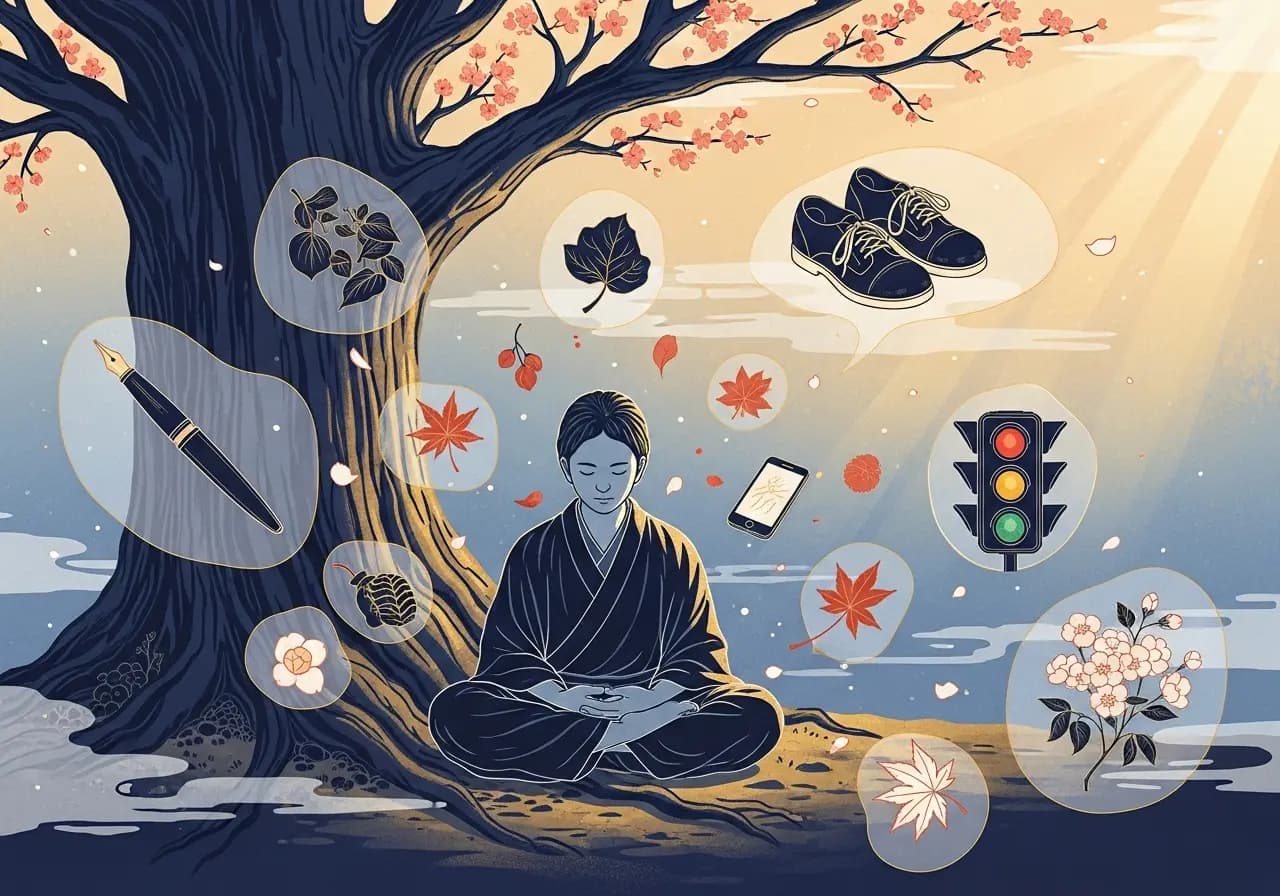
One of my teachers was talking about the little things in life that we typically don't even think about or think to be grateful for. He specifically mentioned his shoes, and at the end of every day, he takes off his shoes and says, "Thank you, shoes, for protecting my stinky feet."
It was interesting for me to hear that and think: not once in my entire life have I ever thanked my shoes. You wouldn't think to do that. They're inanimate objects without feelings, so why would I need to thank them? But it's not about them. It's about my disposition and my attitude.
After hearing that, I spent a week trying to think of all the little things to be grateful for. Throughout that week, it was fascinating. At work, a check came in. I signed it and deposited it on my phone by taking a picture. I had this moment where I thought: I've never thanked my pen for being able to sign my name, or my phone for being able to take a picture and have it go directly into my account without having to drive to the bank. So I found myself saying, "Thank you, smartphone. Thank you, pen. Thank you, check." Because it came right in the mail. And then I thought, "Oh, well, thank you to the post office for delivering this and getting things from here to there."
It just went on and on. That one single action brought up hundreds of things to be thankful for. It's fascinating how so many of those things had never crossed my mind before. You can imagine that whole week was an intense week of being grateful for all the little things.
Even driving home, I was thinking about how to be grateful for things I'd never thought to be grateful for before. For example, the red light. You're stuck at it and never thank it. But I looked at the red light and said, "Thank you, red light," because without it organizing us all, it would be chaotic. While my light is red, someone else's light is green, and they get to go. When theirs is red, mine is green.
I realized I should thank the red light because thanks to it staying red, I get to drive through this intersection when it's green, and I typically don't have to worry about someone else running through the intersection and hitting me.
It really reframes the way you view a lot of things if you practice gratitude.
The Challenge
I think it would be a fun experience this week, or whenever you listen to this podcast, to give yourself this 10-day challenge. Take a vow for 10 days to not complain, gossip, or criticize. During those 10 days, practice expressing gratitude. Give at least one authentic compliment every day to someone for something. See how that changes you. See if it starts to shift your mindset.
What you'll notice most importantly is this: the more you practice gratitude, the more you experience happiness. And this is the best part of all—the goal isn't to be happy. We're not chasing happiness. We're practicing gratitude, but the effect of that practice, what you'll notice, is that you experience and feel more happiness.
A Final Word
Before I wrap up, I want to remind you that next year in January, from January 26th through February 4th, I've been invited to teach a mindfulness retreat in conjunction with a humanitarian trip we're doing in Uganda in Africa. This is going to be a really awesome opportunity to do humanitarian work while focusing on the contemplative practice of mindfulness. If you're interested in learning more, visit MindfulHumanitarian.org. This will be a wonderful and unique experience—going to Uganda, practicing mindfulness, doing humanitarian work, and going on a safari. If you're interested, check out the website or reach out to me with any questions you have.
As always, I want to thank you for taking the time to listen. When I started this podcast, my intention was to make content and tools available for people to learn the philosophical concepts taught in the contemplative tradition of Buddhism that ultimately enable us to live more mindfully. I've been surprised to see how much demand there is for this presentation, this style of presentation for Buddhism, and it's been an incredible journey. I'm very happy to be doing this and to be on this journey with you.
I believe that the key to contributing to making society or the world a better place is really about making ourselves better versions of ourselves. That's why I do these podcasts. I'm determined to continue producing content and creating tools that help us be more mindful, and ultimately, this is my practice. This is me trying to be the best me I can be.
At times, it feels good to do this for everyone else listening to it, but ultimately, I'm also doing this for myself. I don't feel like I'm trying to sell anything or push anything on anyone. I record all this, in a way, for myself. This is me expressing myself so that my own children will be able to listen to this at some point in the future and know how I felt about these topics.
And if you listen to this and enjoy it, well then, that's all the better. If we can be more mindful as individuals, we end up having more mindful families and ultimately more mindful societies, and we can end up having a better world. It's not because we were trying to change the world. It's ultimately because we were trying to change ourselves, and I really believe that.
If you're able to contribute in any way, your generous donations allow me to continue producing weekly content for this podcast, along with content for the workshops, retreats, and seminars that I do. If you're interested and in a position to help, please visit SecularBuddhism.com to make a one-time donation or sign up as a monthly supporter.
Thank you for your continued support, and I'll be happy to record another podcast episode next week. Have a great week, and until next time.
For more about the Secular Buddhism podcast and Noah Rasheta's work, visit SecularBuddhism.com