

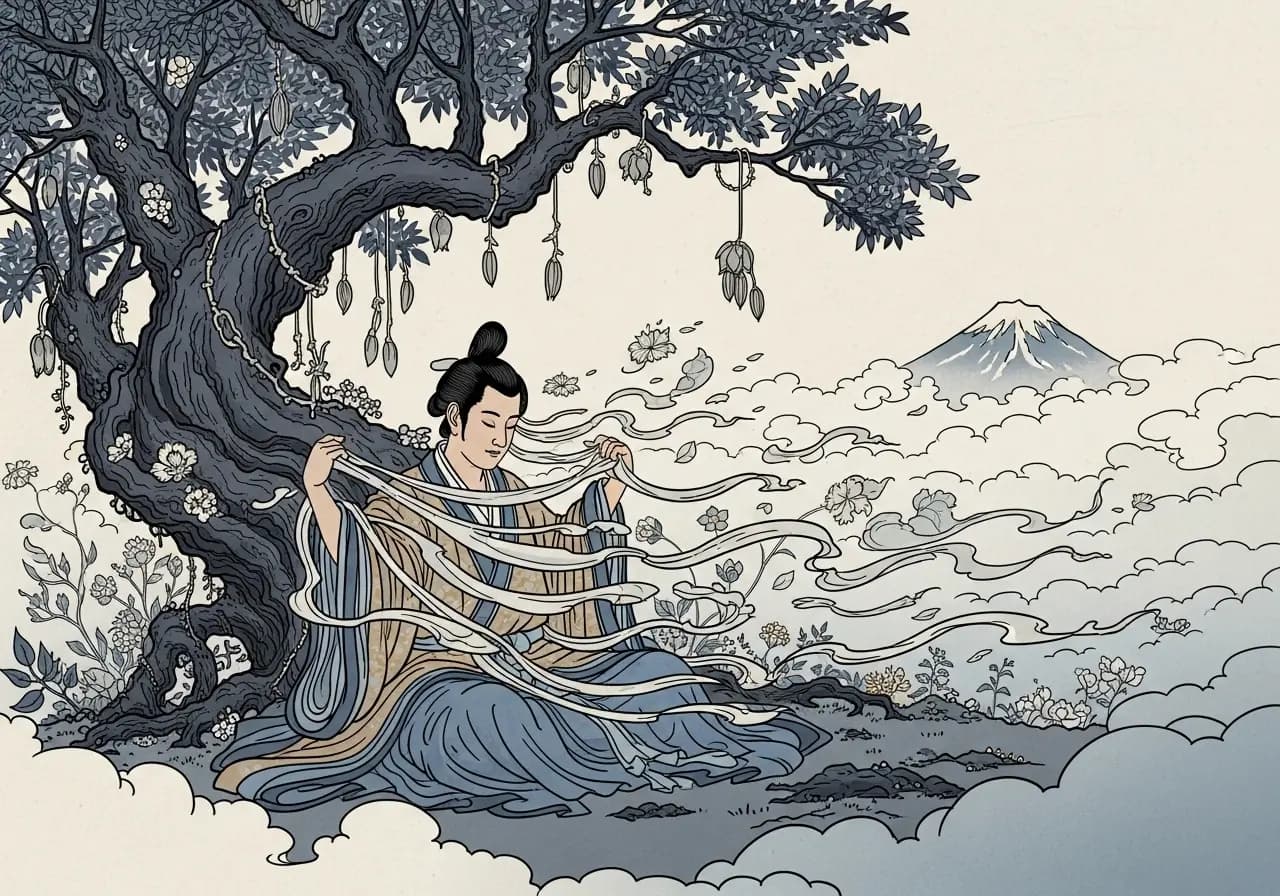
Unbecoming Ourselves
Episode 209 of the Secular Buddhism Podcast
Guest: Heather Schenck Host: Noah Rasheta
The Journey Begins
Noah: I want to acknowledge that we have known each other for quite a while now. Do you remember when it was that we first interacted?
Heather: I remember I first began listening to your podcast in early 2020. That's a very distinct memory to me. I think when I finally joined your Sangha online was towards the end of that year, so in the fall of 2020.
Noah: I think it was when I first started the first version of the book club, right?
Heather: Yes, I think I was in that first group of people on Marco Polo.
Noah: Yeah, that was fun. That group seems to have maintained pretty good contact with each other in the years since then.
Heather: Absolutely. It was a very meaningful group and still has been.
Noah: It's fun that during that time, you went through devouring all the information about these concepts and ideas. And now here we are, what, four years later, and you've written a book about it. I think it's just so cool to see that journey. I'm excited to talk a little bit more about that book. But first, just give me a little overview of the book. What inspired you to write it?
From Suffering to Understanding
Heather: Thank you for that question. I came to Buddhism and mindfulness practice, as many people do—not everyone, but from a place of suffering and needing some help and guidance. At that time, when I first found this group and first learned about Buddhist concepts, I was really struggling with a negative self-perception.
Unbecoming Ourselves in general is about my journey—that process of transitioning from an unskillful or harmful self-perception to a truer self-assessment, which surprisingly is less judgmental.
My own self-perception is something that I've always struggled with. And about that time, in the beginning of 2020, when I started listening to your podcast, I eventually came to this realization that a lot of my suffering was caused by my striving to become someone or something and my harsh evaluation of myself. I've always felt like I wasn't good enough, that somehow my worthiness was tied to how I performed or who I quote-unquote was.
So I've always found myself striving for labels, believing that it would satisfy that gaping wound. I got my nursing degree twelve years ago and became a nurse, which is a very respectable label. I even practiced as a cardiac nurse for a while, which if you're in healthcare, you know that it comes with its own special kind of merit. And then as a mother, I strove to become the best mother, reading all the parenting books, listening to all the podcasts, doing all the things. But it still never felt like enough.
I had coworkers who were more experienced and could care for sicker patients than me. Or I'd get frustrated as all parents do sometimes and yell at my kids. And then all of these things I would save in the back of my mind as proof that I was fundamentally bad, that I wasn't enough. I would just circle around in self-shaming.
It's always kind of been there: the striving to be a good daughter, then a good wife, a good nurse, a good mother. Which sent me constantly searching outside myself for my self-worth. And that really came to a head at the beginning of the pandemic.
I felt like I was literally drowning in my suffering. My husband had moved out. He was working with COVID patients, so I was home alone with the children, and my mental health plummeted. I found myself being even more critical of myself as a mother, and it was paralyzing.
So at that time, I realized I needed help. I started searching for new ways of looking at my suffering and for supportive communities. That's when I found the Secular Buddhism podcast. The journey I began after joining this community and examining my long-standing limiting beliefs changed my life in more ways than I initially anticipated.
That's what the book essentially is about: this journey from a really hurtful self-perception to letting go of those labels. And what's interesting is, as I was going through this journey, I actually began to notice how people all around me cling to their labels as well, and how it causes them suffering too. So my hope is that the reader of Unbecoming Ourselves will relate to my personal story and find peace through the ideas and practices I present.
The Chains We Choose
Noah: Thank you for sharing that. I remember you and your husband were stuck, separated, and you didn't want to take the risk of bringing home COVID. I remember thinking, wow, that would be really difficult.
So with this notion of unbecoming ourselves, I think all of us relate to some degree. Because all of us go through that process you described of trying to become something—become a college graduate, become a spouse, a parent, the best coworker, whatever it is. It reminds me of that quote that says good concepts are like a gold chain and bad concepts are like an iron chain, but they both equally bind you in the end.
With labels like you said—nurse, for example, or good mom. Good mom's better than bad mom, but still, both of those labels are like chains. They bind you in one way or another to a way that you think you should be or shouldn't be, or things you should do or shouldn't do. And I think we all do that. Literally, I don't know that we can't not do that.
I feel like in my own journey, part of what drove me to studying Buddhism—looking back now—was trying to replace some of those labels with new ones. Like, well, now I'll be a meditator and I'll be, you know, whatever else. But maybe I was just replacing some iron chains with gold chains. But I feel like in the years of putting all these concepts into practice, I've come to realize I'm always going to have some label. And whether it's the one that I'm trying to display or the one that I'm trying to avoid others having of me.
It seems like a balance, right? Because I'll never be able to control that one—the way others perceive me, the labels they give me, and what that means to them. And I feel like, in that sense, we're all battling with this process of unbecoming ourselves, trying to realize first: what have I become? And is this really what I want? Or are any of those things that maybe I want to unbecome?
Heather: Yeah.
Noah: I love that idea.
Categorizing Others
Heather: I think there's a poem that really resonates with me, and it's about how we create this sense of identity for others as well. We do that thing where we put people in mental boxes. We think of them as a fixed person. We stereotype them, we categorize them. And when we do that, we're boxing them in just as much as we're boxing ourselves in.
Noah: I love that. That's a really neat poem. And yeah, I think if we could actually do that and apply that in our lives, we would be the ones experiencing so much more inner peace. Because we do get on edge the moment we put someone in that category of "their team" or "team them."
I'm actually really careful when people ask me about my religious views, for example, or political views. I'll usually say, "Why do you want to know?" And that'll throw someone off because they're like, "Isn't it natural to want to know?" And then I'll tell them, like, a lot of times we ask that because we're just trying to identify: is this person on my team or not?
And I just want to assure you, I am on your team. We're the same. We may not have the same views, but that actually doesn't matter. I'm on your team. And then that's almost always okay. There's like a relaxing there. It's like, you don't need to know. I don't need to know. I don't need to know what your views are. And then we just kind of go from there.
Heather: I love that. I think they've proven that there's obviously real biological reasons why we categorize people as like me or not like me. And a lot of it stems from our earliest ancestors who were in a constant state of threat for their safety. And we're not generally speaking always in that situation anymore, yet we still think of ourselves that way. So maybe poking and prodding at those questions, we can relax a little bit and maintain and stay in that sense of connectedness.
The Perfectionism Trap
Noah: So one of the final themes I wanted to cover in your book is a recurring theme: the struggle with perfectionism. In your case, you mentioned especially as a mother. How have you learned to let go somewhat of this idea of being a perfect mom or a good mom or any of those labels? And what advice would you give to others who deal with similar concepts and notions of trying to be the perfect this or that?
Heather: Yeah, it's a process. I think there are a few concepts here that have been really helpful for me. One has been just to maintain a wide view of my entire life—zooming out instead of being only in this moment, but really taking a minute to step out and take a wide view of my entire life. You know, parenting or whatever it is that we're looking at and evaluating ourselves—that's a lifelong journey or a very long journey.
Another concept that's been really helpful to me: Thích Nhất Hạnh describes or illuminates the idea that we all have, in our store consciousness, the same seeds of compassion and joy and anger and hatred. They're all there, and it's just a matter of which ones we water. And so sometimes at the end of the day, I'll just ask myself, okay, which seeds did I water today? Because inevitably, yes, there's going to be some seeds of anger or impatience watered. But it also allows me to reflect on all of the times I was empathetic and caring and kind and encouraging and grateful.
I want to emphasize that this is a really long process. I think perfectionism is something that it takes a long time to really kind of undo. And it's funny because if you are a perfectionist, even when you're approaching the idea of trying to heal yourself, you are probably going to approach it in the same way, right? Like you're going to try and be perfect in the way that you are getting through your perfectionism or like overcoming it.
I think if you can remember to zoom out, pay attention to all the seeds that you're watering, and then really just start poking holes in that balloon—like I mentioned earlier—start to just poke holes in your limiting beliefs and really bring some curiosity and doubt to them. That can be an excellent starting point.
The Journey, Not the Destination
Noah: I love that. I feel like curiosity has been one of the superpowers I've tried to develop in the later stages of my life. It's like, question everything. And you question if you should question everything. Like literally, question everything. Because I think in our society, we really do struggle with notions like perfectionism, whether it's being the perfect mom or being the perfect whatever it is.
I feel like when people get into studying Buddhism, they bring that with them. And well, now I want to be the perfect meditator or the perfect person at not being the perfect person. And just relaxing and realizing this is a process, and there is no destination. In fact, I was thinking about the title of your book: Unbecoming Ourselves. You're implying in the title that unbecoming is a process. And I feel like that's kind of what we're experiencing being just humans, being alive.
I always say life is an experience to be had because it doesn't end. It's just you're experiencing it until one day you're not. But you don't ever finish and say, "I did it. I won. This is it." And I think the process that you're describing in the book, the notion of unbecoming ourselves, is a continual process that you don't even need to be stressed about achieving it because there isn't anything to achieve. It's a method.
Heather: Absolutely. Even though I've been on this path for a while and I feel as though I've had such profound insights, I still have a very strong habit energy. My habit energy is to be a perfectionist. My habit energy is to strive for things like labels. My habit energy is to judge myself. But I think I'm just a little bit better at catching it now. So yes, it's a continuous practice, as you said.
Noah: Yeah, that's great. And I think I would describe my experience very similarly. It's like I'm understanding myself so much better. But when I first started the whole process—thinking, "This is where I am, this is where I'll be, here's how you do it, start doing this, stop doing that"—I've come to realize there's nothing to achieve here. The only thing that I aspire to continually is just understanding myself a little bit better than I did before, whether that was five minutes ago or yesterday or a year ago.
I feel like I'm always learning, always gaining a little bit more insight about myself—why I think what I think, say what I say, do what I do. Why do I feel what I feel? Why am I having specific thoughts? Why are those recurring thoughts? And then compassion can arise naturally because the goal is curiosity and understanding.
And I kind of gathered that from the way you were talking about this in the book, Unbecoming Ourselves—that it's a continual process and curiosity is the key. Questioning, doubt plays a crucial role there. Just like you've been saying, poke holes in those labels or those stories.
If you had a final message that you would want to share with listeners, what would you share as a final message to someone struggling?
The True Self
Heather: You know, for myself, I think the greatest points of suffering in my life are when I've been stuck in the small sense of "I"—who I am as an individual, a separate self, which I've briefly mentioned before, isn't real.
So for what I would offer to everyone that is struggling with a sense of their own identity or finding peace in who they are: first, just reacquaint yourself with your true nature, with your true self. I think the best way that this can be done is by either spending time in nature or somewhere where you can drop your sense of self. You can drop all those layers that you are showing to the world, the way that you want to be seen, and get to know that person again.
And then, as scary as it might be, really work on that self-compassion. Because for me, I think it's very common to have this belief that we have to be hard on ourselves to grow. But studies have actually shown that shame is not a good motivator for change. So I would advise really building upon your self-compassion practices.
And if it's difficult to start giving that to yourself, begin where you can. Even if it's just looking at yourself through the eyes of someone who loves you. That way you can learn to trust in your goodness again.
Finding Heather's Work
Noah: I love that. And where can listeners find your book? Where can they purchase it? Where can they follow along with any of your current or future work?
Heather: So Unbecoming Ourselves can be found on Amazon. For following my work in the future, you can follow me on Insight Timer. I'm just under my name—my first name is Heather and my last name is spelled S-C-H-E-N-C-K. Or you can also check out my website at aheartawakened.com.
I already have one class posted on Insight Timer and that website, as well as some guided meditations. And I'm hoping to offer some further courses in the near future.
Closing
Noah: Great. Well, thank you so much for taking the time to share a little bit with me and with the podcast listeners about your book. Thank you for putting in the time and effort to write what you've written about. And I wish you all the best with this book and all the other things you're working on.
Heather: Thank you so much. It really has been an honor being here today. Thank you.
For more about the Secular Buddhism podcast and Noah Rasheta's work, visit SecularBuddhism.com