

Episode 2: The Nature of Human Suffering
Hello, you're listening to the Secular Buddhism Podcast. This is episode number two. I'm your host Noah Rasheta, and today we are talking about the nature of human suffering. Let's get started.
Welcome to the Podcast
Hey guys, welcome to the Secular Buddhism Podcast. If this is your first time listening, thank you for joining us. Secularbuddhism.com is my website and blog, and this is the podcast that goes along with it.
The Secular Buddhism Podcast is produced every week and covers all the major philosophical topics within Buddhism. I also plan on interviewing other guests—authors, teachers, and really anyone who's interested in philosophy, secularism, humanism, and of course Buddhism.
I like to remind my listeners of a quote, a wonderful piece of advice from Tenzin Gyatso, the Dalai Lama, where he says: "Do not try to use what you learn from Buddhism to be a Buddhist. Use it to be a better whatever you already are." That's the attitude I'd like you to take when you approach listening to these podcasts.
Please come back often and feel free to share the podcast to your favorite RSS feed or through iTunes. You can also follow me on Twitter or Facebook—my username is @noahrasheta—or you can visit us on secularbuddhism.com. Any links mentioned in the show will be available in the show notes.
Today's Topic: The Nature of Human Suffering
Now, let's jump into this week's topic. Today we're going to talk about the nature of human suffering. We could also say this is the nature of the human condition. When the Buddha gave his first sermon at Deer Park, this was the topic that he discussed. The core teachings of Buddhism can really be summed up in the understanding of the nature of human suffering. The Buddha talked about four specific aspects of it, and that's what we're going to talk about today.
The Buddha was searching for insight into the nature of experience, the nature of the human condition. It was during this introspection that he was awakened to the truth of the reality of life. The principles that he outlines in his teachings are commonly referred to as the Four Noble Truths, or you could say the four truths for those who would be noble.
These consist of a simple, direct analysis of the challenges and possibilities of the human condition. The Four Noble Truths form the core of all Buddhist paths and traditions. The Buddha structured his teaching in terms of a medical practice. First, he diagnosed that there was a problem. Second, he identified the underlying causes of that problem. Then he determined the prognosis and ultimately prescribed a course of treatment. Those are the four aspects of the understanding of the nature of human suffering.
The First Noble Truth: The Problem
We're going to start with the first one, which is diagnosing the problem. The problem is simple: in life, there is suffering. That's it. That's how simple that is. Life has a way of interrupting us. This could be the loss of a job, the loss of a loved one, or finding out you have cancer. All the way down to small surprises—you're driving down the highway and your tire pops. These surprises, along with subtler, less noticeable experiences—the aches and pains that come with age, sickness, the frustration of waiting in a long line, or simply running late and then getting stuck at a red light—these can all be understood as manifestations of suffering.
Simply acknowledging the fact that at any given moment we may face some type of uneasy or uncomfortable experience constitutes the essential lesson of the First Noble Truth. Life is frustrating and painful. Suffering is a part of life, and no matter how expertly we manage our lives, we still don't get what we want, and we still get stuck with the things that we don't want.
What the Buddha was trying to teach with the First Noble Truth is that life is going to be easier for us when we understand—when we truly understand—that suffering is simply a part of life. There's just no way around it. No matter what we do, we can't avoid the sudden and unexpected surprises that will inevitably come our way.
I think it's important to understand the universality of suffering because it helps us to not take things personally when these surprises in life jump up. I think a typical reaction when something happens is, "Why is this happening to me? What did I do to deserve this?" Or, "I've been doing everything right. This shouldn't be happening to me." These emotions come up because we have this tendency to think that things aren't going to happen to us.
The Bear in the Forest
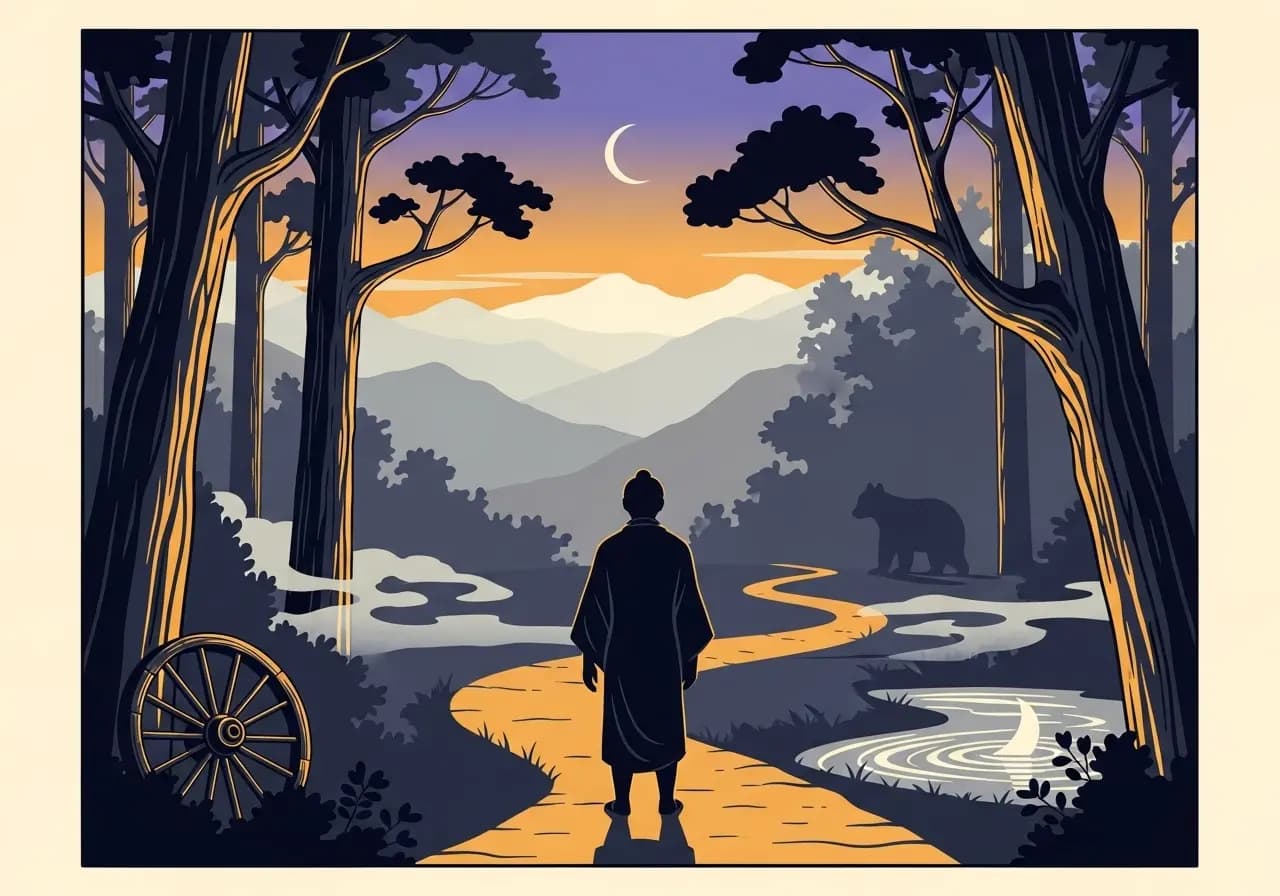
Imagine that you're going to go for a walk on a path through the forest at night. Suddenly, someone jumps out at you, dressed in a bear costume. There's no doubt you would be frightened and surprised—probably even scared to death, right?
But imagine that before you started on that path, a friend comes up to you and warns you, and says, "Hey, somebody's hiding in the forest. He's dressed as a bear, and he's trying to scare people. So just so you know, at some point, that guy might jump out and scare you." Well, now you know it's going to happen. You just don't know when. When it finally does, you'll still be startled, but not nearly as much as you would if you didn't expect it.
The same thing happens in life. We go through it without ever expecting to encounter any surprises. Then when the surprises come—you lose your job, you find out a loved one has cancer, whatever it is—something pops out at you. The First Noble Truth is about understanding that these surprises are going to certainly come. We just don't know when.
Simply knowing that suffering is universal, that it's not something that's personal, that there's not some form of cosmic justice taking place, can ease a tremendous amount of suffering because we don't have to take it personally. When things come up—and these surprises will come up—you've been warned. It's going to happen at some point. The guy in the bear costume is going to jump out and scare you. We've all been warned. It's going to happen.
But when it does, we don't have to stop and pause and think, "Why is this happening to me? What did I do to deserve this?" None of those things have to come up because you can address these things as they happen and think, "Okay, well this is what is," rather than experiencing unnecessary suffering because we're playing with the idea of, "Oh no, what did I do to deserve this? Why is this happening? What could I have done?"
At that point, it's just what's happening. It's what is. You just tackle it the way that it is. The amount of suffering can be diminished simply by understanding that suffering is universal.
The Three Types of Suffering
It's important to understand that there are different types of suffering. My favorite way to explain this is to illustrate them in a story. Most Buddhist traditions talk about three types of suffering. To explain this, I'm going to tell you a story, and maybe this will make more sense to you.
Try to imagine yourself in high school or in college—or maybe you are in high school or college. Just imagine at some point in your life, you decided that you didn't have a vehicle, and you were going to save up to buy a new car or a new motorcycle, whichever seemed more appealing to you. Up until this moment, you'd been hitching rides with friends and with your parents, and you were really eager to be able to get around on your own.
After working all summer, you finally saved up enough money to go buy this car or motorcycle. Now that you have it, you're really happy and you feel like life is finally good. You don't have to bug people. You don't have to be that guy who doesn't have a way to get around. Now that you've got your new vehicle, you decide you're going to show your friends.
You're driving down the road, really excited, and you're not really paying attention. At the red light, you didn't realize it was red, and you accidentally run into the back of a car that was stopped at the red light. Suddenly, you're going to be experiencing the first type of pain.
The Suffering of Suffering
This first type of suffering is really physical pain. Maybe it's the airbag and it breaks your nose, or you feel bruised around your chest where the seatbelt stopped you. If you're on a motorcycle, maybe it's that you fell off and it's the road rash that you're feeling on your arms. This is what we would call the suffering of suffering—the first type of suffering. This is essentially the suffering of pain.
The Suffering of Change
The next thing that's going to happen, you're going to stand up and you're looking at your car or your motorcycle. You realize it's totaled, and now you're experiencing the second type of suffering, which is the suffering of change or the suffering of loss. This is also a type of suffering that you really can't avoid.
Pervasive Suffering
It's this third type that we're really concerned with, which is called pervasive suffering. This one is really difficult to understand because it's the hardest one to detect in ourselves.
This is the suffering of looking at the whole incident with your motorcycle or your car, and now you're thinking, "Oh man, my friends are going to think I'm such an idiot. I crashed my car on the first day. I'm such an idiot." Those are the type of thoughts that enter the mind and cause suffering, and yet this is self-inflicted suffering. It's what we call pervasive suffering.
Again, it's the hardest to understand, and it's also the most dangerous because it's very difficult to detect in ourselves. It's the suffering that we experience that we think is caused by others, when in reality it's completely self-created.
Understanding the three different types of suffering will help us as we move forward because it's the third type that we're really focused on ending. When we talk about ending suffering, I think a misconception sometimes in Buddhist studies is that people think, "Well, you know, we're trying to end suffering. But how? You know, I'm going to suffer when I experience loss—if I lose a family member, or if my pet gets run over by a car. Are you saying that I just sit there and I don't experience any pain?" No, that's not the idea of ending suffering. What we're talking about specifically is this third type of suffering. The first two you can't avoid, and it's important to know that.
The Second Noble Truth: The Cause of Suffering
The truth of the cause of suffering is the second aspect, or second component, of the nature of human suffering that the Buddha taught. This is essentially understanding that the cause of suffering doesn't necessarily lie in the events or the circumstances, but in the way that we perceive and interpret our experience as it unfolds.
Suffering emerges from craving for life to be other than it is. That's really important to know. I'm going to repeat that because the definition of suffering from the Buddhist understanding is that when we crave for life to be other than it is, we're going to experience suffering. Life is impermanent. Change is constant. We grow frustrated when the world doesn't behave the way that we think it should, and our lives don't conform to our expectations.
The only certainty in life is that it will end. In the face of a changing world, such cravings seek consolation in something permanent and reliable, a self that is in control of things, and a greater meaning or a destiny. The irony of this strategy is that it turns out to be the very cause of what it seeks to dispel.
In yearning for suffering to be alleviated in such ways, we reinforce what creates suffering in the first place. We're craving for life to be other than it is. We find ourselves spinning in this vicious circle. The more acute the suffering, the more we want to get rid of it. But the more we want to get rid of it, the more acute the suffering gets.
The Three Poisons
Collectively, this ignorance, desire, and aversion are referred to in Buddhist writings as the three poisons. These are habits of relating to experience that are so deeply rooted that they cloud or poison the mind. I want to talk about this idea of the three poisons for a minute. To really understand the truth of the cause of suffering, it's important to understand what's happening in our mind when we don't want to suffer.
The three poisons, as I mentioned, are ignorance, desire, and aversion. Or you could say delusion, greed, and anger. But the idea here is this: So let's start with greed—these are things that we want. Then there is anger or aversion—these are the things that we don't want.
What I'm talking about here are the things that we want, or the things that we think, "If I could just have this—whatever this is—then life is going to be good."
Think about that for a minute and ask yourself, "What are the things in life that I tend to think are things that, if I had them, things would be good?" Examples of this would be, "Well, if I had more money. If I had a better job. If I had more power. If I had fame." Fame, money, and power are big ones, but it can also be smaller things. "If I just had a spouse who was willing to listen to me." Or, "If I had a spouse who believed the way I believe." Whatever it is that you think that you want, and if you could just have it, then life would be good—all of those things fall under this category of desire or greed.
The second category is aversion or anger—these are things that we don't want. Think about this for a second and ask yourself, "What are things in life that I tend to think, 'Well, if I could just avoid that, life's going to be good'?" For example, "If I could avoid losing my job. If I could avoid getting sick. If I can just ensure that I never get cancer, like my grandpa did," or whatever line of thinking that you're on where you're trying to avoid something. Aversion—you're trying to avoid getting something—and if you can, life is going to be good.
Now you have this list: the things that you want and the things that you don't want. We live life in a way where we genuinely think, "If I can just get anything on that list of the things that I want, life is going to be good." Or, "If I can just avoid the things on this list of things that I don't want, life is going to be good." That's what takes us to the third poison: ignorance or delusion.
It's the inability to see the truth about things. It's the inability to see things as they really are. Ignorance is thinking that there actually are things that if you could have, life would be good, and if you can avoid, life will be good.
It's important to understand that we're not alone in our suffering. Everyone experiences this, and no one is immune to it. This is a universal way of being.
The Essential Lesson of the Second Noble Truth
The essential lesson of the Second Noble Truth is acknowledging that all conditions are bound to change. We can approach each moment with a bit more clarity and confidence. We can relax into it rather than resist it or being overwhelmed by it. We have the potential to look at each experience as it's happening and say to ourselves, "Okay, this is what's happening now at this moment. The next moment will bring another experience, and the next moment will bring another experience," and on and on.
It's when we get caught up in wanting things to be other than they are that we start to experience suffering.
Sometimes when we're talking about this idea of suffering emerging from craving for life to be other than it is, a common thought could be, "Well, but isn't it nice that we want things to be other than they are? That's what creates change in the universe. That's what creates in society and in our families." Yeah, that's true, but it's important to understand that there's a difference between thinking, "I want things to be other than they are because that's the key to my happiness," versus understanding that wanting things to be different than how they are to make the world a better place—those are two very different approaches.
One of them can bring happiness and change. The other one is a delusion, or like the three poisons we talk about, it's ignorance or delusion—the idea of thinking, "This is what I need that's going to make me happy." Just change that and think, "What are the things that can make the world better?" That makes all the difference in this approach, this specific approach to suffering.
This idea reminds me of something that Shantideva said: "All the suffering there is in this world arises from wishing ourselves to be happy. All the happiness there is in this world arises from wishing others to be happy."
The Third Noble Truth: The End of Suffering
Now we're going to talk about the third aspect—the truth of the end of suffering, or determining the prognosis, as we mentioned at the beginning.
The idea here is understanding that the cause of suffering can be ended. Understanding that all things are impermanent and ending, the chase after satisfaction—that is enlightenment. It's not that suffering ceases. It's that craving can cease. We don't end suffering. We end the fixation on what brings us suffering. We do that through mindfulness, which is something we're going to discuss in a separate podcast.
The essential lesson of this Third Noble Truth is that the limiting ideas we hold about ourselves, others, and virtually every other experience can be unlearned. This is where I like to mention another quote: "When we take the time to look at the way we see things, the way we see things changes." That's what we're going to be exploring in further podcasts, but that's kind of the idea of Buddhism—secular Buddhism in general. We want to take the time to really understand how it is that we see things because that's the way that things change.
Things don't change. It's that when we take the time to look at the way we see things, then the way we see things changes.
The Fourth Noble Truth: The Path
The Fourth Noble Truth is the truth of the path that frees from suffering. The Fourth Noble Truth teaches us that in order to bring an end to suffering, we need to cut through the dualistic habits of perception and the illusions that hold them in place. Not by fighting or suppressing them, but by embracing and exploring them.
There's a path, or there's a way, to end the cause of suffering, which we now know is craving. But we need to abandon our expectations about the way we think things should be, and we need to begin to develop an awareness about the way things are. This is an important concept in Buddhism. There's this idea that there's life, right? And there's life the way that it is. Then there's the story about life that we create—the story about how things are. And these aren't the same.
What we're trying to do is get out of that mode where we're creating stories about the way things are and start to see things just the way they are. Proper perspective is the key here.
Consider that perhaps the reason we keep getting tangled up in these things is not because we fail to see things, but because we imagine ourselves to be configured other than we really are. For example, we think of ourselves as these round pegs trying to fit into these round holes, while completely unaware that in reality we are square pegs.
We believe that the way we see things is the way that things truly are. But again, when we take the time to look at the way we see things, the way we see things changes. And that's why it's so important to take the time to really look at how we see things. We do this through meditation and through mindfulness. These are things that we're going to discuss, and the specific path is something known as the Noble Eightfold Path in Buddhism—and that's what we're going to discuss a little bit in the next podcast.
Wrapping Up
In this podcast, the key thing I want you to take away from this entire discussion is the understanding that suffering comes from wanting life to be other than it is. We're going to explore this a little bit more in future podcasts, but I hope that this has made sense to you. These are the essential teachings of Buddhism known as the Four Noble Truths. This is where we start with the entire foundation of understanding how we can change our perception of reality.
It's when we can do that, that we achieve enlightenment or awakening. I think that's another big misconception in Buddhism—this idea of awakening or enlightenment is seen as this mystical thing. But really, it's not. Enlightenment is when we come to learn to see things the way that they really are, and we're no longer caught up in the story we're creating about the way things really are. That's how simple that is.
I hope you've enjoyed this podcast. I look forward to discussing a few more topics with you in the upcoming podcasts. Thank you.