

The Bodhisattva Path
Episode 199 of the Secular Buddhism Podcast
Hello and welcome to another episode of the Secular Buddhism Podcast. This is episode number 199. I'm your host, Noah Rasheta. Today's episode is going to be a little different. Instead of the usual format, I'll be sharing the audio from a Dharma talk I gave this past Sunday on the topic of the Bodhisattva path and how we can approach suffering in the world.
As I've been thinking about the state of the world lately, I've received several messages from listeners who are feeling overwhelmed by the suffering they see around them. One email in particular from a humanitarian aid worker really struck me. She asked, "What can I do when it feels like whatever I do doesn't matter?" I think this is a question that many of us are grappling with right now. When we see so much pain and injustice in the world, it's easy to feel powerless, to wonder if our small actions make any difference at all.
This Dharma talk explores the concept of the Bodhisattva path—someone who commits to helping all beings while releasing attachment to outcomes. I share some practical ways we can engage with the world's suffering without becoming overwhelmed by it.
As always, keep in mind that you don't need to use what you learn from Buddhism to be a Buddhist. You can use what you learn to be a better whatever you already are.
With that, let's jump into the audio of the Dharma talk.
I have a lot of thoughts I wanted to share. This may be slightly longer than the typical Dharma talk, but it's inspired by a couple of emails I've received—requests from friends and podcast listeners regarding some of the topics going on in the world. It's also inspired by what Alexandria shared in our last call at the end of the meeting. She brought up a list pertaining to the Bodhisattva path, and Tim shared a resource on our community forum that had more information about the Bodhisattva path. It just got me thinking that this might be a good topic to explore today.
I spent yesterday trying to record a podcast episode, and I actually did record one, but I was also thinking about the topic for the next one. And I realized that if I were to record something today, this would be it. So I wanted to share some of my thoughts with you on this and then open it up for discussion.
But this all started with an email I received about a month ago from a podcast listener. This particular listener works in humanitarian aid and had just returned from an assignment somewhere. I could sense in the email a deep exhaustion and frustration in the tone. But something really stood out. She asked, "I don't know how to keep doing this. Every time I turn on the news, there's another crisis, another tragedy, and it feels like I'm pouring water into a bucket with a hole in it. Nothing changes, and I sometimes wonder why I even bother."
That was the premise of her request: What can I do when it feels like whatever I do doesn't matter?
I've received plenty of messages like this in recent months. And I imagine that many of you have felt something similar at times. Maybe not about humanitarian work specifically, but about just the state of the world. The constant barrage of troubling headlines. The feeling that things seem to be getting worse, not better. The sense that our individual efforts seem insignificant against the scale of suffering we're witnessing in the world. And I wanted to share my thoughts on that.
A few days after receiving the humanitarian aid worker's email, I found myself standing at the kitchen sink washing dishes, a little lost in thought—which happens from time to time. I was distracted and didn't realize that the way I had the plates positioned in the sink at an angle meant the water was hitting them and splashing onto the countertop. Then it pooled there until it started to spill onto the floor. That's when I noticed it wasn't going where it was supposed to go. It was going on the floor. I quickly turned off the faucet and reached for a towel to clean up the mess.
But that was a moment of awareness. It occurred to me that this might be what happens to us sometimes when we're trying to absorb all of the world's suffering. If we have moments where we unintentionally lose focus, that's when things tend to spill and overflow. The truth is, we can't contain it all.
And this is where the teaching of the Bodhisattva path, I think, can offer us some wisdom. Not by asking us to turn away from the world's pain, but by showing us how to engage differently with it.
Understanding the Bodhisattva Path
The Bodhisattva path is a central concept in traditional Buddhism. A Bodhisattva is someone who vows to attain awakening not just for themselves but for the benefit of all beings. The term comes from Sanskrit, where "bodhi" means awakening or enlightenment, and "sattva" refers to a being or essence. So it's quite literally a being of enlightenment.
The Bodhisattva makes a radical commitment—a vow to postpone their own complete liberation until all beings are free from suffering. It's kind of like being on a journey or in a race with others and then saying, "I'm not going to cross the finish line until everyone else crosses the finish line first."
If you're approaching these teachings just from a practical perspective like I do, you might wonder: How does this apply to our daily life? Aren't we all trying to cross that finish line to eliminate the suffering we're experiencing? Why would I want to postpone that suffering?
Well, let me share a personal story. Several months ago—actually almost a year ago—my wife and I did a half marathon. It was the first time I had competed in one. Towards the end, I just wanted to finish and cross that finish line. I was done. It was painful and exhausting, and I didn't want to take one more step beyond what I needed to.
My wife still had much more energy. She was throttling back, saying things like, "Let's run at this pace," then "Let's run for 60 seconds then walk for 10 seconds." She was doing all these things to keep me going. I've thought about that since, and in a way, without even knowing it, that's kind of what the Bodhisattva path is about.
She could have gone on and crossed that finish line and been done with it. But she didn't. She ran with me. And I think that's where this teaching is so powerful.
At its core, the Bodhisattva path is about expanding our circle of concern beyond ourselves. It's about recognizing our deep interconnection with others and choosing to act from that place of awareness. The Bodhisattva doesn't act because they're certain they're going to fix everything. They act because of compassion. Compassionate action is the natural expression of seeing things as they truly are.
The Four Bodhisattva Vows
The Bodhisattva vow consists of four parts. I want to share those with you as a contemplative practice that might inform how we can engage with the world.
The first part says: Beings are numberless. I vow to free them all.
Then: Delusions are inexhaustible. I vow to end them all.
Dharma gates are boundless. I vow to enter them all.
And finally: The Buddha way is unsurpassable. I vow to embody it.
When I first heard these, I remember thinking, "Well, this seems kind of impossible. How could anyone possibly free all beings or end all delusions when you're literally describing them as being numberless and being inexhaustible?"
But since then, I've come to understand that's precisely the point. The Bodhisattva path isn't about accomplishing the impossible. It's about orienting ourselves towards certain values despite knowing that we can never fully realize them.
Think about other ideals we hold dear—justice, equality, freedom. We strive towards these things knowing that we may never see their full or perfect manifestation in our lifetime. Yet we continue to strive anyway. That's the Bodhisattva path.
Releasing Attachment to Outcomes
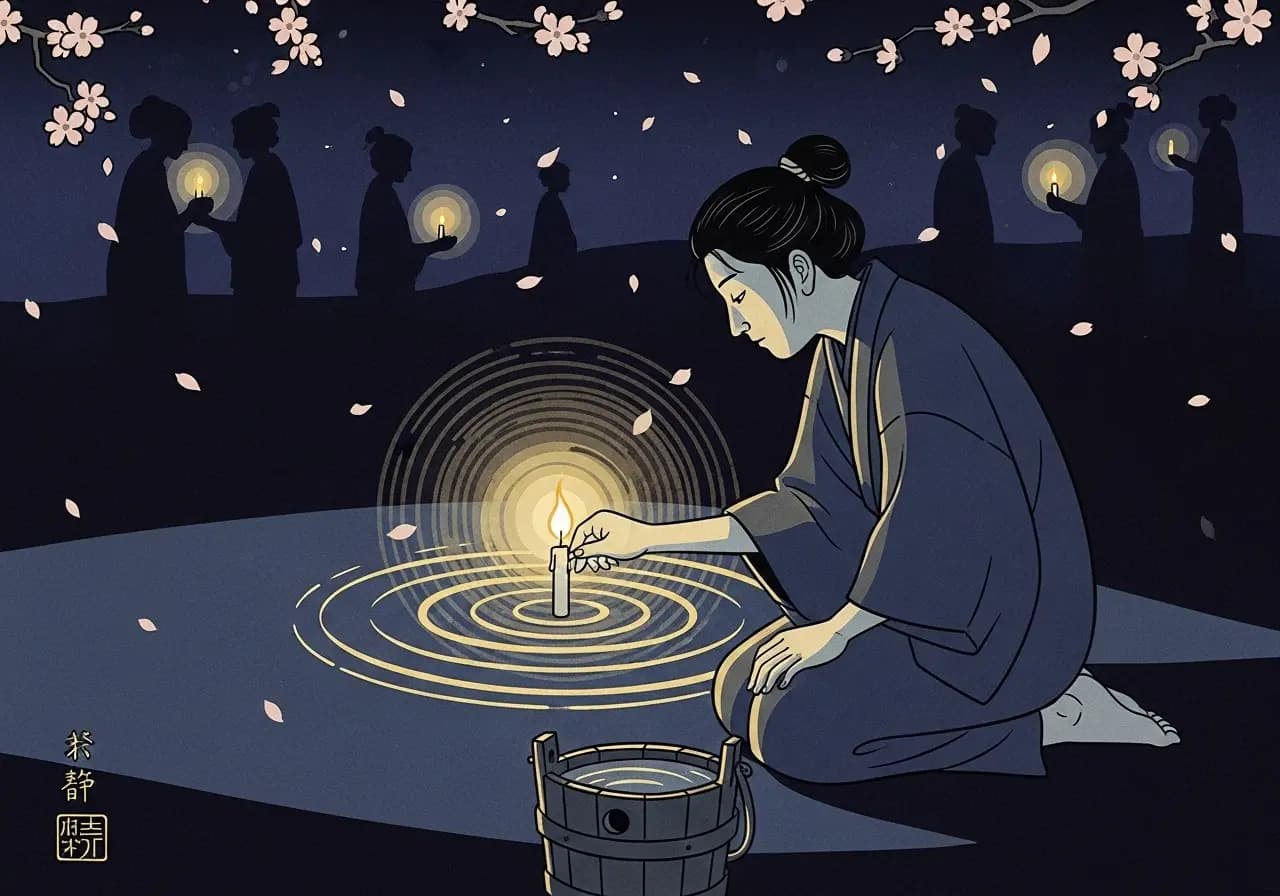
One of the most powerful aspects of the Bodhisattva path is that it teaches us to act while releasing attachment to outcomes. We show up. We do what we can. We light our candles in the darkness. But we don't demand that the darkness disappear completely because of our efforts.
There's a beautiful story in Buddhism called the story of Kisa Gotami. She was a woman whose young child died, and she was overcome with grief. In her anguish, she carried her dead child to the Buddha and asked him to bring the child back to life. The Buddha didn't refuse her. Instead, he gave her a task. He asked her to go throughout the village and collect a mustard seed from every household that had never experienced death.
Kisa Gotami set out with hope. She went from house to house, and at each one she asked, "Has anyone in your household ever died?" And at every single house, the answer was yes. Someone had lost a parent, a spouse, a child, a sibling. Every household had experienced loss.
As she walked through the village hearing these stories, something shifted in her. She realized that grief and loss weren't unique to her. They were universal. Everyone had experienced suffering. And in that realization, her grief transformed. She came back to the Buddha with a very different question now. She asked, "What should I do with my grief?"
The Buddha taught her, and she eventually became one of his foremost disciples. But the key insight of that story is this: suffering connects us rather than separates us. When we can recognize that everyone is struggling in some way, everyone is dealing with pain and loss, it opens something in us. It opens compassion. It opens connection. And it also opens something else—it opens wisdom about how to engage with suffering without being crushed by it.
Community and Connection
You know, so often we think we have to do this work alone. We think we have to fix everything ourselves. But the Bodhisattva path teaches us something different. It teaches us that we're not alone in this. We're part of a community of people who all care, who all want to make a difference, even when it feels impossibly small.
This is why these calls—these community gatherings—are so meaningful to me. None of us are pretending that everything is fine. But we can remind ourselves: hey, we're not alone. We all care. We're all here. We're all trying to make a difference. And these connections nourish us. They sustain us in ways that going at it all alone couldn't do.
There's a poem by David Whyte that speaks to this. He says: "Start close in. Don't take that second step or the third step. Start with the first thing close in. The step that you don't want to take." This reminds me of the ripple effect that occurs when we toss a pebble into water. The impact begins at that single point, but then it extends outward in circles, affecting areas far beyond that initial point of contact.
Our actions are like that. However small they may seem, they create ripples. And we never know how far those ripples might travel or what shores they might eventually touch.
I experience this a lot when I receive emails from people who write about how a particular episode of the podcast helped them throughout a difficult time. And then as a result, they're on a new career path, or they're volunteering at a crisis hotline, or they're doing something meaningful they weren't before. I've heard countless stories like that. And it's just so heartwarming to know that here I am, sitting at my desk in my house with no knowledge of who's going to listen to a particular idea or concept, or what effect it might have.
It's moving to receive those messages and hear, "Oh wow, that's how that affected someone. That may have changed someone's entire course of their life." It's very humbling. It's a reminder that anything I can do, I'll continue to do. It's like lighting that one candle.
Finding Peace and Engagement
So to wrap this up: we can be a light in uncertain times—to ourselves and to others. The Bodhisattva path teaches us that we don't have to choose between inner peace or some form of active engagement with the world's suffering. The deepest engagement comes from a place of being centered and having more clarity.
The story of Kisa Gotami reminds us that suffering is universal. It connects us rather than separates us. And the wisdom of lighting candles in the darkness shows us that even small actions matter, especially when those challenges seem so overwhelming.
That's what I hope we'll think about throughout this week: that what we do matters. In however seemingly small or insignificant ways, it matters. Showing up for each other, being here with each other—it matters. It helps. Every little bit helps. Every little candlelight adds to the overall light in that darkness.
I want to thank Alexandria for bringing up the idea of the Bodhisattva path and the Bodhisattva vows, and Tim for sharing that additional resource. And really, all of you for what you bring to these calls and the way these discussions unfold. The way we take these teachings, internalize them, and start applying them in our daily lives—in the little, seemingly small ways—they don't go unnoticed. They make a difference. They're creating ripples.
When you feel overwhelmed with all the things in the world, just think of that. Think: but here we are. We're doing something. I just want to express my gratitude and love for each one of you and for spending time on these calls, walking this path so that I feel like I'm not alone.
I'm honored to be here with you. And as I said before, just being here with you—that's it. That's enough. There's really nothing else.
So yeah, those are the thoughts I wanted to share regarding the Bodhisattva path.
I hope you found something meaningful in these reflections. Remember, we don't have to fix everything in the world to make a difference. Sometimes lighting just one candle, showing up for just one person, performing just one act of kindness is enough. And when many of us light our individual candles, the darkness doesn't seem quite so overwhelming.
If you found this episode helpful, please consider sharing it with someone who might benefit from it. And as always, if you'd like to support the podcast, you can visit secularbuddhism.com and click on the donate button or consider joining our community.
Thank you for being part of this journey. I look forward to joining you again in the next episode. Until next time.
For more about the Secular Buddhism Podcast and Noah Rasheta's work, visit SecularBuddhism.com