

Emotional Agility
Episode 185 of the Secular Buddhism Podcast
Hello, and welcome back to another episode of the Secular Buddhism Podcast. Today we're embarking on a journey through a universal topic—one that we've all wrestled with, yet often find elusive. In today's episode, we'll explore the concept of emotional agility and talk about how we can work with our emotions more effectively. We'll draw on insights from both Buddhist teachings and contemporary science to guide us on this journey.
Before we dive in, I want to share that some of the ideas in this episode were discussed in our online community discussion—a weekly Zoom call for podcast supporters and community members. If you're not aware, we have a vibrant online community where we engage in video calls, delve into Buddhist concepts and teachings, share experiences, and explore how to apply these teachings in our daily lives. You can learn more about that at secularbuddhism.com.
The Mantra and the Sky
Here's a mantra for you to consider: I let them come and I let them go.
What do these words evoke as you think about them?
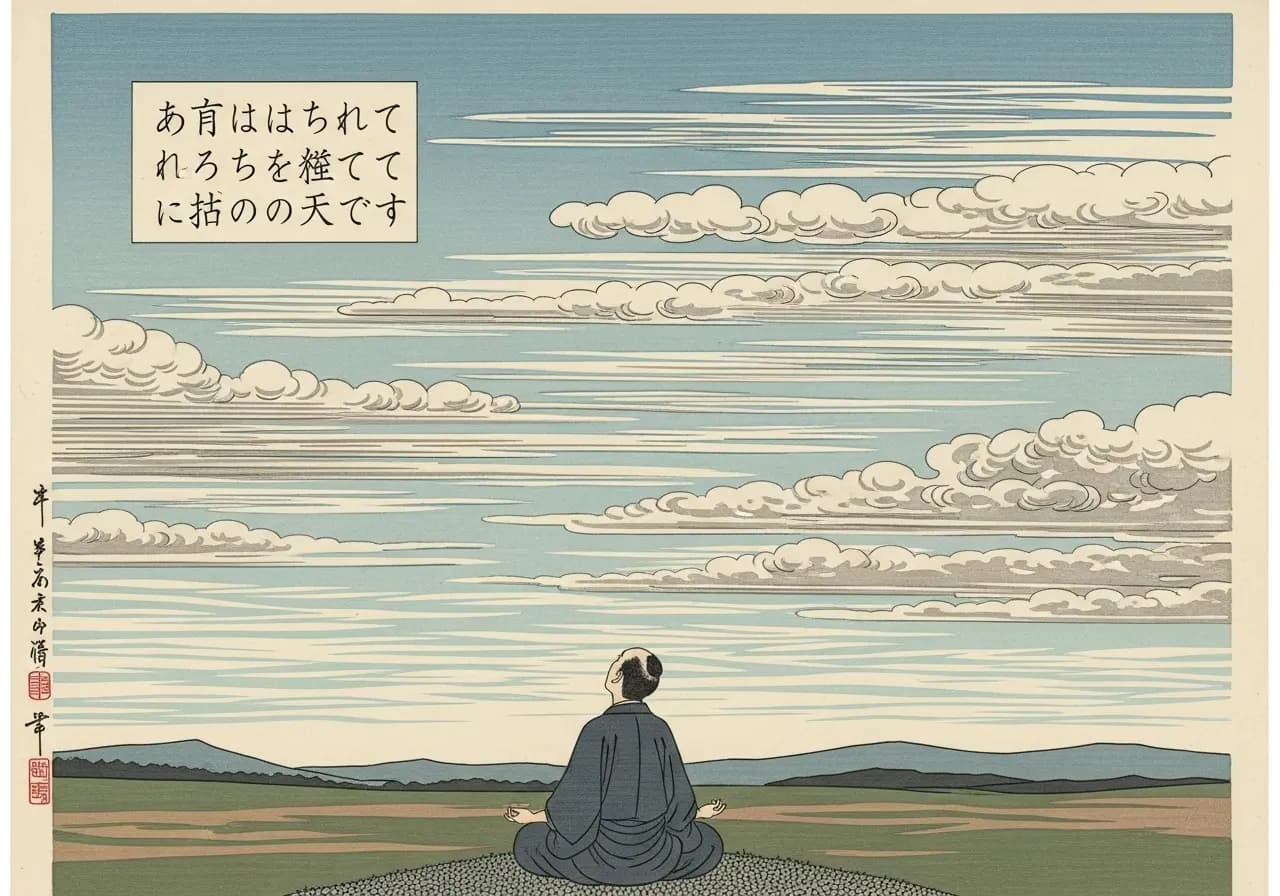
Imagine yourself lying under the open sky, observing clouds as they pass by. Some clouds are light and wispy, while others are dark, heavy, and imposing. These ever-shifting forms that we see in the sky mirror our ever-changing emotional states—moments of joy, pangs of sadness, bursts of anger, and flutters of excitement.
While picturing yourself in this meditation looking at the sky, bear in mind the wisdom of Pema Chödrön when she says, "You are the sky. Everything else, it's just the weather."
Like these clouds, our emotions can sometimes cast looming shadows, or they can be brief moments of brightness. But armed with our mantra—I let them come and I let them go—we anchor ourselves to the truth of their impermanence. They might linger for a while, but eventually they drift on like clouds, leaving us with the vastness of our inner sky.
This understanding is at the heart of emotional agility. Like the sky remains undisturbed by the ever-changing weather, through emotional agility we too can navigate our emotional storms with greater equanimity and calm. Just as we adapt our actions according to the weather, moving effortlessly through our emotional states without being anchored to any singular emotion offers us a more centered and balanced way of life.
Let's explore the transformative power of this agility in our everyday life.
Understanding Agility
Agility, by its nature, is our innate ability to respond swiftly and efficiently to the unpredictability and intricacies of life—the nimbleness to adapt and stay resilient amidst ever-shifting circumstances.
When rain clouds gather, I can instinctively reach for my umbrella. As they disperse, revealing a bright sun, I might shield my eyes by reaching for sunglasses. These responses are, in a way, a form of agility in the face of ever-changing external conditions.
Emotional agility mirrors this same adaptability. It's our capacity to recognize and label an emotion, and then act skillfully while anchored in the understanding that emotions, like clouds, come and go.
Emotions shape the atmosphere of our minds, influencing our decisions, our actions, and our words. But how do we cultivate emotional agility, and why does it matter? I'm going to talk about that for the rest of this episode.
Climate versus Weather: A Nuance
I do want to share a quick note—a thought that came from the discussion we had about this topic in our community Zoom call. It addresses something important: if we equate emotions like we do weather, where the sky is the container for all weather phenomena and allows it as a witness to what's taking place, what about more long-lasting emotions like grief?
When we compare this to the notion that the mind is like the sky and all the emotional weather patterns that take place in it are impermanent and come and go, the distinction that emerged was between climate and weather.
It may be that the climate of a certain region is predominantly a certain way. Take England, for example, known for its gray and cloudy weather, compared to somewhere like Cancun, Mexico, known for its sunny and bright climate. The idea here is that certain regions do have certain climates, and yet it's still not truly permanent.
In the UK, you may have your six days of sunny, bright weather. With our emotional weather, comparing this as an example, it's possible that the life circumstances you've lived or your genetic predispositions could give rise to a particular climate that tends to be more predominant for you. Some people are naturally more optimistic and cheery, while others may be naturally more pessimistic and gloomy. But by the same token of this analogy, it's still impermanent because it's not all the time—and yet you can carry certain climates with you.
This is important to understand when we talk about grief or other long-lasting emotions: the goal of this topic and this conversation is not to alter the weather. That's not our goal—we can't do that anyway. But how do we act skillfully with the weather? That's the name of the game here.
The Buddhist Perspective on Emotional Mastery
Buddhism places great emphasis on the idea of mastering the mind, and emotions play a significant role in this endeavor. Emotional agility from a Buddhist perspective refers to the cultivation of mindfulness toward our emotions, understanding their impermanence, and not being too attached to or repelled by them.
Consider for a moment the parable of the two arrows. This comes from the Salatha Sutta, where the Buddha describes a man struck by an arrow, naturally writhing in pain. Moments later, another arrow strikes him in the exact same spot. This second infliction of pain is no longer just physical—it's coupled with a surge of emotional despair.
The Buddha's interpretation of this story sheds light on the human experience. That first arrow symbolizes the unavoidable hardships we face, whether that be loss, illness, or simply the mere act of aging. The second arrow symbolizes our emotional reactions to these events—anger, resentment, sadness, sorrow.
While the first arrow's strike is often beyond our control, with mindfulness and insight we can temper the sting of the second arrow, or avoid it altogether. We can ensure that our emotional responses don't amplify the suffering we're experiencing from the strike of the first arrow. In essence, this ancient wisdom is a testament to the idea of emotional agility.
Emotions, like unpredictable weather, are a natural part of our existence. Yet our reactions—our second arrows—are what we hold the power to shape and influence.
Consider the teachings of the Buddha in another discourse, the Satipatthana Sutta, where he spoke of the contemplation of feelings, teaching us to recognize and understand feelings without becoming entangled with them. This echoes the understanding that our minds can be silent observers of the emotional storms that brew within them, in the same way that the vast sky remains untouched, merely witnessing the ever-changing weather that unfolds within it.
Emotions like storms may sweep through, but we have the ability to observe without being entangled or defined by them.
The Dance with Your Emotions
In contemporary terms, you can think of this through the lens of emotional agility as a dance with your emotions, where the goal is to move in harmony with their rhythm without losing your balance.
This is a concept I talk about a lot while I teach paragliding. When you're learning to paraglide, the very first skill you have to develop is how to kite the wing. We call it "kiting the wing," where you inflate the wing into the wind and learn to manipulate that wing. I always tell my students who are learning to kite that it's a dance—not a fight, not a wrestling match.
And I emphasize this: if you think of it as a wrestling match or as a fight, you'll never win. We are no match for the wind—the strength of the wind coupled with a big wing. If you try to fight it, you can't.
The strategy here is you're learning to control, to some degree, this piece of fabric that's flying in the wind. You can't control the wind or its direction or the intensity of it, but you can learn to manipulate this piece of fabric to dance in the wind. And if you do it just right, it will actually pick you up and take you for a flight. It's a really neat thing, but it really is a lot more like a dance than it is a fight.
I think this same principle applies to the relationship we have with our emotions.
Emotional agility can be likened to finding oneself in a sudden, unexpected downpour. Just as you can't stop the rain or modify the intensity of the rain that's falling, you can't always control the onset of powerful emotions. But in both of these scenarios, you do have choices.
Whether it's deciding to go out and dance in the rain, deciding to seek shelter, or grabbing an umbrella—whatever response you choose, how you choose to weather that storm is a reflection of the relationship you have with the weather and your understanding of whatever circumstances you're in.
If you're on your way to work, you're more likely to get under an umbrella so you don't get wet. If you're done with work and have been playing outside, maybe that's when you'll feel like dancing in the rain. So again, the idea here is that there isn't a correct answer, but there are a variety of choices we can take when it comes to how we encounter the weather—or in this case, how we encounter whatever emotion we're experiencing.
Emotional agility is the art of recognizing, understanding, and skillfully navigating through our emotions and the emotions that others are experiencing. It's about cultivating awareness, embracing the complexity of our emotional landscape, and then choosing responses that are both measured and constructive—or as we often say, skillful rather than unskillful.
The Science Behind It
Dr. Susan David, a psychologist at Harvard, has extensively studied emotional agility. Her research indicates that individuals with higher emotional agility tend to have reduced levels of stress, increased resilience, and greater overall well-being.
At the crossroads of Buddhist wisdom and modern psychology lies a profound insight. Buddhism emphasizes non-attachment and the practice of observing our emotions in the same way that we would observe the sky, so that we can notice the impermanent nature of our emotions. Contemporary psychology, on the other hand, emphasizes understanding and integrating our emotions.
For me, it's similar to the difference between looking at the sky to have an understanding of the nature of the sky—recognizing that clouds are impermanent—versus becoming a skilled weather observer where you can notice the different types of clouds, start to predict the upcoming weather based on what you are observing, and become not only prepared but also able to adapt and act skillfully, anticipating what's likely to come in terms of weather.
Both of these approaches converge on a simple yet profound understanding: we don't need to be mere puppets to our emotions. We don't have to allow our emotions to be the stimulus that regulates what we say and do or how we're going to respond. Instead, we can use our emotions as tools to better understand ourselves.
Three Practical Tips
Let me expand on that with three practical tips for working more skillfully with our emotions.
Tip One: Cultivate Selective Attention
The first tip is to cultivate selective attention. That means essentially learning to pay attention.
Consider the phenomenon that we know of as selective attention, which is tied closely to the RAS system in the brain—the reticular activating system—which filters and prioritizes sensory information.
Here's how it works. Picture this scenario: on an average day, if you were to be asked, "How many red cars did you see today?" you probably wouldn't be able to answer that question accurately. You might say, "Yeah, I'm pretty sure I saw a red car," but you're not going to be able to give an exact number.
But if you were told the day before that you were going to be rewarded for every red car you noticed that day—let's say you were going to be given $100—well, suddenly you would become highly aware of red cars. And it's not because there are suddenly more red cars or they're easier to notice. It's simply because your attention has become sharpened. You now have selective attention to the thing that you're looking for. At the end of the day, it's very likely you're going to be able to give an accurate number of how many red cars you saw.
Similarly, by being mindful and attuned to our emotions, we can recognize the subtleties and patterns of the emotions we experience—if and only if we cultivate selective attention and set the intent to pay attention to these things. This empowers us to respond with greater understanding and greater intentionality about how we want to act when we're experiencing certain emotions.
The key to emotional agility lies in this ability to discern—to recognize, actively notice, and understand what emotion am I experiencing right now. Then we'll be able to skillfully navigate that landscape. But first we have to pay attention. We have to notice.
Tip Two: Embrace the Pause
Which leads us to the second tip: embrace the pause.
When strong emotions start to consume you, take a moment to pause. Acknowledge in that moment what it is you're experiencing, and then try to correctly identify the emotion you're experiencing. Our initial reactions can often be misleading because they stem from unexamined emotions.
A strong emotion will cause you to go into reactivity mode, and you may not pay close enough attention to that emotion to recognize what it really is or why it's really there.
In the words of C.S. Lewis, this is expressed beautifully in his quote: "I sat with my anger long enough until she told me her real name was Grief."
I love the visual of that. Anger is such a strong emotion that we experience, and we don't want to let it sit with us very long, so we don't get to look at it closely. The realization that anger's real name might be something else—in this case, grief—requires the ability to pause and allow time for emotions to reveal their true nature.
So that's the concept of the second tip: embrace that pause and give time to the emotional experience you're having.
Tip Three: View Emotions as Informative Messengers
This leads us to the third tip: view emotions as informative messengers rather than commanding directors.
After taking a moment to pause, you can delve deeper and look closer. What message does this emotion convey? What is this emotion trying to tell me? Remember, emotions offer insights rather than commands. They indicate underlying feelings or needs without necessarily prescribing specific actions.
We tend to think, "I'm feeling this emotion, therefore I must act this way or say this." But that's not the role of the emotion. You're experiencing the emotion because the causes and conditions of that emotion arose. There's a message there. That emotion is trying to convey, perhaps, a need.
Fear, for example, conveys information that the circumstances you're in might be dangerous. So experiencing anger doesn't mean you have to immediately punch the wall. But experiencing anger, if we look at it like this, could be a clue—a clue that's trying to tell you something. You can ask, "What is this emotion really trying to say?"
By recognizing the messages within the emotions we experience, we can gain insight and make more informed and deliberate decisions.
A Personal Story
I know for me personally, there was a period in my life when I felt intense anger and resentment toward someone dear to me. And instead of reacting or suppressing the emotion, I eventually learned to turn inward.
I will say that was after a significant period of time, because at first my instinct with anger was to do everything I could to get rid of it. I didn't want to feel angry. I had been brought up to think that I'm not supposed to be angry, that I'm supposed to forgive, let things go, or turn the other cheek. And I didn't realize that in the process of trying to eliminate this very natural, normal emotion, I was only putting fuel to the fire. It was increasing the intensity of the emotion that I didn't want to be feeling.
So once I learned to turn inward—through this concept of looking at emotions as messengers and as welcome guests—through deep reflection I started to realize that the anger was very much a surface emotion. Beneath it there were a whole bunch of other feelings: pain, a sense of shame, a sense of betrayal. These underlying emotions were the ones that needed attention. It wasn't anger that needed the attention. That was the messenger.
But it was these hidden emotions that I didn't immediately recognize because I wasn't willing to sit and spend time with anger long enough to see these other emotions. This realization had a profound impact on my life. It enabled me not only to heal from that whole process, but to grow and to be stronger—embracing that concept of antifragility that I talked about in the last podcast episode.
By recognizing the true emotional landscape that I was dealing with, I was able to interact with circumstances in a more effective and constructive manner. And that's what we're trying to do with this notion of navigating with agility the emotions that we might be experiencing.
A Challenge for You
So for you, consider the last time you experienced a strong emotion. How did you respond? With the understanding of this concept of emotional agility, you could ask yourself, "What could I have done differently? Could I have handled it in a more skillful way?"
Or you could ask yourself, "If you're currently grappling with a strong emotion, how can emotional agility empower you to navigate this experience more effectively?"
Bringing It All Together
In this episode, we've talked about the concept of emotional agility and embraced the wisdom that you are the sky, and everything else is just the weather. We talked about the parable of the two arrows, understanding that while the first arrow of life's changes may be inevitable, it's that second arrow—our emotional response—that is something we can work with. We can temper the pain of that second arrow through mindfulness.
And we talked about three powerful tips for how to deal with emotions. First, we practice cultivating selective attention so we can pay attention and know what it is we're dealing with. Second, we embrace the power of that pause, where the pause allows us to look at things a little bit closer, to be more introspective. And third, we view emotions as informative messengers rather than commanding directors.
With all this, we can remember that this notion of learning to master our mind is an ongoing journey. It's a process, but with these tools of mindfulness and introspection, we can at least start to navigate that journey a little bit more skillfully.
I invite you to a challenge. Next time you're feeling overwhelmed by a strong emotion, give yourself the gift of a pause. Say to yourself, "I let them come and I let them go"—whatever those emotional experiences are that you're having. Then lean into the emotion without resisting it and gently ask it, "What are you really trying to tell me?"
I hope you'll do this and that you'll experience the transformative power of seeing emotions through this new lens.
Thank you for listening, and I look forward to talking with you again next time.
For more about the Secular Buddhism Podcast and Noah Rasheta's work, visit SecularBuddhism.com