

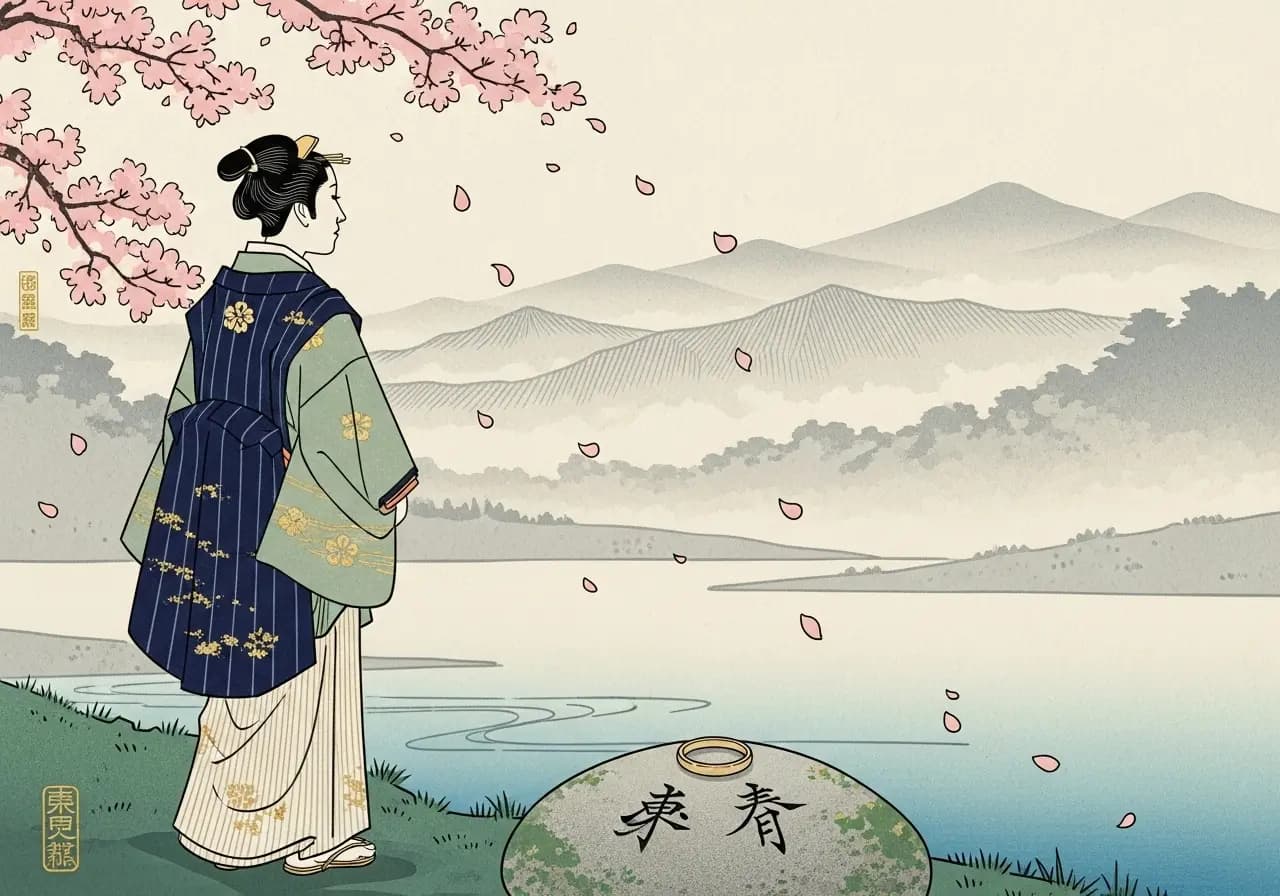
Freedom From The Pursuit of Happiness
Episode 18 of the Secular Buddhism Podcast
Hello. You are listening to the Secular Buddhism podcast, and this is episode number 18. I'm your host, Noah Rasheta, and today I'm talking about the pursuit of happiness. Or maybe more specifically, liberation from the pursuit of happiness.
Welcome
If you're a first-time listener, welcome to the podcast. If you're a repeat listener, welcome back. The Secular Buddhism Podcast is a weekly podcast that focuses on Buddhist philosophical concepts and teachings presented for the secular-minded audience.
Every episode I like to remind my listeners of a quote by the Dalai Lama, where he says, "Do not try to use what you learn from Buddhism to be a Buddhist. Use it to be a better whatever you already are."
If you enjoy this podcast, please feel free to share it with others, write a review, or give it a rating on iTunes. Now let's jump into this week's topic.
Why We Chase After Happiness
Why do we chase after happiness? I think the short answer is: it feels good to be happy, and it doesn't feel good when we're not happy. It doesn't feel good when we're angry or sad for too long. And it does feel good to be happy, to experience joy. So we end up in this position where we decide, "I want more of that good stuff—happiness—and I want less of that bad stuff: sadness or anger." And then we get caught up in the pursuit of happiness. We're continuously chasing after the things that make us happy, and continuously avoiding the things that won't make us happy. That's the topic I want to discuss today.
A Frustrating Journey to Meditation
This has been on my mind for about a week now. Last Sunday, I was heading down to a meditation session in the morning, about an hour away from where I live. On my way there, I had punched the address into the GPS on my phone, and I left with enough time to make sure I could be there early—because I don't like being late.
So on my way down, I'm keeping track of the time, thinking, "This is great, I'm going to be there right on time." As I pulled up to the location, I knew this couldn't possibly be the right place. I was in a residential area, pulling up to a house. I knew the group that I was going to visit met at a yoga studio. So I thought, "Well, this can't be it."
Sure enough, after checking, it looked like Google had messed up. I was a bit sad, but not too concerned, because like I said, I had left early. So I thought, "Well, maybe I should punch in the address using Apple Maps instead of Google Maps"—which I rarely use because usually Apple Maps leads me astray.
So I punched in the same address into Apple Maps, and it said I was ten minutes away from the right location. I sped off to the new location following Apple Maps' directions, and as I pulled up ten minutes later, I thought, "Uh! This still doesn't seem right," because it was a big empty field. At that point I didn't even question it, because I've been wrong many times with Apple Maps. I thought, "Well, somehow this address just doesn't work on either system."
So I Googled the name of the studio that I knew they were meeting at—it was a yoga studio. I punched in the name instead of the address into Google, and that worked. It pulled up the name and on the map it showed that I was ten minutes away. So I sped off, realizing at this point, "Now I'm going to be ten minutes late." Because by then it was starting time, and the map said I was ten minutes away.
I raced off, and I started feeling frustrated because I really don't like showing up late to places. Especially imagine a big meditation room where everyone's already started, and it's all quiet, and then I come walking in late. That interrupts everything. So I really didn't want to do that, but I had already driven an hour to get there, so I wasn't just going to give up and go home.
So I started following the new directions on Google Maps, and as I'm pulling into the new parking lot ten minutes later, I realize, "This possibly can't be the location." Because I had been there before—that was the old address. I knew that about a month or so ago, they had switched to a new address. So I thought, "Why did it take me to the old address? Maybe they didn't update the right address on their website."
So I get on my phone and I start doing a little more research and find out there are actually two locations for this specific yoga studio. After checking on Google Maps again, I realized, "Oh! It did pull up to the right one. I just happened to pick the first one, which was the wrong one. The second one is the right location, and the address on that listing matches the one that I was initially searching for."
So I punched that one into my GPS, and it says I'm ten minutes away. At this point I'm frustrated because now I'm going to be twenty minutes late by the time I show up—and that's assuming it takes me to the right place.
So I start heading in this new direction following my GPS, and I had ten minutes to burn while driving. While I'm doing this, I decided to try to practice mindfulness. I thought, "Okay, I can tell that I'm upset. I'm frustrated that I'm going to be late. Let me work with that. I've got ten minutes to go. I'm just going to think about this: what is it that makes me upset about being late?"
And it was fun—almost comical—to realize the irony of the situation. I had started out my day thinking, "I want peace and calm, so I'm going to drive down and meditate, so I can start out with a nice, peaceful, calm day." And that ended up being the very source of my frustration: the fact that I couldn't get to where I was trying to go to get my peace.
I found that comical. I was thinking, "If I didn't want peace this morning, I could have just stayed home and I'd be content and happy at home. But instead, I wanted peace, so here I am—frustrated that I can't have it because I can't get there on time, and I can't even find the place."
Just the irony of the situation had me laughing.
So I finally pull up to what should be the right location. At this point, I'm twenty minutes late, and I look at the parking lot and think, "Okay, this looks like the right place." And I look across the street and what do I see? The abandoned field—the empty field that Apple had taken me to the second time I was trying to find the address.
At that point, I just started laughing out loud, thinking, "Uh! The irony of this thing is just too much." Here I was at the right place, at the right time, but I didn't see it because I was on the wrong side of the road, and I just assumed, "I must be at the wrong place," so I continued my wild chase to the right place, which only brought me back to where I was initially.
At this point, it was all comical to me. If I was late to some meeting, maybe I wouldn't have made too much of it. But the fact that I was going to meditate to start my day out with some peace and calm—that's what made this almost too funny.
So I showed up, walked in late, and it was fine. I didn't think much of it. And I'm glad I went even though I was late because it was a wonderful experience, and it accomplished what I was hoping for. It was a very uplifting day after that.
The Irony of the Pursuit
The funny thing is, for days since this happened—and this was last Sunday—all week I've just been thinking of the irony of the situation. How in life we do the same thing: it's the thing that we want that becomes the very reason we suffer.
We want something and we can't have it, so we suffer. And then if you're lucky and you find a spiritual path, so to speak—like Buddhism, for example—it says, "Okay, the problem is in wanting. Okay, then I want to not want." And now the fact that I want to not want, and I can't not want, makes me frustrated. Because now I want the thing I can't have, which is to not want. But I want to not want. So it's the irony of the whole situation. It's comical.
And that's the nature of reality. The fact that we chase after happiness is what guarantees that we're never going to be happy. Because we have a misunderstanding of what happiness actually is. We treat happiness like it's a permanent thing. And if I can find it, then I'm done. I'm solid. For the rest of my life, I'll just be happy.
It entails not just being happy, but avoiding suffering. I'm not just going to be sad. I'm not going to be angry anymore. I'm just going to be this peaceful, zen-like person who's only blissed-out. And the harder you chase after that, the more suffering you'll experience. Because that's not a scenario that's real. That's not real life.
The Ring That Inscribes "This Too Will Pass"
This reminds me of a story I want to share with you. This story is told in several circles among Sufi poets, and the main one is Attar of Nishapur. I think I've shared this before. He talks about a fable in which a powerful king assembles all his wise men to create a ring that will make him happy when he's sad.
So he's going through this period in his life where he's sad. He doesn't want to be sad—nobody does, right? He wants to be happy. So he tells his wise men, "Come up with something that's going to make me happy."
After deliberations, the wise men get together and they come up with a ring. They hand it to him, and the ring has the inscription: "This too will pass." And it has the desired effect. He realizes, "Ah! The sadness I'm experiencing is impermanent. This is wonderful!" The understanding that it's impermanent is enough to get him to start being happy, because sadness is not a permanent thing.
But then he looks at the ring and realizes this message is also cursed. Because now whenever he's happy, he's reminded that the happiness is impermanent and it's going to pass.
And that's where the expression "This too shall pass" comes from—this story. I think this story has a profound teaching in it. It's the understanding that emotions, like all things in life, are impermanent. So to chase after happiness, to pursue happiness, is like pursuing your shadow. You can chase it your whole life, but it's something that isn't a permanent thing. It's not a thing that you catch. It's not a thing that you can grasp.
Happiness as an Impermanent Emotion
Happiness is very similar to other emotions—sadness, anger, fear. These are emotions that arise, they linger, and then they disappear. They're in a constant state of changing because that's the nature of emotions. We happen to fixate on happiness because it's the one we like. We like how we feel when we're happy. We realize we don't typically like how we feel when we're sad or when we're mad. So we latch onto the concept of happiness and chase it like we would our shadow.
And then there we are, spending our whole lives chasing after something that is never meant to be a permanent thing. It's never meant to be something that you can actually get and then—boom!—there you go, now you're happy. You'll never experience other emotions again. Because they're fleeting. They're impermanent.
So if we can understand the nature of happiness as something impermanent, then we have a new sense of freedom.
One way to think about this is like we would think about the shadow. When the conditions are right, the shadow appears. And when the conditions are not right—when there's no source of light, no object to cast a shadow—then there is no shadow. So when the conditions are right, happiness is there. We experience happiness under the right conditions. And when those conditions are not there, we don't experience happiness.
When the conditions are right, we experience anger. When the conditions are right, we experience sadness. That's the nature of human emotions.
So what's powerful in this is realizing: "Okay, the point isn't to obtain happiness and avoid sadness, or avoid anger, or avoid all the other emotions." What we'll learn, and what we'll see as a wise way of approaching this experience of life, is to think: "Okay, all of these are natural, normal emotions. At some point I'll feel one, and at some point I'll feel another, and they're all impermanent."
Imagine you have that ring with the message etched on it: "This too will pass." Next time you're experiencing an emotion—whether it's a positive emotion or a negative emotion—remind yourself that this too will pass. Then we don't have to cling so tightly to these emotions. They're just impermanent emotions. It's the nature of being human that we're going to experience the full range of emotions that humans experience. And not one of these is a permanent emotion. You can't catch it and say, "Okay, that's it. From here on out, I will only experience this one."
So much of our suffering comes from the misunderstanding of the impermanence of our emotions.
The Trap of Rejecting Negative Emotions
When we're experiencing anger, for example, we can get angry at the fact that we're angry. Because now we're caught up in this conceptual idea: "Anger is bad. I'm not supposed to be angry. I'm just supposed to be happy or grateful."
I speak from experience on this. I used to genuinely believe that there is no legitimate reason to ever be ungrateful, or to be angry, or to be sad. In my mind, it was always compared to, "Well, think of so-and-so who has it so much worse. Or think of the starving kids in Africa, or some scenario like that."
I'm not saying that we shouldn't compare at all. But what I'm saying is everyone's circumstances are unique. So it's unfair for me to say, "I lost my job," but I shouldn't be mad because somewhere else someone is starving. There may be some truth to that from a perspective sense, but the natural way human emotions work, they don't operate that way.
Everyone wouldn't never experience any emotion if they could just simply compare themselves to someone else. It may help a little bit, but you're still going to experience emotions.
The point here is: no matter what type of life you have, you're still going to experience the full range of human emotions. This is why you have people in third-world countries who live in poverty who can be happy. And you have someone living in a first-world country who has fame and power and wealth, and they can be unhappy. They can be experiencing suffering and anguish.
Because that's the natural way of being human. It doesn't matter what your circumstances are—you're going to experience the full range of emotions no matter what.
The Baseline of Needs
So what's the freedom in this? Well, Buddhism is often referred to as the path of liberation. So if we're applying that thinking to the concepts of human emotions, what is the sense of liberation that we get? Well, it's actually a pretty incredible one: when you don't have to be happy, now you're free to be content.
It's like the expression: "Now that I don't have to be perfect, I can be good." Well, this is similar: now that I don't have to chase after happiness as if that's the only emotion that counts, I can just be content with whatever emotion I'm experiencing. And when I'm experiencing it, I can just be with it.
For example, anger. When I'm angry, I can understand that anger is natural and it's okay. I can't get rid of anger—and that's okay. You can't get rid of sadness—and that's okay. You just learn to be with it while it's there, with the understanding that this too shall pass. These emotions are all impermanent. When the conditions are right, they appear. And when the conditions are not met, these emotions aren't there, and that's it.
I do want to be clear and specify that there is a baseline. There's a baseline where once your basic human needs are met, beyond that there is no change. Money, power, fame—none of it is going to guarantee more happiness. But if you're under the baseline, then yes. If you don't have proper shelter, you don't have love, or your basic human needs aren't met, then yeah, those need to be met first to have that baseline of happiness.
But you'll be shocked at how low that baseline is. This is why, like I mentioned before, there are people in third-world countries who live very happy lives, while you have people in first-world countries who have so much more, who live very unhappy lives. Because none of these things we typically associate with happiness guarantee happiness. Because happiness is just an emotion. When the conditions are there, we experience it. And when they're not there, we don't.
Money is no guarantee of it. Fame is no guarantee. Power is no guarantee. We tend to chase after those three specifically because somehow we live in a delusional society that thinks those three things will have bearing and weight on how happy we are, and how we can minimize our suffering. And it's just not true. You can look at any study and you'll find that it's simply not true.
The Zen Teaching About Being on the Other Side
This reminds me of a Zen teaching that I once heard, and I really enjoyed it. It's about the journey. The idea of the story is that there's a man who's on a journey trying to get from here to there. On the other side of the river happens to be where he wants to go. As he's traveling and comes up to the river, he realizes, "To leave here and get there, I have got to get across this river."
He can't find a suitable place to cross because it's dangerous. So he starts walking along the edge of the river looking for the right place to cross. This goes on for however long—hours—looking for the right place to cross.
At one point he reaches a place where he can see someone on the other side. It happens to be a monk. He sees this monk sitting on the other side of the river, and he finally yells out to him and says, "Excuse me, excuse me!" The monk looks up and looks at him. The man says, "Can you please tell me how to get to the other side?"
The monk kind of looks at him bewildered, looks up and down the river, and then finally yells back, "You are on the other side."
And that's the story. That's the whole story. And I love this story. It makes me laugh when I hear it because he's asking, "How do I get to the other side?" But from the perspective of the monk, he says, "You are on the other side."
And this is the nature of reality when it comes to perspective. Wherever you are, for you is here. For someone else, it's there. Now there is no here and there other than based on perspective. Where I am is where I am. Where you are is just where you are.
With emotions it's the same. When I'm happy, I'm happy. When I'm mad, I'm mad. When I'm sad, I'm sad. There's no need to fight off a specific emotion as if I could guarantee that there's something that will ensure I never experience that again. You can't do that.
The Reality of Chasing Happiness
You can see this in real life by observing people who chase after happiness, who are caught up in the pursuit of it. Their thinking often has to do with money. "When I can finally get enough money, then I can be happy." And they chase after this their whole lives. Some of them do reach the point where they finally get a lot of money. And the first thing you'll notice is that they're no different than anyone else—they just happen to have more money.
Happiness-wise, they still have a set of difficulties that arise in life because that's the nature of life: difficulties arise. There's no guarantee against them.
So we get caught in this cycle. Why do we chase after happiness? Well, another answer is: it's just our human nature. It's our human nature to experience something pleasant and say, "I want more of that." To experience something unpleasant and say, "Uh! I don't want to experience more of that." And then we start chasing after those two things—chasing the things that are pleasant and avoiding the things that are unpleasant.
And that's natural. But the misguided understanding of that is that either one of those is permanent. There's no guarantee of any formula that's going to say, "That's it. Now you won't experience suffering."
You can work hard your whole life building up money, wealth, and power. You finally get it. You think life is good. And then your loved one dies in a car accident, and now you experience suffering. Or you get sick and now you're thinking, "I will give all the money I have to find a cure for this," but there is no cure for it. Now you're experiencing suffering just like anyone else.
Because the nature of reality is that difficulties arise, right? This is the First Noble Truth taught in Buddhism: in life there is suffering. In life difficulties will arise.
Freedom From the Pursuit
So when we understand this, we become free. We become free from the chase of pursuing happiness. Happiness, you can think of it, is part of the overall journey. So there can be happiness in the pursuit, but what is it you're pursuing? What is there even to pursue?
If you understand the nature of interdependence and the nature of impermanence—especially when applied to human emotions—then you're free to just experience living. There's not a specific point other than the point being to live. So you get to just enjoy things for the sake of enjoying them.
This is the way I tend to live, the lifestyle that I have. I like to chase after experiences for the sake of the experiences. I enjoy adventurous stuff. I love flying—I fly with a paramotor and paragliding. I love traveling. I love taking pictures and capturing my experiences. I would have to say that at one point, initially, I was chasing after happiness. I thought the answer to happiness was doing this and avoiding that.
Over the years, that's evolved. Because I found that no matter what I do, I still get anxious when the time of the month to pay bills comes around. I still get stressed when I'm thinking of a specific deal that fell through at work. None of that has ever changed. But somehow in the middle of all of it, I'm still content. I'm enjoying the experience of being alive.
And that doesn't just mean the good experiences. That also includes the bad ones—or what we would perceive as bad.
After a particularly stressful day or a specific stressful event that happens at work, I often find myself thinking, "I'm glad I've experienced that, because when someone else is going through that, now I know what that's like. I've been through that." And it makes me grateful for the experience that caused pain—tremendous pain in life. To think, "I know what that's like because I've been there" allows me to have more compassion and kindness for others.
Because I get to experience everything—I want to experience everything. I want to know what it's like to hurt. I want to know what it's like to be sad. I want to know what it's like to be blissful and happy. Fortunately, I have experienced a broad range of these emotions. And even more fortunately for me now, I understand that they're all impermanent.
The Freedom of Not Pursuing
I feel what is expressed in the parable: "This too shall pass. This too will pass." It's been a fantastic way of looking at life and understanding my personal pursuit of happiness. It's no longer something I pursue, at least not in the sense of thinking I can actually catch it. Now it's something I can have fun with.
When you understand that it's impermanent and that the nature of life is to experience all of it, you can have fun with it. When I'm experiencing happiness, I love thinking, "Oh! Right now the conditions are there. I'm experiencing happiness. This is great." All the while knowing this is impermanent. Enjoy it because it is impermanent.
And then the same thing happens when I'm sad or when I'm angry. I'm just with it. I'm not trying to change it because I know it is impermanent. When the conditions go away, the emotion also goes away.
And that's the beauty of just living life in a way where you're detached from the pursuit. I'm just enjoying it as I go because I don't need to cling to the delusion that it's actually something I can have. That happiness is something I can obtain, I can pursue it, I can catch it, put it in a cage, and it's mine—that's a delusion. I would be better off chasing my shadow for the rest of my life.
Closing Thoughts
So that's the topic I wanted to share in this podcast: the concept of why do we chase after happiness and the pursuit of happiness. I want to hopefully give a sense of liberation. Now you're free to no longer pursue happiness, because happiness is just something that will be there.
When it's there, it's there. When it's not, it's not.
Try to think of happiness like you would any other emotion. We don't particularly chase after anger or chase after sadness. And yet no matter what you do, you're going to experience those as well. So freedom from the pursuit of happiness is knowing that now that you don't have to be happy, you can be content.
Now that you don't have to chase after happiness, you can just enjoy life with a content attitude—even when you're experiencing positive emotions or negative emotions.
So that's what I wanted to share with you guys. I look forward to another topic next week, and I hope you guys have a wonderful week. So take care, and until next time.
For more about the Secular Buddhism podcast and Noah Rasheta's work, visit SecularBuddhism.com