

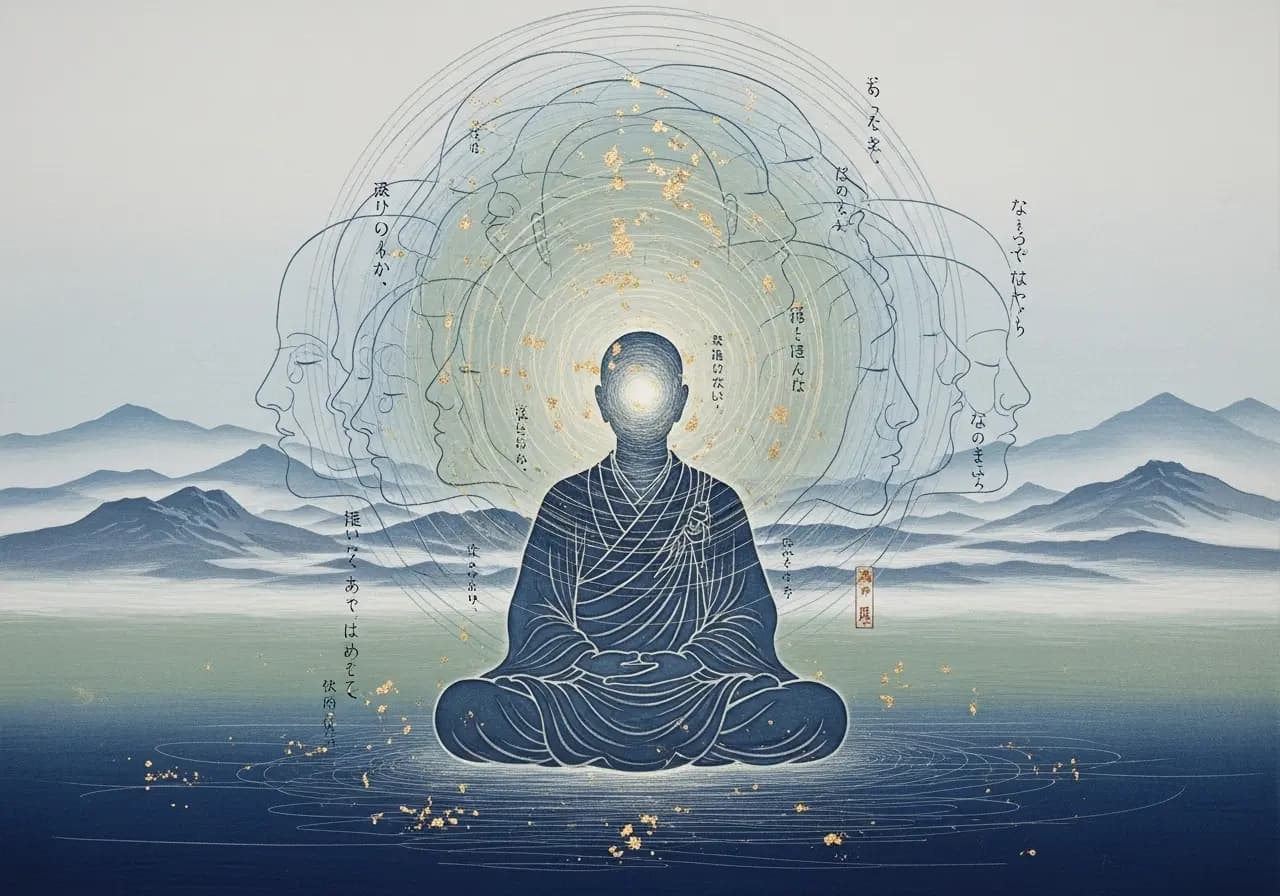
Sticks and Stones
Episode 163 of the Secular Buddhism Podcast
Hello and welcome to another episode of the Secular Buddhism Podcast. This is episode number 163. I'm your host, Noah Rasheta, and today I'm going to talk about sticks and stones, words, and the meaning we give to words.
As always, keep in mind: you don't need to use what you learned from Buddhism to be a Buddhist. You can use what you learned to simply be a better whatever you already are.
If you're interested in learning more about Buddhism, check out my book, No Nonsense Buddhism for Beginners, available on Amazon, or listen to the first five episodes of this podcast. You can find those first five episodes easily by visiting SecularBuddhism.com and clicking on the "Start Here" link.
If you're looking for a community to practice with and interact with, consider becoming a patron by visiting SecularBuddhism.com and clicking the link to join our community.
Continuing the Conversation on Stories
In the last podcast episode, I talked about the games we play and their correlation with the Buddhist concept of right view, or skillful view. I want to continue building on this topic by going into perhaps one of the biggest games that we play: the game of telling stories.
Actually, let me back up. Perhaps it's not just telling stories—it's first creating stories. I think about the stories we inherit from our society: stories about what this is and what that is, what this means and what that means. Perhaps the most important story we'll hold to or attach to throughout our lives is the story we have about ourselves—the story we carefully craft, the one we try to ensure that others have of us.
These are complex layers of a story that's very meaningful to us. It affects the way we see things because we're constantly perceiving ourselves through the lens of the story we have of ourselves, comparing that to the story we perceive that others have of us. So many of our actions go into crafting this narrative to ensure that others perceive us the way we want them to perceive us.
And that's already two realities, right? The one that I have of myself, and the one I perceive you have of me. And then it gets more muddied and complicated because I also have a perception of how you perceive that I perceive myself. That's a third layer. This process goes on and on.
I wanted to talk about this in a Buddhist context, presenting the Buddhist thought behind an expression that so many of us Westerners know—at least in the United States. The expression is: "Sticks and stones may break my bones, but words shall never hurt me."
The History and Intent of the Expression
This expression seems to have first appeared in the early eighteen hundreds. It's an expression that seems to be intended as a way of building resilience against being called names. I grew up hearing this, and in our society, being called a name is something that's offensive.
Think about this: at least in Western culture, there was a time when you could feel insulted because somebody had insulted your honor or for almost any reason, and you could challenge them to a duel—literally challenge them to a fight to the death over an insult.
I think that sensitivity has lingered and can be seen even today in our culture. Think about how offended you get if somebody calls you a name or if somebody driving next to you shows you a certain finger. These are things we're quite sensitive to, and I think there's good reason for it. It's an inherited societal norm that's carried throughout the ages.
And I think a big part of why we feel such sensitivity is because we have a story about who we are and how we are, and why we do the things we do. Then somebody else comes along and presents an alternate reality—their interpretation of why you are the way you are, who you are, why you're doing what you do. That clashes with ours, so we get really sensitive about it because our reality is so real to us, it's so true. And theirs can't be. So I've got to defend mine.
At least I like to think of it that way. So I want to talk about two stories that fit well with this notion of name calling. Roughly twenty years into his teaching, the Buddha had two incidents take place around the same time. One I've talked about before in previous podcasts, and the other one I haven't. So let me start with the story I haven't talked about.
The Story of Sundari
This is the story of Sundari, a female ascetic who lived in the time of the Buddha and belonged to a different ascetic group. Remember, at this time the Buddha had his group, and his group was starting to grow. They were out there teaching their philosophy, their understanding of reality, their teachings about suffering. As the group was growing, there were still other groups in the area—other ascetic practitioners who had other ways of practicing the spiritual life.
So you had different ideologies. Now, some of these groups were seriously threatened by the presence of the Buddha and his growing group of monks and followers. And I think the reason is, like you see today, right? Anytime you have a group that espouses any form of thought, if another thought comes along and it's different than theirs, they feel threatened. Because, again, I think it's an inherited societal norm that says: if your way is right, my way can't be right. So now I'm offended that your way is being talked about because that says something about my way.
I think that's what was happening with this other group. They were jealous of the Buddha's group. They didn't like that he had favorability with the king and that he was respected and liked. It was a threat to them.
So they came up with a plan and recruited the help of this poor female ascetic, Sundari. Unfortunately for her, she didn't realize she was just being played as a pawn in the whole process. What they convinced her to do was infiltrate the Buddha's group, get to know him and the group, and look for any flaws or weaknesses they might be able to exploit and use as a way of saying: look, this group turns out to be this way or that way, and now everybody can disavow them.
The plan went into motion. Sundari infiltrated the Buddha's group and started practicing with them and getting to know them. Over time, this other group had a more sinister plan in mind. They took Sundari during one of these occasions when they were debriefing her from her experiences, and they actually killed her. They killed her and buried her somewhere near the monastery or the practice grounds of the Buddha's followers.
Then they went running to the village and to the king, saying: "Where's Sundari? We haven't seen her, but I'm sure you've all noticed she's been spending a lot of time with the Buddha and his group." Long story short, they placed the blame entirely on the Buddha and his group for killing her. Then, of course, they happened to discover her body, and now everybody was up in arms about this scandal and this murder.
So the blame was initially placed on the Buddha. This other group blamed him, the villagers didn't know what to think, the king didn't know what to think. But something happens right away in this process that's interesting to me: the followers of the Buddha were really concerned. "Oh, what are we gonna do? They're accusing us. They're accusing you." And the Buddha remains really calm.
I think it's interesting how he handles this. He asks people to remain calm, to endure what they're going through. And then he specifically says: "Those who lie and those who deny what they have done both suffer. When harsh words are spoken, endure with an unruffled mind."
This stands out to me because in the midst of being accused of such a heinous crime, he has nothing to defend. And I think on one level, he realizes what we always present him as—this person of tremendous compassion. Well, here's an example of that. In that moment, I think he feels compassion for both parties. Of course, compassion for the person who was played and killed, but also compassion for the people doing this. Because he realizes that ignorance and fear are the driving factors behind committing such a hurtful and unskillful act. He knows that with time and understanding, they will realize what they've done, and they will also suffer for it.
What It Means to Endure with an Unruffled Mind
So in his quote to endure with an unruffled mind, I want to talk about that a little bit. What does it mean to endure? It means to suffer something painful or something difficult patiently. And then what's meant by an unruffled mind? It's not disordered or disarranged. It's not agitated or disturbed. It's a calm mind.
I think skillful view—right view—which is what we discussed in the last podcast episode, is the key here. I like to imagine that the Buddha remained calm in light of these accusations, not because he was pretending to be calm, but perhaps because he was able to zoom out and see a much wider picture of what was taking place. He could see in that larger picture what was happening and feel a sense of kindness and compassion for the suffering he and his monks were patiently enduring. And he likely also knew that the accusers were suffering—or would be suffering—and would eventually be engulfed by that suffering. Which is actually exactly what ended up happening.
They ended up confessing to this crime because they realized something. The Buddha remained calm. He had nothing to defend. He kind of treated it like, "I'm gonna continue going about living my life, and through my actions, hopefully you'll all come to see that this is something I would never do." But he didn't have to immediately put up these defenses. He didn't have to challenge them to a duel. He didn't have to do anything like that because there's nothing to defend.
As a practitioner of the teachings he taught, I think the Buddha understood very well this notion of stories. The story you have of yourself—and one of those stories may be: "I am an honorable person who would never do anything wrong." So now if you present me as doing something wrong, I have to defend it. But I think you've realized that's a form of attachment. I don't need to attach to that story. I'm perfectly content knowing that I wouldn't do something like that.
This is where this whole concept takes a deeper and more profound layer of significance. Going back to the story, justice was had for Sundari. The king eventually took these others who confessed out of their deep sense of guilt and remorse, realizing what they'd done. And even through all of this, the Buddha never retaliated or said anything bad about any of them. They ended up confessing and paid the price for their own crimes.
I think that's a story that's stuck with me since I first heard it because one of my first thoughts was: what kind of person wouldn't defend themselves against an accusation like that? What kind of mindset would that take? And the more I've come to understand Buddhism, the more I think I've come to understand why that wasn't necessary for him.
The Practical Application: Why We Defend Our Stories
Now think about this in a different context. That's a pretty extreme context, right? An accusation of murder, somebody lost their life over this whole incident. Think of the more common things that happen to us where the same dynamics are in play.
For example, anytime you're gathered with friends or family and a discussion is being had, and you feel the need to interject to express something you know is accurate or correct compared to what others are saying in the conversation. This could apply to so many examples. You could be talking about a specific topic—who wrote a song, and you maybe know more of the story than others. And there's this need to correct if somebody says it wrong. "Well, actually, so-and-so wrote this song because of this or that." You know differently. So you feel a deep need right there to say: "No, actually..." and then you give your story.
This is one of those examples where you should question: why am I doing this? Is it to increase the effectiveness of what's being taught here or to correct something? Which I think would be fine and valid. But sometimes there's a deeper thing going on. Sometimes it's: I need to say this to make sure that they know I know more than them. If you're being honest, that's sometimes what motivates us to say things or do things.
And we know this is true because on a topic that may not be relevant—where it's completely unskillful to say whatever you need to say—you may still feel a deep need to say it. You know that if you say it, it doesn't contribute to the discussion. It doesn't help anything. But it does fuel a need you have to make sure you're perceived the way you want to be perceived. I think we've all experienced that. I know I have. I think we all do to some degree.
That's kind of what I'm hinting at in the story of the Buddha. He had nothing to defend because he knew the nature of himself and his stories. And he had, at this point in the story, already achieved enlightenment. I want to explore what that means real quick, because what does enlightenment mean?
What Does It Mean to Be "It"?
Well, there are two ways I've always heard it discussed that really resonate with me. One is from Alan Watts, who has a lecture series called You Are It. This correlates well with the interpretation that my teacher had about the story of the Buddha's enlightenment. He would describe it as the moment when the Buddha realized he was it.
So what does that mean? For the example of the Buddha attaining enlightenment, it's described sometimes as a moment of realization. When he realized he was it, meaning he was the source of all of it. He was the source of good thoughts and doing things that are benevolent and skillful, but he was also the source of unskillful acts and perhaps being blinded by ignorance or fear. But at the end of the day, it's him. There are no external agents that you can blame this on, like "the devil made me do it." That doesn't work in this mindset. It's him coming to a very real, very radical conclusion: the buck stops here. It's recognizing: it's me. All of this starts and stops with me. And taking complete ownership at that point.
One of the consequences of thinking this way—of feeling this way—is this: if you're it, then the ultimate source of contentment when it comes to defending your honor or your character resides in you. Meaning, if I am content with who I am, it no longer matters how you perceive me.
And again, in the example of the story of Sundari, you see this. They may think he's a murderer incapable of doing these heinous things. But that doesn't ruffle his mind because he knows he's it. If he is perfectly content and serene in the knowledge that he didn't do it and that he would never do that, then he can't be shaken.
I think a lot of times for us, we encounter little mini-episodes of stories kind of like this. We don't quite have that sense of peace because we're not it yet. We haven't reached that realization that we're it. We think that we're it because of how others perceive us, for example.
Another example of this is in being right and wrong. Why are we so deeply affected by others perceiving us as being wrong? It's because in our mind, our story is: I'm someone who's right. I don't want to be perceived as someone who's wrong. So if you think that I'm wrong, I need to tell you this—not because it's the right thing to do, and definitely not because I'm content with knowing that I'm right. It's because I want to feel a sense of contentment that arises when I know that you know that I'm right.
Well, that's the problem we wrestle with: these stories. And the Buddha didn't have that. He didn't have anything to defend because he had a really thorough understanding of his own story.
The Story of Angulimala
I think you can see this evidenced in another story that takes place around the same time, which I have talked about in the podcast. This is the story of Angulimala—the murderer who was chopping off people's fingers and making necklaces out of the fingers of his victims.
He comes into the picture and everybody is freaked out—rightfully so—about this crazy guy running around killing people. The Buddha's warned: "Don't be out there teaching. Don't be out there begging for food. Don't do the thing that you guys do, right? That monks do. Don't do that. It's dangerous right now."
But he goes about doing what he normally does because he's not worried about this. Well, sure enough, Angulimala encounters the Buddha. He starts chasing after him or asking him to stop. The Buddha continues walking, and Angulimala is shocked because the Buddha isn't afraid of him and doesn't stop. Finally, Angulimala yells out: "Stop! Stop! What are you doing? Why aren't you stopping when I tell you to stop?"
And here are those famous words by the Buddha where he says: "I stopped long ago. It's you that hasn't stopped."
That sparked in that moment a deep interest in Angulimala. He started to think: what does that mean? What do you mean I haven't stopped?
As the story evolves, the Buddha helps him understand that what Angulimala is chasing, he'll never have it. There's no need to continue down that path. He can stop at any point. And Angulimala becomes one of the followers of the Buddha, mends his ways, and becomes a monk. That's kind of the rest of the story for Angulimala.
But again here, I think what you see in this story is that the Buddha had no story to defend. I think that was at the heart of Angulimala's transformation. He saw in the Buddha something he had never seen before: a person who had no story to defend and therefore no fear of death. I think there's something really powerful happening in this story and in the story of Sundari.
What can we learn from these stories? Well, first of all, it tells me: what stories do we have about ourselves that really matter to us? What stories do I have about me, Noah, that really matter to me? And why do they matter so much?
The Power of Words and the Meaning We Give Them
Again, in our society, words are very powerful—often much more powerful than sticks and stones. That's why I like that expression at the beginning: "Sticks and stones can break my bones, but words will never hurt me." It's both true and also evidenced as being not true because we really do suffer a lot when others criticize us or when people have certain things to say about us.
Why is that?
I think what this expression is hinting at—and also these stories I'm sharing—is that perhaps it's in us. Meaning: we're it. I'm the reason why those words hurt me so much because of the meaning that I'm giving to those words. If you call me a liar or whatever you're gonna call me, I give meaning to that. I think: oh, what does it mean if they think I'm a liar? And that meaning that I give to this is what causes me suffering. It's not the words themselves, but the meaning we attach to those words.
That meaning carries weight because of the value I have in the story I have about myself. And again, as a society, I think we're generally quite fragile when words are being thrown around. Think about it: people get into fights over words. People get into fights over name calling. People are fragile and break down due to the words and the names they're called.
Why do you think that is? And again, I'm not answering this for society. I'm trying to explore this for myself. Why does this matter so much to me if somebody called me a name? And I know I've experienced this myself. Words and stories have been so powerful, and I didn't even know how much I was defending my stories and how fragile I was about the words and labels that were being thrown at me.
I can look back now and identify that almost any time I've experienced a really strong sense of indignation, pain, or suffering, it almost always has to do with this realization: the story I have about myself is now clashing with the story you have of me or that somebody has of me.
I experienced this when I left the religion of my upbringing. I had a really hard time knowing that I was being judged and labeled as a sinner, as a traitor, as a misguided soul. Different people interpreted this process in different ways, but at the end of the day, I felt I had a story to defend. The story was: I am a good person, and I will do the right things. But others were looking at me saying: "Okay, maybe I'll buy that you're a good person, but you're definitely not doing the right thing. You're doing the wrong thing."
And I felt such a need to defend that image I had of myself.
I recognized this again later on, and I've talked about this in the podcast with the story I had of myself as an entrepreneur. I was experiencing deep suffering and pain in the midst of the collapse of my company. And I don't mean to bring all this up as a way of dismissing the pain and suffering that words and stories can have. I acknowledge that form of suffering is real.
But I also recognize that there is a form of liberation that is possible when it comes to this specific kind of suffering. And again, when we talk about suffering in Buddhism, we're careful to separate what we call natural suffering and unnecessary suffering. And this, to me, falls in the category of unnecessary suffering.
I see it in the stories I mentioned of Sundari and Angulimala. I see in these stories a powerful example of how liberating it can be to fully understand our own stories, why we defend them, and why things like honor matter so much to us as humans and as members of our society.
The Peace That Comes from Letting Go
I believe that the peace and serenity that are often seen and reflected in these stories—like the story of the Buddha being accused of the murder of Sundari—I think they're somewhat tied to this notion: we can actually reach a point where we genuinely feel no need to defend. We no longer have any agenda to push.
It seems like most of us always carry some kind of agenda. Here's my agenda: make sure you see me like this. Or here's my agenda: make sure you don't see me like that, right? We all have something we're selling—an image we're selling or an agenda we're pushing.
And perhaps you've noticed, like I have, that some people feel like they really aren't pushing anything anymore. They're no longer trying to sell anything to you or to anyone else. It feels like some people are always trying to push something. They're trying to sell you an idea, at least. And I think we have this built-in radar for that kind of thing. Maybe this radar detects: oh, this person is playing the game. They want something from me.
Maybe that radar is what saved the Buddha from Angulimala. Maybe Angulimala was genuinely shocked to encounter someone who he perceived as so genuine that they had nothing to sell him. There was zero preaching. He wasn't telling him: "What you're doing is evil and you're gonna go to hell." There was nothing. He spoke to him from such a matter-of-fact stance with zero fear that I think that shocked Angulimala. It was like: what? Who is this? Who thinks that way? Tell me more.
And I think the Buddha's words have stuck with me from that one single incident when he says: "I stopped long ago. It's you that hasn't stopped." I've often thought about that, and I ask myself that question: Have I stopped? And if not, what am I still after? What am I trying to sell? What am I trying to preach? Why am I still after it? What am I trying to defend? And what happens when we stop chasing and when we stop defending?
I've experienced this in my own life again with the acceptance that there will be people who will view me as being on the wrong path. There's nothing I can do about that. The society where I live, the norms of the culture I live in, make it so that there will always be people who think I'm on the wrong path, that I'm doing the wrong thing.
So again, I think: what does it mean to take the Buddha's wisdom to endure with an unruffled mind? To be patient with this and not allow it to ruffle my mind?
For this, I go back to this notion: you're it. And the notion that the Buddha attained enlightenment the moment he discovered that he was it—that he was the source of it all. The thoughts and beliefs that shape our reality, they're all in our own mind. I've been able to experience this myself—this sense of peace that arises in recognizing this aspect of the realization: you are your own best friend. And if you are good with you, then it doesn't matter if any external opinions are different.
I've come to feel this again in my own life, this sense of serenity and peace that arises from recognizing: I feel like I'm playing the best that I can with the deck of cards that have been dealt to me in life and that I currently hold. And therefore I feel a sense of peace. You may think I'm wrong for living the way I'm living, but that doesn't ruffle me anymore because I've got my own back. I actually feel that I'm doing the right thing—living life the best way I can.
So I'm no longer ruffled by having to defend this story. I recognize: okay, that the story that "I am a good guy who does all the right things"—that's just a story. There's nothing to defend in that story because you might think I'm not a good guy and I'm not doing the right things. But that's on you. That's not on me. I feel peace in knowing that I am content living life the way I'm living it.
The Takeaway
And I guess that's at the heart of what I'm trying to convey in this podcast episode. I think all of us have the ability and the potential to recognize that we are it. And when you become your own best friend, you're going to have that serenity and peace that you see in these stories—where the Buddha had no need to defend anything. He had his own back. There's nothing to defend.
And this can be our own lives. We can experience, if anything, glimpses of this—perhaps at moments, and perhaps at times when we recognize that this isn't what's taking place, that we are suffering over something. Then we can become introspective about it. Okay, why? Why does this matter so much to me? Why do I feel this way? Why am I so ruffled by the fact that you just called me this or that?
There's a lot to be learned there. It's not so much about what's being said. It is, but it's about recognizing that so much of what other people project onto us has to do with them and their reality and how they perceive reality. It doesn't have to do with us. Most of what people do is a reflection on themselves, not on you.
So anyway, I hope this episode gives you something to think about, something to reflect on—all with the intent of internalizing and applying this to yourself, to your own life. This isn't a concept that you can just acknowledge: "Okay, now I'm gonna judge so-and-so." No, you'll have more understanding of why people do the things they do, but that understanding comes from recognizing: oh, this is why I do what I do.
So make it about you. Internalize this. That's what these concepts and teachings have done for me. It's about the wisdom that we can gain from introspection, and perhaps more importantly, the peace and serenity that arise from gaining some form of insight or understanding into the nature of our own minds.
That's the topic I had to share with you today. That's all I have for this episode, but I look forward to sharing more thoughts in another episode in the future.
Thank you for listening. Until next time.
For more about the Secular Buddhism Podcast and Noah Rasheta's work, visit SecularBuddhism.com