

The Games We Play
Episode 162 of the Secular Buddhism Podcast
Hello and welcome to another episode of the Secular Buddhism Podcast. This is episode number 162. I'm your host, Noah Rasheta, and today I'm going to talk about the games we play—specifically, a discussion on right view.
As always, keep in mind you don't need to use what you learn from Buddhism to be a Buddhist. You can use what you learn to simply be a better whatever you already are.
If you're interested in learning more about Buddhism, check out my book No Nonsense Buddhism for Beginners, available on Amazon, or listen to the first five episodes of this podcast. You can find those five episodes easily by visiting secularbuddhism.com and clicking on the link that says "start here."
If you're looking for a community to practice with and interact with, consider becoming a supporter of the podcast and a patron by visiting secularbuddhism.com and clicking the link to join our community.
The Games We Play
So the topic for today: the games we play. This is something I've been thinking about over the last couple of weeks.
I had family in town for the holidays—Christmas. My mom and my two siblings with their families came into town to spend the holiday with us. This was a meaningful gathering, because it was the first Christmas we've had since my dad passed away. We really wanted to spend this time together as a family.
Actually, I'm pretty sure we've never spent Christmas together, all of us, because usually my older brother comes either the day before or a day after. He's never actually been here during Christmas itself—for the actual Christmas holiday. So it was a fun, meaningful gathering for all of us, and we spent some good quality time together.
Fortunately, we had a lot of snow, which is what they wanted to experience. All three—my mom and my two brothers, along with their families—come from warmer climates: Arizona and Texas. And they were coming to our house in Utah. When you come here for the winter, what you want to see is snow, and snow is what they got. We had plenty of it.
But during the time they were here, we were spending quality time together and playing games—a lot of board games. And that's where the topic for today's discussion starts.
The Phase 10 Moment
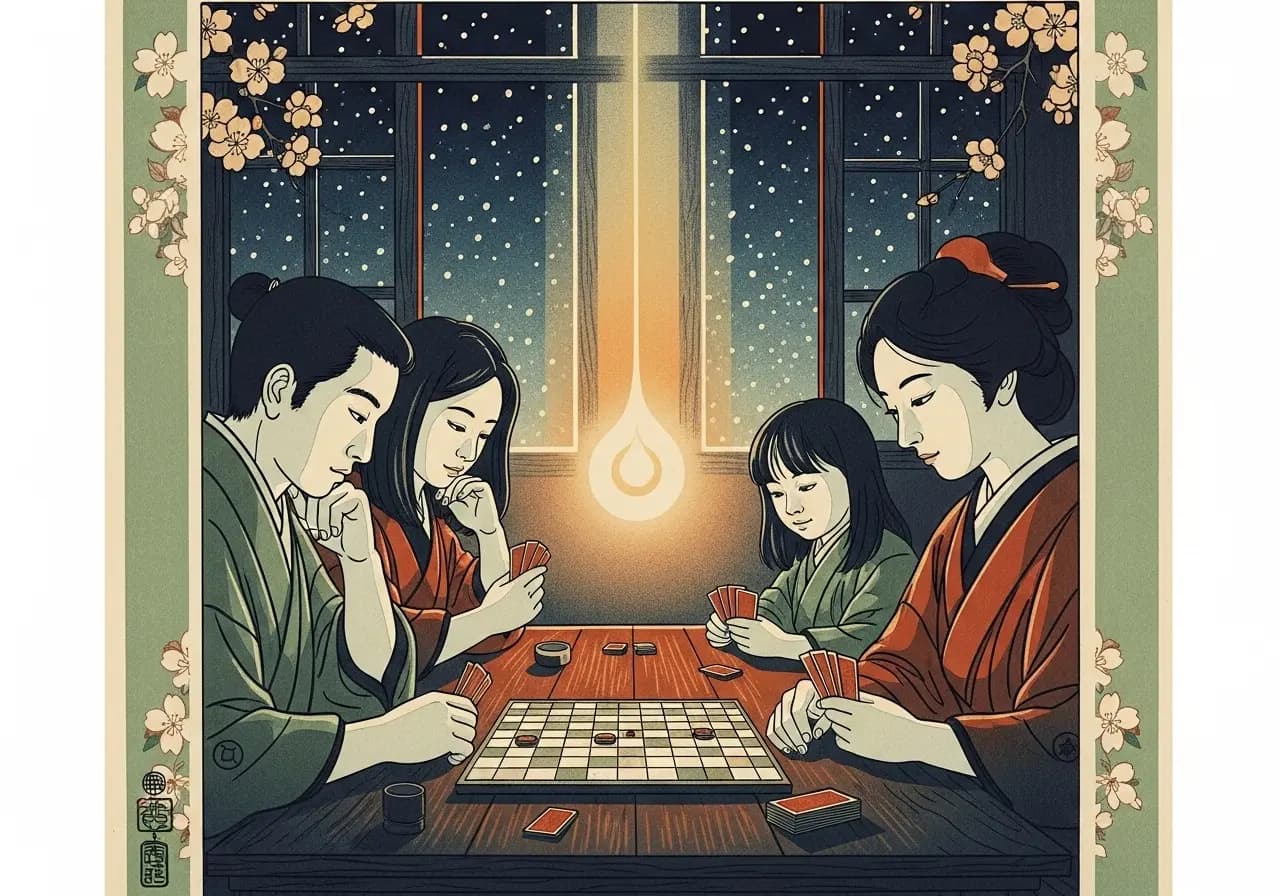
One evening we were playing a card game called Phase 10. I'm sure some of you are familiar with it. The way the game works is you start with ten different phases that you need to get through. When you complete a phase, if you're the first one to complete it, you get to move on to the next phase. It can be a really long game.
While we were playing, I started to become disillusioned early on. I would get really close to completing my hand, but somebody would complete theirs before me and get out, ending the round. We'd move on to the next one. After four or five rounds in a row where I couldn't complete even the first stage, I started to feel like, "Well, this isn't fun. I don't want to keep playing this game."
For a brief moment, I felt this sense of dissatisfaction with the game—just general unhappiness. It wasn't fun to continue playing.
But as I sat there thinking about this, I started thinking about the correlation between games and reality. As you know, I like the analogy of life compared to games—specifically the game of Tetris. And I started to think about the notion of perspective and the notion of right view, which on the Buddhist path is the first of the Eightfold Path.
Right view supports wisdom. And wisdom in this sense is the understanding of things as they are. In his book What the Buddha Taught, Walpola Rahula refers to this as "seeing a thing in its true nature without name and label."
The Shift in Perspective
So I sat there thinking: the narrow view while I'm playing this game is that this game is not very fun. I'm caught up in a narrow perspective of what's happening in the game itself. But the wider view is the perspective of realizing I'm sitting at a table spending time with and interacting with people that I deeply care about.
As I experienced this shift in my perspective, I realized this isn't about the game at all. Yes, sitting here and playing the game is what we're doing to collectively spend time together. But the bigger thing—the real thing—is that we're spending time together. That changed the relationship I had with the experience of not doing well in the game.
In the days after this experience, it occurred to me that ignorance is one of the root poisons in Buddhism. And it brings with it greed and ill will. Ignorance in this example is getting caught up in a game, thinking that the game is what's real, and not seeing what is real—which is spending time with each other. That was the real thing. The game was another superficial layer to that.
The Games We Play
So it got me thinking about life in general and how often we get caught up in the games that we play. It's important to pause for a moment and ask: what game am I playing? Who invented these rules? Who says it has to be this way? What am I really after? Who's keeping the game going?
Now, when you play a game like we were at the table, sure, if I want to be involved in the game, I have to play by the rules. And who sets the rules? The collective group playing the game selects the rules. Nobody's going to want to play a game with someone who's playing it by their own rules, because then the game doesn't work.
But that's different than getting caught up in thinking this game is what's real. And I think we do that sometimes in life. We get caught up in the games we play and we don't question these things at all.
Some of the games that we play are the game of being right, or the game of being successful, or the game of being looked at and admired, or trying to be attractive. There are all kinds of games that we play. But in the Buddhist approach—in Zen—there's an expression that says: "Great doubt, great awakening. Little doubt, little awakening. No doubt, no awakening."
I really like that applied to this specific analogy when we're playing these games. If we're not willing to have some doubt and question a little bit what we're doing and why we're doing it, then there is no awakening.
I experienced this while I was playing the game. It wasn't fun, and it occurred to me in that moment to question: wait a second, why am I not having fun? Why am I experiencing this emotion of dissatisfaction? And through that brief moment of introspection came this moment of awakening—which in this case was that I'm spending quality time with my family.
That was it. That changed the rest of the game.
And I think it can do that for our lives. We can experience this moment of awakening where we encounter how we're experiencing life. From that moment on, it can change to be a more enjoyable experience because you're no longer caught up in the delusion of what you think is reality. No, the game is not what matters. What's actually taking place is that I'm spending time with family.
Questioning Everything
I think we can apply this in our day-to-day practice with the notion of questioning everything—the thing I'm doing. Will this really make me happy? Do I really want to be doing this in my life? Or questions like: what is it that I really want in my life? Why am I really chasing after the things that I'm chasing?
And going back to some of the games that we play, just some of the ones off the top of my head that I know I've played in the past, or maybe continue to play sometimes without realizing it.
The Game of Being Right
The game of being right. Isn't that a game that we play? We want to be perceived as right. And it's not enough to feel that yes, I am correct. No, no, no. I need to make sure that you know that I'm correct.
Oh, well then the game isn't about being right. The real game is about being seen as being right. And that's a whole different game.
So the game of being right, I think, is a game that a lot of people play. And often we live with the delusion that we think being right is what matters, when in reality what matters is that we're striving to be perceived as being right. In other words, what others think of me is more important than what I think of myself.
When you realize this and you have this awakening about this specific game, you may realize I don't feel the need anymore to state my opinion to someone else because I'm content with the opinion that I have. I'm perfectly content with it. I don't need you to know what that opinion is, because that's a different game—the game of me feeling satisfied that now you know what I think. No, I'm content with me knowing what I think.
That's one of the many, many games that we play.
The Game of Being Successful
The other one is being successful, right? This is a game that our society plays quite well. But first of all, who defines it? Who defines what being successful even means? Is it being wealthy? In our culture, that certainly seems to be one of the answers. Does it mean to be famous? To be powerful? What does it actually mean? Perhaps it means to be happy.
I had an experience five or six years ago when I first encountered the sport of powered paragliding. Well, it was paragliding first—without the motor. If you fly without the motor, it's called paragliding. If you strap the motor on your back and do the exact same thing, then it's called powered paragliding.
Anyway, long story short, when I first discovered this sport, I looked up the instructor in my area who could teach me. I reached out to him, met him, and started taking lessons.
At the time I was still very deeply involved with running my company. If you'll recall, I had a company that manufactured smartphone accessories, tripods, selfie sticks, and things like that. And I was playing really hard the game to be successful—the game to be wealthy. That's how I defined success at the time. Things that mattered to me were the kind of car that I drove. It was really the image that I wanted others to have of me. I didn't realize at the time how caught up I was in that game.
But then I met this gentleman, Russ, who was my flight instructor. The more time I spent with him, the more I realized I wanted to be like him. He was doing the thing that he loved to do. He was flying. He was teaching people to fly. It didn't matter what kind of car he drove. He actually restores old vehicles—old classic cars. So the very first time meeting him, I saw this really cool old truck that he had restored and thought, "Wow, that's really neat."
But anyway, the more time I spent with him, the more I realized he's not caught up in the same game that I'm caught up in. He doesn't care about the labels. He doesn't care about what he's driving or how he's perceived. What he does care about is doing the thing that he enjoys and doing that with the people that he cares about.
He would be out there with his children, flying with his son and teaching his daughter to fly. Then the whole family would show up and they'd go on hikes, always doing fun things revolving around his work.
And I realized back then that's not how my life was. I'm chasing after something and it's not getting me this. Maybe my definition of success has been wrong.
Over the years, I came to understand that that's exactly what was happening. My definition of what it meant to be successful was part of a game—the game that society gave me, that my upbringing gave me. Lots of things gave me that game. But it wasn't the game that I wanted to play anymore.
And here we are many years later, and I feel like I'm not playing that game anymore. I have followed in the footsteps of Russ. I'm just enjoying being alive and doing the things that I enjoy. And I'm grateful for that shift that happened.
Right View and the Wider Perspective
But I think this is a good opportunity for us to pause from time to time and ask ourselves: what game are you really playing?
And what would you see if you remove the name and the label? Using the analogy of the game I was playing—I'm playing Phase 10. But that's a name and a label that I gave to what's really happening, which is I'm just spending time with family. That shift in perspective is often referred to as the narrow view versus the wide view in Buddhist thought.
It's important to be able to extract ourselves from that narrow view and gain a wider view, a bigger perspective. To use tools like doubt and questioning. Ask yourself: why am I really doing this? What am I really after? Through that, gain some sort of introspection that causes us to start acting more skillfully. Say, "Okay, well, from now on, I'm going to go down this other path." And that's exactly what I've experienced in my own life.
Part of why I think this topic is so important—the notion of right view, the notion of understanding the games that we play—is for this quote. In his book The Heart of the Buddha's Teaching, Thích Nhất Hạnh says:
Our happiness and the happiness of those around us depend on our degree of right view. Touching reality deeply, knowing what is going on inside and outside of ourselves, is the way to liberate ourselves from the suffering that is caused by wrong perceptions. Right view is not an ideology, a system, or even a path. It is the insight we have into the reality of life, a living insight that fills us with understanding, peace, and love.
I wanted to end on that note. I agree with that sentiment that Thích Nhất Hạnh shares.
A New Year Wish
At the end of the day, that's what I want for myself, for the people that I love. It's what I want for all of you—to have a life that's filled with more insight, with understanding, with peace, and with love.
And I think this is a good time to bring up this topic because this is the start of a new year. I wish you all a happy new year. And by happy, that's exactly what I mean: more understanding, more peace, and more love.
That's all I have for this episode. I look forward to sharing more thoughts in another episode later.
You may notice I purchased a new microphone. I'm hoping that the audio quality is better. I am a little under the weather, so some of the differences in sound will be due to the fact that I have congestion. But I'm hoping the audio quality will be better overall. I apologize for the last episode where there was a lot of static and bad noise that came through somewhere around the middle of it. I was able to correct that, but hopefully that won't be an issue anymore with this new microphone.
So, all right, well, thanks again. Have a wonderful new year, and I look forward to more podcast episodes in the future.
Until next time.