

The Faith to Doubt
Episode 15 of the Secular Buddhism Podcast
Hello. You are listening to the Secular Buddhism Podcast, and this is episode number 15. I'm your host, Noah Rasheta, and today I'm talking about the faith to doubt. Welcome back to the Secular Buddhism Podcast. This podcast is produced every week and covers philosophical topics within Buddhism and secular humanism.
Episodes one through five serve as a basic introduction to what secular Buddhism is and general Buddhist concepts. So if you're new to the podcast, I recommend listening to the first five episodes in order. All episodes after that are meant to be individual topics that you can listen to in any order.
Before we get started, I like to remind my listeners of a quote by the Dalai Lama where he says, "Do not try to use what you learn from Buddhism to be a Buddhist. Use it to be a better whatever you already are." Please keep this in mind as you listen and learn about the topics and concepts discussed in this podcast episode. If you enjoy the podcast, please feel free to share it, write a review, or give it a rating. Now let's jump into this week's topic.
The Story of Chris
This week I wanted to talk about the topic of faith and doubt—specifically, the concept of having the faith to doubt. A few weeks ago while I was in China on a business trip, I had an experience that I think does a really good job of explaining what the whole concept of faith and doubt actually means.
Just a little bit of background: I've been working with a new supplier for almost a year now. In that time, we've gotten to know each other, but we've never actually met. Something that happens in a lot of Asian cultures, or at least in China, is that people choose their own Western name to make it easier to communicate with Westerners like me. I have contacts there named Jason, Wyatt, and Mr. Lee—they pick their Western names. With this new supplier, it's no different. As soon as we started communicating, they told me the person I needed to talk to was Chris. I started emailing with Chris, who's the head of sales for this new factory, and Chris and I got to know each other through email. We placed multiple orders for various parts with the supplier, and everything had been going well.
So I thought I would take advantage of this trip to China to schedule a time and meet Chris in person.
While I was there, I received a message from Chris saying where we were going to meet and what time. I followed the instructions to the meeting place and started walking around looking for Chris. I looked everywhere and couldn't see him, so I continued walking and buying time. Every minute or two, I'd come back to that specific location where we were supposed to meet, look around, and he still wasn't there, so I'd keep walking. I did this two or three times and by then almost 10 minutes had gone by. I thought Chris must be running late, so I figured I could just wait here for him to show up.
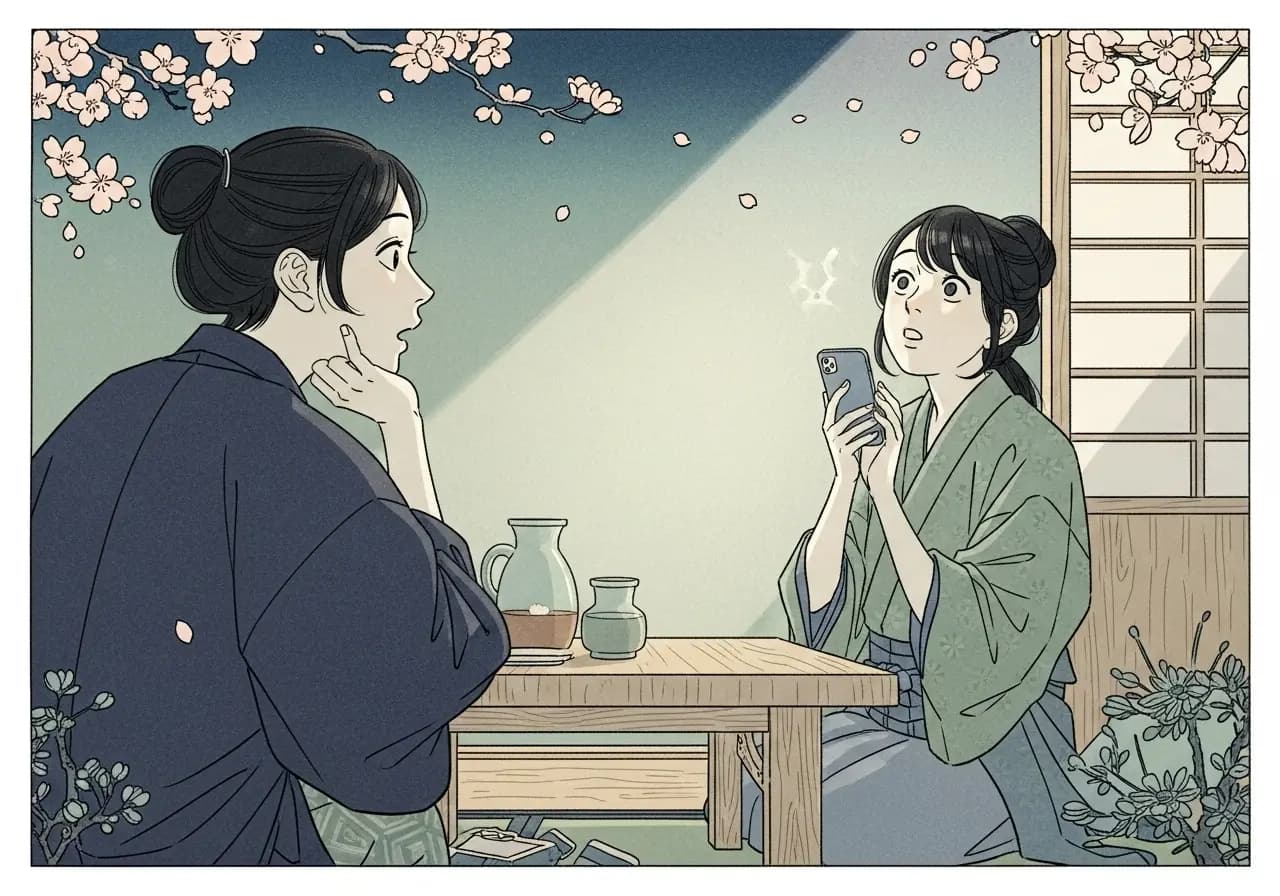
I went over to the specific table where we were supposed to meet and sat down. At the end of the table were two young girls on their smartphones. I just sat down on the other side. As soon as I sat down, one of the two girls looked up and said, "Hi, are you Noah? I'm Chris."
I was just stunned. That was not what I was expecting. I started to laugh, but then I thought to myself: You were here the whole time. I've been walking past you back and forth and not once did it occur to me that the girl sitting at the table might be Chris—because in my mind, I had already decided that Chris was probably a man.
It was a very mind-opening experience to realize how, in a very literal way, I was blinded by my beliefs. I was blinded by the belief that Chris was a man. For days after this experience, I just kept thinking about the implications of that lesson.
There's a quote I really like that says, "What screws us up most in life is the picture in our head of how it's supposed to be." I would put quotation marks around "supposed to be." That's exactly what happened to me. There was a picture in my mind of how Chris was supposed to be, and that picture blinded me from seeing Chris the way Chris really was. Chris had to finally speak up for me to realize that was Chris. It was a really moving experience.
I've been thinking about this and trying to apply it to other concepts, thinking: In what other ways have I been blind to reality because I already have a picture of what that reality is supposed to be?
Blind to What Is
If you think about it, this is actually a really powerful way of understanding reality. Take a concept like happiness, love, or success. Think about the concept you have in your mind of what that's supposed to mean, what that's supposed to be. You'll understand that, much like my experience with Chris, if you have an idea of what that is, you're not going to be able to see it for what it actually is.
I think this is the very essence of what Buddhism teaches. Thich Nhất Hạnh says the secret of Buddhism is to remove all ideas, all concepts, so that truth has a chance to penetrate and reveal itself. I like that—to reveal itself.
That's exactly what happened with Chris. Chris was there the whole time, and I couldn't see Chris. The only reason I couldn't see Chris was because of the concept I had already developed in my mind. I was blind, you could say, by my faith in my concept of who Chris was.
Two Approaches to Faith
This brings us to the notion of faith. Many of us in the West, from our cultural backgrounds, have an understanding of what faith is. Typically, that faith is: here's an idea, now believe in that idea and don't doubt it.
But the Eastern approach to faith is different. Alan Watts talks about faith as the attitude of being open to whatever is. That attitude of being open to whatever is allows us to experience whatever is the moment it shows up. We don't have to waste 10 minutes looking for Chris when Chris was there all along.
In life, we do the same thing. Perhaps we're looking for happiness, and we're looking for it because we have an idea of what happiness is. Then one day happiness looks up and says, "Hi, are you Noah? I'm happiness." We're just stunned: This is not what I was expecting. You literally start to laugh and realize that life has been presenting itself to you in ways like this all along. The only thing blinding us from seeing those things is the picture in our head of how it's supposed to be.
I've talked about this on multiple occasions in several podcast episodes: the idea that there's reality, and then there's the story we build around reality. That world of story prevents us from seeing reality as it is. It's almost identical to my experience with Chris.
Faith and Doubt in Buddhism
This is the notion of faith and doubt in the Buddhist context, in the secular Buddhist context. We go through life developing concepts, and then we believe in those concepts or have faith in those concepts. But that's not what true faith is. I like to imagine true faith as simply being the attitude of being completely open to whatever may be.
Imagine if I had shown up at that table with the attitude of being completely open to whatever is. I would have just walked up to the table knowing Chris was supposed to be here, with no assumptions about whether this is Chris or that is Chris. I would just assume one of you sitting here must be Chris, no matter how improbable that seems based on the picture I had in my mind.
But here's the thing: I couldn't do that. It's not that I didn't want to. I literally couldn't. I was blind and didn't even know I was blind. I wonder how many other concepts in life do I approach that way, where I don't even realize I'm blind to them—where the picture, the story I have of that thing compared to just however it is, prevents me from seeing clearly.
This experience motivated me to want to approach life with a new perspective, with a new attitude of true faith: being completely open to whatever might be, and allowing whatever might be to present itself like Chris and say, "Hi, are you Noah? I'm happiness, or I'm success," or whatever the concept is. I want to try to let go of that.
The Role of Doubt
This is where doubt plays a pivotal role in understanding the true nature of faith. If the true nature of faith is being open to whatever is, then what I need to be doubting continually are the concepts that I create in my mind. I need to question them: Is this really how it is, or is this the mental picture I've created about how life is supposed to be?
I think this is really relevant to all things in life. Take the concept of love, for example—your relationship with your spouse, your significant other, your parents, your children, your siblings. You could look at that relationship and for years question whether they really love you. It could be that they do love you all along, and you've never seen it because you have a different picture in your mind of what that love should be.
I think this really hits home if you've ever studied or read about the five love languages. You'll learn that love is communicated and expressed in different ways. If you speak one love language and don't know there are other love languages, you may be blind—much like I was with Chris—because you only see love through the language that you speak.
If you haven't looked into the five love languages, Google it. It's a really fascinating concept, and I think it's very applicable to understanding how we communicate and experience something as universal as love. If that applies to love, I'm sure it applies to so many other things. If we develop a belief in how things are supposed to be, then we become blind to seeing how they actually are.
That's really the essence of the topic I wanted to discuss today: having the faith to doubt. The key to accessing true faith—which is complete openness to whatever life is—is having doubt.
Reclaiming Doubt
In our society, we've attached negative connotations to the word "doubt" and positive connotations to the word "faith." We're motivated to always have faith and never question things because somehow doubt is seen as negative. But in reality, doubt is a very positive thing. Doubt is the very thing that makes science work. Because we continually question and explore why and how, we find new knowledge.
Having this sense of doubt, this sense of questioning in our personal lives, is very much what the Zen Buddhism school refers to as beginner's mind. Think about a child. Children approach life with a beginner's mind, with a doubting approach to life—not negative, but they're constantly questioning everything. Everyone knows what it's like to be around a kid who's always saying, "Why? Why?" I think this is what it means to have a beginner's mind. You're always exploring, always curious. You're always asking why. This approach allows you to gain new insight, to see and learn things you didn't know before, because you don't operate under the assumption that you have all the information you need. Instead, you always operate under the assumption that there's something I don't know.
Furthermore, you operate under the assumption that everything I believe I might actually be wrong about. There's not one thing I could say with complete certainty that I'm right about. I should approach life the opposite way: Everything I believe could be wrong. That is faith in the unknown, faith in uncertainty, faith in whatever life is going to present. I'm just going to take it as it is.
The Tetris Analogy
I've talked about this in past episodes using the analogy of playing a game of Tetris. Imagine you're playing Tetris. The whole premise of the game is that pieces just show up. We don't control what pieces show up, but when they do, we have the opportunity to manipulate them. We can move them left or right or spin them around to position them in whatever way works best for our game.
The one thing we don't do is control what comes up next. As soon as you place one piece, the next one's on the way, and it goes on and on until the game is over.
That's a lot like life. Approaching the game of Tetris—or the game of life—with an attitude of faith means faith in whatever's going to come up next. I don't know what it is, but I know something is coming up next. The moment it does, I'm going to have to work with it. That's what I have faith in.
What I would be doubting—what I want to doubt—is the moment I think I know a square is coming up next, or I know an L-shape is going to be what's coming next. I should probably doubt that. That's where you need to have doubt and think: Wait, don't get caught up, because the moment it doesn't show up the way I want it, now I'm upset.
There's a Zen expression that says, "Great doubt equals great enlightenment. Little doubt, little enlightenment. No doubt, no enlightenment." This is the kind of doubt I think is being implied here—the doubt we have about the assumptions we make.
There's a quote that says, "No matter what you believe, you might be wrong." I think it's really important to go through life with that attitude: It's fine to have beliefs, but I might be wrong. I might be wrong about my beliefs. That is the cultivation of doubt. It's what prevents us from being locked in a place with such certainty that we're blinded by that certainty. Blind faith is not good faith.
Reframing Faith and Doubt
The concepts of faith and doubt in our society have interesting—twisted—connotations. Doubt is frowned upon and faith is treated as something that's actually not really faith. We're told to just have faith, but often it's conveyed as: continue to blind yourself around your belief and don't question it. But that's not faith. Faith is being open to whatever might be, and we do that by having and cultivating doubt around our assumptions of whatever we think is.
This is an entirely different approach to faith and doubt than what we're typically used to. The beautiful thing is that with this doubt comes new knowledge. It's the only way new knowledge comes in.
I like to think of science as a good example of a system of doubt. Science is constantly questioning, right? It says, well, here's what we know, and it's always asking: Why? Why does this work this way? Then it investigates. It creates a theory around why, then it proves the theory, and then that's new knowledge. Then we move on to the next thing. Okay, if that's that, now why this? Why that? It's always questioning.
This is the sense of doubt. With this cultivation of doubt, if we can apply this inward to our own perceptions and understanding of the world, that's the key to obtaining new knowledge and wisdom about how the world really is.
The assumptions that we have about other people, our in-group versus our out-group—they are this way, they are that way. Us and them. What if we were able to doubt the concepts we've created about "other," about these people in that category of "other"? What would become possible?
Closing Thoughts
Those are a couple of ways to look at and explore the concepts of faith and doubt within the Buddhist understanding of life and the Buddhist worldview. Faith and doubt are not negative and positive things. They're actually both positive things in the toolset to help us experience the nature of reality, to experience life as it is without being blinded by only looking for life the way we think it's supposed to be.
Again, there's always just what is, and then there's the story we create around what is. We should doubt the stories that we're creating around what is, and we should have faith in being open to seeing whatever just is outside of those stories.
I wanted to share this because I thought it was a really neat experience for me to go through in China looking for Chris. It's exciting to know that in life this is happening all the time. We're always looking for Chris. If we have an idea of what Chris is, then we're going to spend a lot of time looking for Chris who's sitting right in front of us, when Chris has been waiting all along.
I hope to have more experiences like that in life, when Chris will look up and say, "Hi, are you Noah? I'm..." whatever concept. And I'll just laugh and think: Of course you are. That's how it's been all along, and I couldn't see it.
That's the nature of doubt I want to have in my life. I want to be willing and able to continually question the assumptions I've made about life, the assumptions I've made about how life is supposed to be—especially when applied to concepts as important as love, happiness, and success. I just want to be open to whatever those things are and not be blinded by the beliefs I have around what those concepts are supposed to be.
I think that will provide many fascinating experiences in life. Carl Sagan says, "Somewhere something incredible is waiting to be known." Whatever that is that's waiting to be known, I think that's faith. I have faith in that exact expression—that somewhere something incredible is waiting to be known, and I can't wait to see whatever it is. But I'm not going to get lost in the assumption I have of whatever that is supposed to be.
I hope that makes sense in explaining the concepts of faith and doubt at a deeper level for understanding the Buddhist worldview of faith and doubt. Again, if you've enjoyed this podcast, please feel free to share it, write a review, or give it a rating. If you want to clarify this topic further, feel free to reach out. I'd love to hear what you think about this topic. I'll talk to you next time. Thank you.
For more about the Secular Buddhism Podcast and Noah Rasheta's work, visit SecularBuddhism.com