

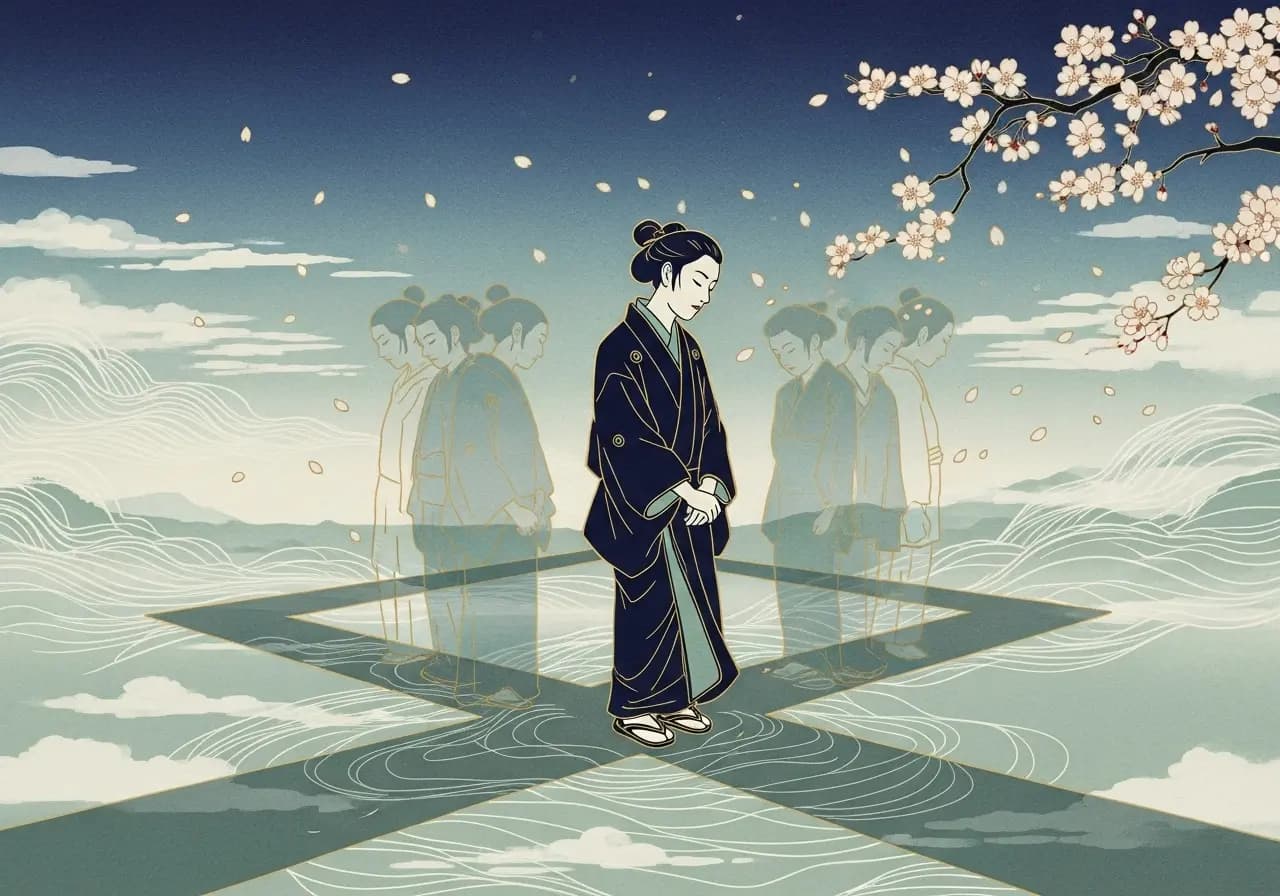
The Freedom to Be You
Episode 146 of the Secular Buddhism Podcast
Hello, and welcome to another episode of the Secular Buddhism podcast. This is episode number 146. I'm your host, Noah Rasheta. Today I'm going to talk about the freedom to be you.
Keep in mind, you don't need to use what you learn from Buddhism to be a Buddhist. You can use what you learn to be a better whatever you already are. If you're interested in learning more about Buddhism, check out my book, No-Nonsense Buddhism for Beginners, available on Amazon, or you can start by listening to the first five episodes of this podcast. You can find them easily by visiting SecularBuddhism.com and clicking on the link that says, "Start here." If you're looking for a community to practice and interact with, consider becoming a patron by visiting SecularBuddhism.com and clicking on the link to join our community.
A Community Update
I want to give a quick update regarding our community. The community was previously set up to only be accessible by people who support the podcast, but I understand that not everyone is in a position to be able to support the podcast. So I've made a change to how community access is made available to podcast listeners. If you visit SecularBuddhism.com and click on the link at the top that says "Community," you'll notice there's still the ability to support the podcast. The donation for supporting the podcast is $3 a month, which is very minimal—equivalent to buying a cup of coffee. But if you're not in a position to do that and you still want access to the community, there's an option to click for a sponsorship. You'll be given access to our Discord server where you can interact with podcast listeners and supporters without any financial burden.
I wanted to make that change because I didn't like the thought of having the community locked behind any kind of financial aspect. I totally understand that depending on what stage of life or life circumstances we're in, we may not be in a position to provide any kind of support. Yet the benefit of having access to a community is so great that it shouldn't be restricted by any kind of financial gate. That's why I made that change.
Having said that, you may have noticed it's been a while since the last podcast episode—a month or maybe even more. While I haven't been doing podcast episodes quite as frequently, I have been engaging with the community very actively. In fact, every Sunday we have a one-hour live Zoom call. There's enough content in this podcast and in the books I've written to keep discussing these concepts and ideas on a regular basis, talking about how they apply to everyday life.
So while I may not have been doing as many podcast episodes, I've been talking with the community in a very active way every week as we continue these discussions on how to apply these concepts into day-to-day life. If you want to watch some of those past episodes, you can find them in the community. Join us, and you can find videos of our past Zoom calls and engage weekly with myself and other podcast listeners on these topics.
Again, I have every intention of continuing the podcast as before, but if it seems like I haven't been doing much with the podcast, it's because I've been doing a lot with the community. I'm going to make every effort to stay up to date with regular podcast episodes. Sometimes life happens and the podcast gets behind, but the community is where I'm more committed right now. I'm spending time with anyone in the community who wants to take these concepts and ideas and learn how to apply them to everyday life.
Okay, so that was the announcement I wanted to share. Now let's get into today's topic.
The Topic: The Freedom to Be You
The topic I want to discuss in this episode is the freedom to be you. This actually comes from the last four to five weeks in the podcast community. We've been talking about this weekly, and it all started with a discussion around the concept of branding.
When I graduated from college, my first job was an internship at a company doing marketing, and then one of my first positions was at an advertising agency. I learned a lot while working there regarding marketing and branding. This specific agency was known for coming up with the brand "What happens here, stays here" for the City of Las Vegas. That was one of our customers—their tourism or tourism-related entity responsible for getting people to visit Las Vegas.
The agency had come up with this branding campaign, and I'm sure many of you have heard it. It's a very popular brand for Las Vegas.
Understanding Branding
Branding is a very important aspect of marketing, but it's not necessarily the same thing as marketing. Marketing is what you want your customers to do—an advertisement that convinces them to call your phone number to hire you for air conditioning repair or whatever it is. But branding is something a little bit different. Branding is everything that you do to evoke a certain feeling from your customer. When they think about your company, you want them to have a certain feeling.
Many large brands focus heavily on being consistent with their branding. Apple has a certain feel. BMW, Audi, Ford—any major brand has what's called branding, and all of their marketing revolves around it. It starts with something as simple as their mission statement. So think of branding as what a company wants you to feel about them, and marketing is more what a company wants you to do.
Because I spent so much time at an advertising agency learning the ins and outs of marketing and branding, I started to think more recently about how we as individuals actually do the same thing. We have the story that we have about ourselves, and then everything that we do when we interact with others revolves around maintaining the brand that we want them to associate with us.
As silly as that sounds, I think it's very real, right? You may have a story about yourself which is, "I am an intellectual person," and you look at how much you read. So when you post a picture on social media of, "Hey, check out this book that I'm reading," that's all part of your subconscious branding effort to make sure that people know you're a person who reads and therefore a person who's intellectual.
The clothing that we wear, the way that we do our hair, the type of vehicles that we drive, the sports and hobbies that we participate in—all of these things are involved with our personal brand. I think it's important to understand this, not because we're necessarily trying to eliminate our stories or eliminate our branding, but because our effort is to understand ourselves. When someone does something or says something, why does it affect me this way? Oh, because it's inconsistent with the branding that I have about myself, the branding that I want them to perceive about me.
Personal Branding and Faith
I've encountered this firsthand in my own practice when I was going through my transition of faith. I had this story about myself: "I am a good person. I do good things. I'm not the type of person who's going to intentionally do wrong. In its broadest sense, I'm not a bad guy. I'm not a bad person. I like to be known as someone who's nice and friendly and who does the right thing." That was part of my personal brand, and it still is.
As I was going through my faith transition, members of my faith community started to view me as a heretic or rebel. In the worst-case scenario, as somebody who's doing wrong, and in the best-case scenario, as a naive person who's being misled. I really struggled with that because it was inconsistent with the story I have about myself—that I'm a good person who does good things.
It came to a head specifically with certain family members. I could perceive that they were now viewing me as someone who's led astray or someone who's doing wrong because I'm no longer following the correct path. It really bothered me. A lot of my anxiety and consternation came from the fact that I couldn't convince this person that I'm still the good person, that I'm still living up to my brand. My branding had changed in their eyes. They had a new view of me, and their brand of me was not my brand of me.
A lot of my discontent and suffering arose from the discrepancy between the story I had about myself versus the story that someone else—in this case, a family member—had about me. I see this happen with businesses too. A business that has a brand and does things that are not consistent with the brand struggles with their image. They struggle with their branding. But when it happens to us personally, it's a more difficult thing.
The Turning Point
When I saw this in myself and was able to understand, "Oh, this is what's happening. This is why it bothers me. It's not so much that they're perceiving me from an incorrect perspective. It's that the feeling I want others to have of me, I'm not able to achieve anymore, and I can't help it."
There's nothing I can say that's going to convince this person that I'm still a good person, because from their point of view, based on their belief system, I'm not a good person. I'm not doing the right thing because I've left the correct path and I'm now venturing on other paths that are inconsistent with what they believe is the one true way.
It was really helpful for me to understand: "Okay, this is a branding issue, and it's not that there's anything wrong with how they perceive me. The only thing that's wrong is that I want them to perceive me another way, and I can't control perception. I can't control the story that someone else is going to have about me."
What that left me with was the freedom to just be me. And that involves the freedom of allowing others to have a different story about you than the one you have about yourself.
In that comes a sense of liberation, a sense of freedom. That was a turning point in my journey of understanding myself, understanding my stories, understanding the unconscious branding efforts that I put out to the world. And the wrestling stopped. I no longer felt this tremendous need to influence this one person's view of me to make sure that view is consistent with the view I have about myself, because I realized that just can't be done. It really can't.
Maybe to some degree with some people it can, but overall, with all people, it can't. We can't control the narrative that others have about us. But what I could understand is all the efforts that I'm putting out there to try to determine what that narrative is, and that was really fascinating to understand about myself.
My Invitation to You
So my invitation to you as a podcast listener is to explore what stories you have about yourself. What is the personal brand that you try to put out to your circle of friends or to the world at large? Because somewhere in the maintaining of that story, you may find instances of suffering, instances of dissatisfaction that would constitute the second arrow.
If somebody doesn't like the way you are, if they judge the clothing you wear, the career choice you followed, the ideological or political views you have, or anything along those lines, you may find that it really bothers you. The actual source of your discontent is the inconsistency you're perceiving between the story you have about yourself, the one you're trying to put out in the world, and the one that someone else has about you and is perceiving.
Just knowing that may give you the ability to engage a little bit more skillfully with that relationship you have with the person, the relationship you have with your story, and more importantly, the relationship you have with the story that someone else has about you.
That was the general idea I wanted to introduce. It's been discussed in the last four to five weeks in our podcast community on Sundays, and we've been going into greater detail around the central concept of the stories we have about ourselves and the notion of our personal branding.
Stories Aren't the Problem
Again, the invitation here isn't to change your story or change your brand. I think we all have stories, and the moment I decided, "Okay, I don't have a story about myself," well, then that is the story. The story of having no story is still a story. Everyone has their story about themselves.
Everyone has the branding efforts that go into making sure others perceive you a certain way, and there's not a problem with that. I think that's a very human thing to do. But what becomes really powerful is knowing: "Oh, this is why I'm doing this. This is why this matters to me." Then I can catch myself and won't get so caught up in my efforts.
It's like, "Okay, I see why I'm doing this." And that's okay. I'm just doing it because I'm trying to control the narrative. That's okay too. Trying to control the narrative isn't the problem.
Practicing Non-Attachment
What we start to practice is non-attachment. "Okay, here's the story I have about myself. What does non-attachment to that story look like? Well, it's just a story. I don't have to fight tooth and nail over it. I don't have to get completely bent out of shape when somebody misinterprets me, when they have their own story about me."
In the end, what you'll end up with is a greater sense of freedom to just be you. The you that has a story. The you that sometimes defends the story. The you that sometimes realizes, "That was not very necessary. I'm going to stop defending my story." The you that's putting in efforts to make sure that the story someone else has about you is the story you're happy with. The freedom to engage with the entire process of what it is to be you and what it is to have a story about yourself. The freedom to feel offended when that story about you is misinterpreted or is inconsistent from someone else's perspective.
These are all aspects of being human, of being a social creature that engages in social connection. So that is my invitation to you in this podcast episode—to think about that.
A Final Koan
I do want to echo the koan that I shared in the last podcast episode: "There is nothing I dislike." I think one of the keys to thinking about this koan is this: How do we define "I"? Who is the "I" that can like or dislike something? Take that into consideration with this concept of the you that has a story about yourself.
Which you is more you? The one that has the story? Or the one that is in the storyline?
Those are fun things to think about. So that is my invitation to you.
In Closing
Hopefully, this concept makes sense. I try to explore these key teachings and key concepts from the perspective of liberation and freedom because that's what we're after. It's not about becoming a better you. I know that I mention becoming a better whatever you already are at the beginning of every episode, but perhaps it's less about changing who you are and more about befriending who you are.
The you that you already are has a story about yourself. So get to know that story. Get to understand all the activities that take place when you're trying to influence that narrative for other people. Greater understanding is the goal. With greater understanding comes a sense of liberation, the freedom to be you.
Hopefully, I've given you something to think about over the next few days or weeks. I will work on another podcast episode here in the near future. Meanwhile, if you want to continue these discussions on a more regular basis, feel free to join the Secular Buddhism podcast community by becoming a patron, or if you can't, click in for a sponsorship. Both options are available on SecularBuddhism.com. Click on the link that says "Community."
That's all I have for this episode. Thank you for taking the time to listen. Till next time.
For more about the Secular Buddhism podcast and Noah Rasheta's work, visit SecularBuddhism.com