

Wisdom and Fear
Episode 142 of the Secular Buddhism Podcast
Hello, and welcome to another episode of the Secular Buddhism podcast. This is episode number 142. I'm your host, Noah Rasheta, and today I'm going to talk about fear.
Remember, you don't need to use what you learn from Buddhism to be a Buddhist. You can use what you learned to be a better whatever you already are. If you're interested in learning more about Buddhism in general, check out my book, No-Nonsense Buddhism for Beginners on Amazon, or start by listening to the first five episodes of the podcast. You can also check out my new online workshop called Mindfulness for Everyday Life, available on Himalaya, a new educational audio platform. You can find it at himalaya.com/mindfulness. If you want to give it a try, use the promo code "mindfulness" for a 14-day trial to listen to my workshop and hundreds of other workshops available on the Himalaya platform. And finally, if you're looking for a community to practice with and interact with, consider becoming a patron by visiting secularbuddhism.com and clicking on the link to join our community.
Why Talk About Fear Now?
October seemed like a good month to talk about the topic of fear. With Halloween and all the preparations that go on—at least in the US and other Western cultures—this is the month when you see horror films and scary things everywhere on television. I thought it would be fun to talk about the concept of fear from the Buddhist perspective.
I think this is a fascinating topic to explore because all of us experience fear. Fear is a universal thing. We all experience it, and it's completely natural. Like all other emotions, fear is just an emotion. There are, however, learned fears and hardwired fears. I recently read an article that talked about how, for example, the fear we experience at loud noises is something that's hardwired in us. We don't necessarily learn that—from day one, we fear loud noises. The fear of falling also seems to be one of those fears that is hardwired in us, and I'm sure there are others.
But for the discussion of fear, I think first and foremost, it's helpful to frame our fears within the lens of skillful fears and unskillful fears.
Skillful Fear vs. Unskillful Fear
The Buddha taught that some see something to fear where there is nothing to fear, and some see nothing to fear where there is something to fear. This is more or less along the lines of what I want to talk about with this topic of fear.
Useful fear may prepare us to take skillful action, while unuseful fear only leads to unskillful action. That's how I like framing this. That's how I like thinking about my own fears.
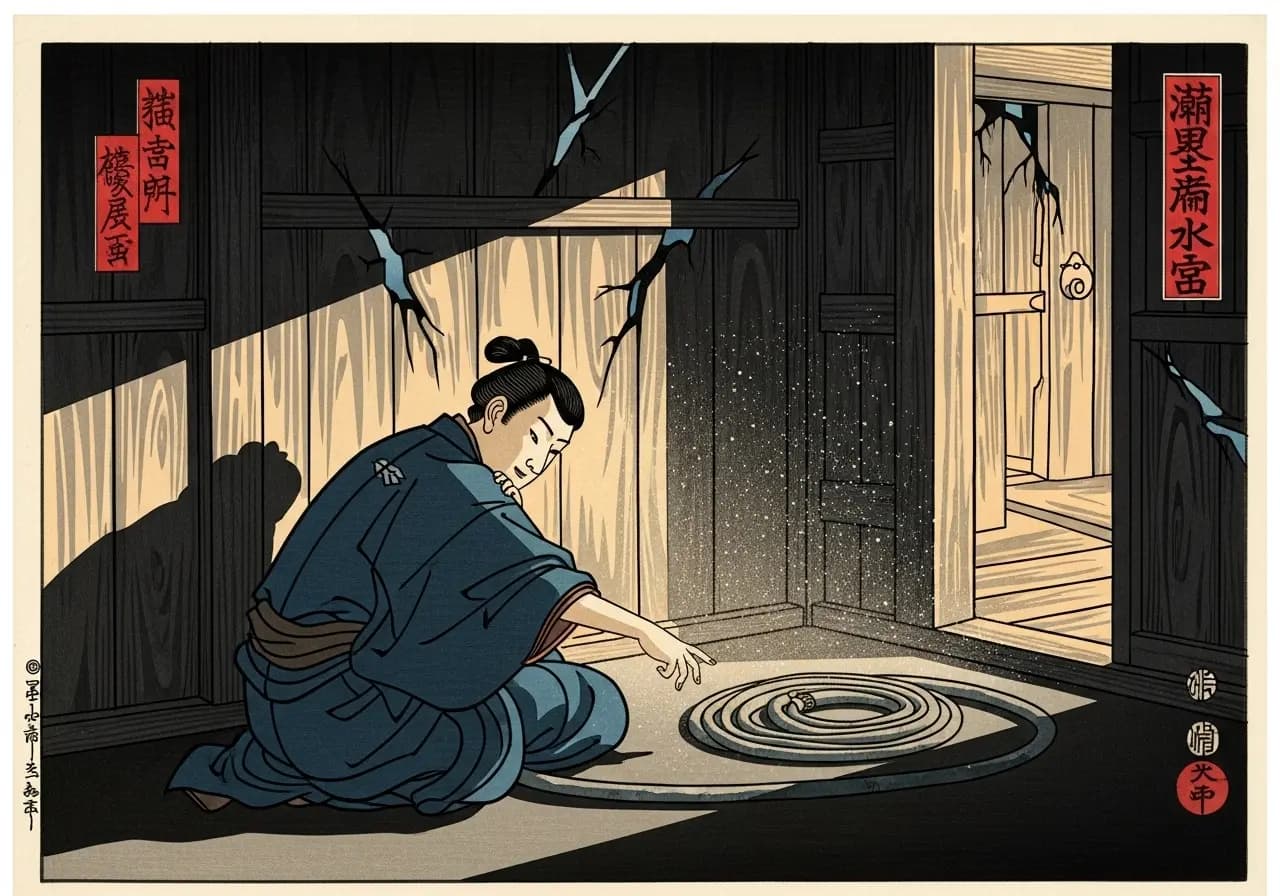
For example, a skillful fear would be avoiding touching a poisonous snake, while an unskillful fear may be fearing the coiled-up hose in the dark shed because I think it's a snake, when in actuality, it's only a coiled-up hose. That's kind of along the lines of the Buddhist perspective on fear.
I'm far less concerned with talking about the fear that comes to mind when we think of fear of the dark or fear of heights. No, I'm much more interested in talking about fears like the fear of rejection, which may cause us to live unskillfully. It could cause us to live an entire life where we're not fully in harmony with our authentic selves—with how we actually think and feel. Because if I fear, for example, the judgment of others, I may be experiencing unskillful actions in my life, living a certain way to avoid the fear of judgment. That may be an unskillful fear. That's what I want to talk about.
The Big Fears Behind Daily Fears
When we talk about fear, we think of the ultimate fears, right? Perhaps the fear of death, the fear of separation from our loved ones, the fear that we experience from uncertainty and the unknown. Those are big concepts to think about, and I think they're good to think about. But for practical purposes, I think it's more important to think of the fears that affect our day-to-day lives and many of the experiences we're having in our daily interactions.
For me, it's important to explore: where does my fear come from? You've heard me mention before in this podcast the notion of the Buddhist teaching of craving, which is essentially what will suffering—that the moment I want things to be other than how they are, suffering is what arises: discontent, dissatisfaction, anguish, however you want to word that. That feeling that arises when I want something to be other than how it is seems to be very intricately connected to this notion of fear. I'm fearing how something is because it's not matching how I think it should be.
And that's one of the ideas that is talked about in Buddhism on this topic of fear: wanting things to be other than how they are. And I think what makes this worse, as far as fear goes, is that we're experiencing a new layer of fear.
The Fear of Fear
Like many emotions, fear is something that we all experience. But when we experience it, we have a relationship to the experience we're having. For most of us, it's aversion—aversion to fear. So if I start to experience fear and I have an aversion to fear, then I start to fear the fact that I'm experiencing fear. It's a lot like being anxious about being anxious or being mad about being mad.
I think this is something worth considering. We can always ask ourselves when we're experiencing fear: am I adding to this? Am I adding a new layer? For me, this is not necessarily a discussion about fear where we come up with some solution to eliminate fear. Instead, it's a conversation about understanding the root of our fear and changing the relationship we have with fear as an emotion. For me, this is all about getting to know my fears intimately and gaining wisdom and insight into the nature and root of our fears.
The Three Poisons and Fear
You've probably heard about the teaching of the three poisons in Buddhism. The three poisons are desire or craving, aversion or anger or hatred, and then the third one is ignorance. These three—desire, aversion, and ignorance—are called the three poisons because they taint and poison everything that they encounter. When we are operating under one of these three, we're essentially living more unskillfully than we could if we were not operating under one of these influences. At least that's how I like to think of it.
There are writings where the Buddha referred to ignorance or wisdom as the cause and the solution to fear. I thought this was an interesting concept to explore. The idea is that ignorance can often give rise to fear. And coupling that with this teaching we encounter often in Buddhism—the teaching of confusing the coiled hose with a snake—that to me is a very good visual representation of an instance where ignorance gives rise to fear.
Ignorance and the Coiled Hose
I'm a little cautious about how we use the word ignorance because I'm not thinking of ignorant as in, "Oh, you're so ignorant." No, ignorance is simply the lack of knowledge of how something actually is. If you think about that—if you're walking into the shed and then you look down in the darkness and you see this coiled hose and you immediately think it's a snake—that's a very natural response. You would certainly feel fear because what you are perceiving does not match reality. That's where ignorance comes in. Through no fault of my own, I am perceiving something wrong. And if I were to immediately act on that—let's say I turn and run, or I have a shovel and I start hitting the hose—that's unskillful action. By the time I turn the light on and realize this wasn't a snake, I may have damaged the hose.
So the idea here is that by shedding more light on it—by turning the light on in the shed physically—I can start to see things more clearly and I recognize, "Oh, that wasn't a snake. That was a hose."
I get that this can be very hard to do in the moment. If you are struck with fear, fear causes you to react and do things. I get that. And this one always hits home for me because I really do have a fear of snakes. But I like this notion: in the moment that I think, "Is that a snake?"—if I were to run out of the shed first, that might be better. Then I come back with a flashlight and realize, "Oh, that wasn't what I thought it was." Then I turn on the light. Then I spend time looking closer. That's skillful action. I'm doing something skillful, and I've gained wisdom.
What was the wisdom? I gained the realization that the hose was a hose and not a snake. Now, taking this to the fears we typically experience in our day-to-day lives—for me, this is where this becomes a powerful concept.
The Fear of Rejection
As I go throughout my life, I discover certain fears that I have. For example, the fear of rejection. I think a lot of people experience this fear. This is a fear that may be unskillful, and I may be experiencing it out of some form of ignorance. In other words, I haven't sat with this fear because it's uncomfortable, and I haven't shed light on it. I haven't spent enough time with it because our natural response to something that's uncomfortable or unpleasant is aversion. I don't want to sit with this emotion. I don't like how this emotion feels.
So then I start doing unskillful things. Let's use this as an example: I have a fear of rejection from others, and that fear causes me to avoid at all costs the possibility of somebody rejecting me. So now I'm with a group of peers and they all like to dress a certain way. They all like to wear the color red. But I love to wear the color blue, and I'm so afraid of being rejected by them that now I start to wear the color red. Perhaps that's something that I don't feel good about. I don't feel great about the fact that I'm wearing red, but what trumps that feeling is the fear I have of being rejected.
I get that this is kind of a simple example, but think about how often this actually happens in life. I'm sure you've experienced this. I know I've experienced it. Where you're starting to live a certain way, do certain things, or avoid doing certain things all out of the fear you may have—fear of rejection or fear of judgment or something along those lines.
For me, this is a very powerful thing: to be able to recognize that when I'm experiencing some form of fear, I can actually pause and say, "Wait a second, why do I fear this? Why do I fear rejection from others?"
I can spend time with this emotion. I can process it. I can look deeper. I can gain insight and wisdom. I can turn the light on. And at some point, I may realize, "Oh, that thing that looks like a snake actually isn't a snake. It's a coiled hose."
My Own Journey with the Fear of Not Being Liked
That's what I'm after with this concept. I've thought a lot about the fears that I have. Fear of rejection is one. I think that's a common one people have. One that I've talked about in the podcast before is the fear of not being liked.
I've sat with this one long enough that I feel like I have a thorough understanding of the root of it. Having grown up as a twin, for example, I always wondered: do people like me or do people like us? In other words, are you my friend because of my own merits and my own personality, or are you friends with us because of the dynamic that we are together as twins?
As we got older, that transitioned into this belief that maybe the only reason people like me is because people like my twin. It caused me to experience a lot of fear that I think would fall under the category of unskillful fear—or perhaps fear instigated by some form of ignorance, which is not understanding the picture of reality and seeing something that actually isn't there.
I've spent time with that fear. I've overcome that fear. And at the end of the day, it's not necessarily that the fear goes away, but the relationship that you have with the fear changes. I'm not afraid of that fear. I'm not afraid of feeling that fear.
When that thought arises—let's say I'm interacting with friends and suddenly the thought pops up: they don't like you, they just like your brother. Or they like you and the dynamic of you and your twin together—now I'm not afraid of that feeling. It's not uncomfortable. I almost smile. I'm like, "Oh yeah, there's that feeling again." Yeah. I don't know that that's true though. There's no way for me to really know that. And they're still my friends, so I don't have to believe my own thought.
I feel like the relationship with the fear changed, and because the relationship with the fear changed, perhaps what would have been some form of unskillful action or unskillful thought didn't take place because I wasn't afraid of the feeling of fear.
There would have been a time in my life when that wasn't the case. The fear of not being liked maybe would have made me do something I wouldn't normally do, say something I wouldn't normally say, not say something I should have said, or not do something I should have done. That's what I'm after here. That's what I'm hoping to convey in this podcast episode to you as the listener: you, like me and like everyone else, have fears. And your fears have roots. If you can get to the root of your fear, if you can shed light on it and spend time with it, perhaps you can change the relationship you have with it. Perhaps you'll gain some sort of insight or wisdom, and you'll see something new—the same way you would if you were to turn the light on in the room and now see a little bit more clearly. The thing that you thought was one thing actually isn't that thing.
And then with that wisdom, with that new knowledge, with that clarity, comes a new way of being. A new way that changes what you were experiencing before.
Fearlessness vs. Bravery
That's what I want to end this on: Perhaps fearlessness is not necessarily about the absence of fear, but the absence of being afraid to experience fear.
I think about fearlessness versus bravery, and I think fearlessness implies that there is no fear. But there's no bravery in that. If I'm not afraid of something, it's not accurate to say, "Oh, I'm brave about flying because I'm fearless when I fly." No, I think bravery is somebody who's afraid to fly but they go fly anyway—that would be brave. For me to just go fly, if I'm not afraid to fly and I go fly, there's nothing brave in that. I'm just doing what I do.
That's another concept I want to end this podcast episode on: when we think of bravery and fearlessness, rather than thinking the goal is to become fearless, maybe the goal is to be a little bit more brave. In spite of the fact that I have a fear of being rejected by others, I'm still going to live an authentic life where I risk the possibility that yes, some people will reject me. But I don't have to lose sleep over the fact that I'm not living authentically to myself. That's the idea I want to convey and end this on.
The Buddha and Angulimala
So next time you're experiencing a form of fear and you sense an aversion to that emotion—you're experiencing—maybe that's a good time to turn and face it and see if you can gain wisdom from the encounter with the fear.
This reminds me of the encounter of the Buddha and the serial killer Angulimala. I always think about this visually. Imagine there's the Buddha in the forest, and here comes Angulimala. Everybody runs from Angulimala. Nobody likes him because he's a serial killer. But the Buddha stood there and faced him. That really surprised Angulimala to the point where he stopped and he was like, "Why aren't you running? Why aren't you afraid of me?"
That gave rise to the opportunity for them to speak. By speaking and by understanding and expressing things, the relationship changed. Angulimala didn't feel the need to kill the Buddha. And then according to the story—and it's just a story, right—Angulimala had a change of heart and became a monk.
I just think that's such a cool lesson that can be extracted whether that story happened or not. It's a fascinating story: by not being afraid, or perhaps there was fear (I don't know), but by turning and facing the thing that everybody's scared of and instead engaging with it, having dialogue, the outcome changed. The skillful action that came out of that was Angulimala quit being a serial killer and instead became a monk.
Your Fears Are Like Angulimala
So I like to think of the relationship I have with my fears as like the relationship where I'm the Buddha and here comes my fear running at me with a knife—it's Angulimala. I try to be skillful with that fear, and I face it and I try to understand it. I try to turn the light on in the shed and see: is this really a snake? Or is this a hose? If it is a snake, I'm going to run. But if it's not a snake, then maybe there's some other more skillful action rather than running from this thing that I've been scared of.
That's my invitation to you. As you think about your fears, as you encounter your fears—especially the learned fears, or perhaps what we'll call the unskillful fears—you may discover that some of the fears you have are skillful and some unskillful. The ones that are unskillful, you can engage with. You can change the relationship with that fear, and perhaps something new and something skillful will arise out of that, thanks to the wisdom that was gained.
Thank you for taking the time to listen. That's all I have for this podcast. Thank you, and until next time.
For more about the Secular Buddhism podcast and Noah Rasheta's work, visit SecularBuddhism.com