

Emotional Enlightenment
Episode 134 of the Secular Buddhism Podcast
Hello, and welcome to another episode of the Secular Buddhism podcast. This is episode number 134. I'm your host, Noah Rasheta, and today I'm going to talk about emotional enlightenment.
Introduction
As always, keep in mind you don't need to use what you learn from Buddhism to be a Buddhist. You can use what you learn to be a better whatever you already are. If you're new to the podcast, feel free to listen to episodes one through five, or visit secularbuddhism.com and click on "Start Here." That will give you a good introduction to a lot of these basic teachings and concepts that I talk about in the podcast.
And if you're looking for an online community to practice with and interact with, consider becoming a supporter of the podcast by visiting secularbuddhism.com and clicking on the top link that says "Join Our Online Community" on Patreon.
Reflections on a Zen Koan
Before we jump into the main podcast episode for today, I want to share a few thoughts about the Zen koan that I shared at the end of the last podcast episode. The Zen koan goes like this:
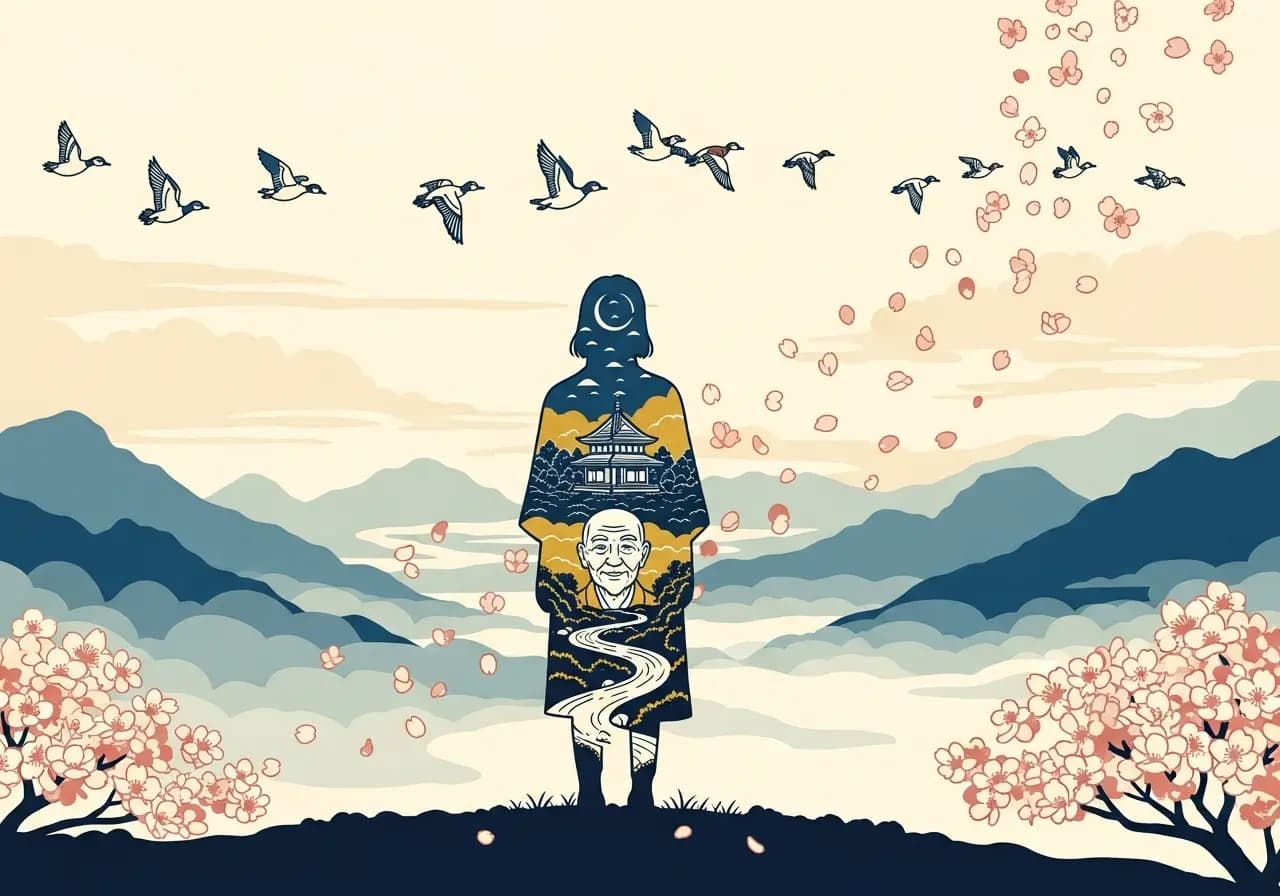
Once Matsu and Pi Chang were walking along and they saw some wild ducks fly by. "What is that?" the master asked. "Wild ducks," Pi Chang replied. "Where have they gone?" "They've flown away," Pi Chang said. The master then twisted Pi Chang's nose, and when Pi Chang cried out in pain, Matsu said, "When have they ever flown away?"
This is another fun Zen koan in that it does what most Zen koans do—it presents you with a little story and leaves you thinking: "Huh, what is that all about?" I wanted to share some of the thoughts that were shared in our Patreon community. We discuss the Zen koan there anytime I share a koan in the podcast episode.
Community Reflections
This first thought comes from Denise, who says: "Pi Chang says the ducks have flown away, but if you could ask the ducks, they probably don't think they've flown away. They might think they're on their way to finally arrive somewhere. This koan is, to me, a reminder that it is important not to hold our views too strongly. My view might be very different from another person's view on the exact same matter, and we might very well be equally right or equally wrong—just like Pi Chang thinking the ducks are flying away and the ducks thinking they're actually on their way to arrive."
Mo kind of expands a little on this too. Mo says: "This koan made me wonder what we mean when we say 'gone.' When is something here and when is something gone? In actuality, there is no clear line between the two, and nothing is ever truly gone in the same way that it is never truly here, because of the nature of interdependence. The ducks may seem to be gone, but if you ask yourself, 'What is a duck?' you start to realize there is no such thing as an individual duck that is independent and separate from the rest of the world. It is, by nature, dependent on the causes and conditions of everything around it.
"Now that I think of it, this koan leads me back to that 'I Am Nobody' episode. I am nobody, the duck is also nothing, and it has never gone because from one point of view, it was never here, and from another, it is always here."
I enjoyed those thoughts by Mo. Anushka says: "When I first heard this koan, I imagined a state where the ducks are flying but not going anywhere. I then started thinking, 'What is flying?' Then, if it's not going—for example, transitioning to another place—in my mind I could still see ducks flying, but not necessarily going anywhere. A state of flying or a state of movement, but not gone yet and not away yet. I then landed on a final thought: 'Well, who is doing the going?' And I wondered if it was Pi Chang, because he was the one projecting the idea of their going, their departure. All of this reminds me of how we impose our interpretation on events that happen and how we get so caught up in things that haven't happened yet, or may never happen at all."
And then the final thoughts I want to share with you come from Robert, who says: "Ducks fly south for the winter and fly north in the summer. So Pi Chang may have assumed that they were flying away somewhere, as they do, depending on the season. The master may have been trying to get Pi Chang to relate duck migration with our thought migration. When we sit to meditate, our thoughts come and go away, depending on the season of our life, that day, or moment. Our thoughts may be with us or away from us. In winter, our thoughts are away and we know not where. In summer, we have our thoughts focused on our breathing."
I really enjoyed everyone's thoughts—their interpretation and analysis of this specific Zen koan. This is a fun one for me because I, like the ducks, enjoy flying. And often when I find myself flying, I think similar thoughts. When I'll pass someone on the ground and wave at them and they wave back as I fly past, I often wonder if they have a similar thought: "Where is this person going?" or "Oh, they flew away."
Just like the koan invokes that deeper thought—when have we ever flown away? From my perspective as the flyer, I'm always just right there where I am. I'm not flying away, and I'm not flying away from anywhere. Or maybe I am, and I might be coming towards somewhere. Going and coming is just a perspective thing. But from my perspective, wherever I am in that moment, I'm just flying. That's what I'm doing. I think, like the ducks, there were so many good thoughts shared here about the nature of interdependence, the nature of impermanence, and the nature of seeing things from a certain perspective. These are all great thoughts that I think are really relevant to this specific koan.
And of course, the most important one is: what does this make you think of? What does it invite you to ponder about? I wanted to share some of my thoughts regarding this koan as they link into the overall concept that I wanted to discuss in this podcast episode—the notion of emotional enlightenment. But before I dig into what that means to me, I want to update you on a couple of things just to explain how I even started thinking about this concept.
A Personal Journey to Understanding Emotional Enlightenment
A Trip to Texas
As many of you know, I've kept you updated. In the past few weeks, I've been missing in action, and I had to go to Texas because my dad was having a procedure done. I wanted to be there with my family to provide support and to be there with my dad and to help my mom while I was there—she could run errands and do things that she needs to do, which she can't normally do because she's with my dad. In a nutshell, we're going through a transition phase with my dad with his health and as he's advancing in age. We celebrated his 80th birthday while I was there.
I was spending time with my family, and during the course of this time, I decided to spend a little bit of time revisiting some of my old stomping grounds. I grew up in Texas, and it was fun to go drive to the old neighborhood where I grew up—the first house that I remember. This is a house at the end of a cul-de-sac, and my memories of the neighborhood, of all of our neighbors, all the other kids that I used to play with out there—I have very fond memories of this specific stage of my life.
Across the street from the house, there's a creek. I remember going down to the creek and there was a pipe we used to walk across. There was a bridge where we would play under the bridge in the water, overturning rocks looking for crawdads. Just lots of fun memories growing up in this specific neighborhood and this specific home.
Reconnecting with the Neighborhood
When I pulled up to the house, I parked at the cul-de-sac, and it happened to be right in front of one of the neighbor's homes. As I got out of the car, I saw the lady who lives in that house outside doing some yard work. So I walked up and said hi to her. This specific house has two giant stone eagles as statues at the entrance to the house.
As I was talking to this lady, I told her, "I remember when those eagles were set up here." And she was shocked. She was like, "Whoa, we've lived here five or six years, and I've never known the story of these eagles." I said, "Yeah, the lady who used to live here was obsessed with eagles and she had all things eagles inside her home. I remember when she put these statues out here. They were actually painted gold at the time. They looked like golden eagles."
All of this was done, I don't know, thirty or thirty-five years ago, when I lived there. As I related more of the memories I had of the neighborhood at the time, we started chatting. Another neighbor came out—she was getting ready to walk her dogs. This neighbor introduced us, and then that neighbor stayed. Then a third neighbor came out, and before we knew it, the four of us—three neighbors and myself—were just out there talking. They were asking me all kinds of questions about this specific neighborhood and what things were like thirty or thirty-five years ago when I lived there. I was sharing a lot of my memories, talking about who lived in this house and who lived in that house, certain stories I had that reminded me of this area and this phase of my life.
It was a really fun experience to speak with these total strangers who, for this one moment, we were all bonded by the unique attachment that we each have to this specific cul-de-sac—this little neighborhood and these specific homes. In this case, I felt like it was unique because the home that I lived in and all the homes right around it were built by a family friend of ours from Mexico. That's how we ended up buying that house. Our friends built several homes, moved up from Mexico, and we ended up buying one of them. We knew everyone who lived in all of the other ones.
So they were kind of speaking to someone who represents the original building of the neighborhood, so to speak. It was a really cool experience for them, and it was a really cool experience for me. But it was fascinating to realize how different this neighborhood is now. There are no kids who live on that street. When I grew up there, almost every home had kids and we were all friends and we all played outside. It had a very different feel and a very different dynamic than what the neighborhood has now.
Now it's a neighborhood where a few of the neighbors know each other—the three that I was with were telling me that the other neighbors, specifically the ones who lived in my house, don't interact with anyone else who lives there. They just keep to themselves. They're a little unfriendly and unpleasant to be around. They don't seem to enjoy anyone else's company. A few other neighbors are like that.
It was interesting to get a vibe and a feeling for what this neighborhood is like now and thinking how different this neighborhood is from the neighborhood I grew up in, and yet here it is—it's the same neighborhood. Not one single family from my time growing up there remains. It's all new families.
Understanding Through Impermanence and Interdependence
And it got me thinking about just this concept of seeing through the lens of interdependence and through the lens of impermanence. You can have something—we'll call it a neighborhood, but in this case it was really just our street, just everyone who lived in the cul-de-sac—and it has its own energy. It has its own way of being, its own mood, its own feeling. And that was the neighborhood.
And then there's the individual homes. Our home had a certain way of being that was determined by everyone who lived there—my twin brother and I, our older brother, my mom and my dad, and our pet Labrador. We had an energy that you could say was the energy of that home. In this case, it was a very vibrant home where we played games in the swimming pool, where we were often found outside climbing our trees and playing in the front yard, playing with the other neighbors. Each home had its own little unique energy and way of being.
And none of that remains. All of these homes are completely different in terms of energy and vibe. I don't even know how to say it. Ambiance, I guess. But it's not the same. It's different in every home now.
Through this lens of impermanence, through this lens of interdependence, I was thinking so much about how what made us who we were had to do with our neighbors being who they were. And so much of what made our neighbors be how they were had to do with us being how we were. And so much of what made the neighborhood as a whole the way that it was had entirely to do with the people who lived in the neighborhood at that time.
So here, through the lens of interdependence, we had a way of—if you could take a snapshot of how it was in that time—that's how it was because of everyone who lived there. And now it's a whole different picture.
The crazy thing is, the house is the same. It's the same house. The colors may have changed, but it's the same original bricks, same walls, same glass on the windows. The sidewalk is the same. Several of the trees and plants look different because they've changed over thirty years, but there were several elements that seem the same. And it got me thinking along the lines of non-self. If the house or the neighborhood has a way of feeling, that feeling is an illusion. There's no—I guess you could call it the soul of the neighborhood or the soul of the house. And yet there actually isn't one. It's just that energy and that vibe that it has, which is real and feels very real, but is not permanent.
And I thought in the same way that sense of self is really no different. The DNA of my body may be the same as the one that was there when I lived in that neighborhood, but that was the ten-year-old me who lived there. And that me is, in a lot of ways, very different than the me that lives where I live now.
It was fun to correlate this concept of the house being like my body and all the other dynamics of the neighbors who live there—the people who are in the house—being like my thoughts and my feelings and my emotions and my memories. All of that has changed and morphed and evolved in the same way that that neighborhood has changed, morphed, and evolved. And now you essentially have two entirely different neighborhoods. They're just completely different, one from the other. And there are elements that remain the same—the concrete, the sidewalks, things like that. And that's how I feel about myself and the me that I am now versus the me that I was before, and the me that will be me when I'm eighty years old.
Time with My Father
I had a similar experience with my dad last week while I was there with him. We had a lot of fun bonding moments, just reminiscing and feeling nostalgia, and talking about his life experience and what it was like growing up in an orphanage and different milestones of his life. It was fun to realize that, like that house, these are stages that have come and gone and they've changed.
Now in front of me, I had this eighty-year-old man who has lived a very full life full of all these cool chapters and cool milestones. But those are long gone, in the same way that the neighborhood of yesteryear—of thirty years ago—that's just not the same neighborhood that's there now.
Of course, I was going through all of this while simultaneously experiencing all these intense emotions because I'm visiting my old stomping grounds, spending time with my dad who's battling cancer and dealing with health issues. He's entered a new stage in his life that's not the same stage that he's been in in prior chapters. And we're coming to the realization that this is just a new stage. Things are changing. And we all know the inevitable outcome of all of our lives is that eventually the book closes, the final chapter is done, and it's all over.
And it got me thinking: what a cool experience it is to see life as a whole, as the greatest journey, the greatest adventure. I thought of this because when I was there in the neighborhood and I walked down to the creek, I was replaying memories of going exploring in the creek with my brothers—just these little epic adventures that, as I remember them in my head, were just little chapters, little stories within a chapter. And yet I've wanted at times to identify or single out a memory and say, "This one here—that's the big journey." But no, it's the whole thing. The whole thing has been the big journey. To be alive is the greatest adventure story ever told.
It was really fun to have that feeling while I was there reliving some of these memories of my past. It was a really cool experience. And then as I navigated all of these things and these emotions—intense emotions at the time, and even now as I sit and think about it—it helped me realize that there's this concept that I've been playing around with in my head called emotional enlightenment.
What Is Emotional Enlightenment?
For me, emotional enlightenment isn't about achieving a certain state. It's really the radical acceptance of whatever state it is that I'm currently experiencing. And it made me recognize—I've echoed this in the past in other podcast episodes—that there is a level of equanimity that can be spread out across all my thoughts, all my feelings, all my emotions.
For many years of my life, I've been chasing after one. I want this one, and I want to avoid that other one. And as I've studied Buddhism, as I've come to understand the nature of what Buddhism actually offers and brings to the table, it's this fascinating realization of the equanimity of all my thoughts and feelings and emotions.
I've said before: it's not about feeling good. It's about being really good at feeling—feeling whatever it is you're feeling in that moment. And I was experiencing this in Texas last week as I was there with my family, processing the emotions and the realizations of what's to come, and allowing myself to fully feel the full range of emotions.
When it was time to laugh, we were laughing hard. When it was time to cry, we were crying hard. When it was time to reminisce, we were reminiscing hard. When it was time to try to feel optimistic and hopeful, we were trying—that's what we did. And what I felt all throughout all of it was just this equanimity across the full range of emotions. And it made me come across this notion of what I would call emotional enlightenment.
It's the recognition that all my emotions are completely valid and completely fine, and the radical acceptance of whatever it is I'm experiencing in that moment offers me the peace that, ironically, I thought could only come by having this emotion and not having that other emotion. But no, the peace came from fully accepting whatever emotion is there, whatever emotion is present.
The Dance of Emotions
There was a broad range of emotions while we were there. And that line of thought of emotional enlightenment led me to realize that it's like being able to fully accept any emotion that you're experiencing and recognizing how it's the chasing after one and the rejecting of another that puts us in this crazy game that we can't win.
By recognizing all of them—by understanding that they're just thoughts and feelings and emotions that arise, a lot like the ducks in the Zen story—the ducks are just flying, and our thoughts are just flying, and our emotions are just flying. And I, as the observer, I'm the one that says, "Where did happiness go?" And I think the Zen master would twist my nose and say, "When has happiness ever gone?" That's just a perspective.
And from one perspective, I might say it was here and now it left, so it's gone. But it's never been gone. It's the same with sadness. It's never been gone. Same with anger. It's never been gone. They're all there all the time. It's just the shift of perspective and the shift of focus that helps us to see and pay attention to one a little bit stronger than the other.
That to me is a really cool mental exercise and a mental correlation. It inspires me to want to spend time thinking about what things I'm grateful for. And this is what I did as I walked the neighborhood. I was just grateful for all the range of emotions and memories and experiences that I had while I was there—not just the pleasant ones. There were unpleasant ones too. Interactions with neighbors that may have been unpleasant, dealing with new experiences as I was growing up that were unpleasant moments. And just being grateful that I was a part of this incredible adventure called being alive. This is one chapter. I got to go back and revisit one of those chapters. It was a really fun experience.
Hopelessness in the Present Moment
It got me thinking a little bit about how, in a way, enlightenment is hopelessness. Hopelessness is something that we experience in the present moment. I'm not talking about hopelessness meaning, "Oh no, things will never get better," or resigning to the fact that this is how things are. I'm talking about hopelessness in the present moment, which is the acceptance of: I don't hope to be feeling anything other than what I'm feeling now. I am just going to be fully aware of whatever it is I'm feeling now. So in that, there's no hope of feeling anything different than what I'm feeling. This is just what I'm feeling.
And again, I got to practice this intensely last week because there were moments that were very difficult. Reminiscing things with my dad as he's losing his health, there were moments where we just sat there and we cried in each other's arms. And I didn't hope to feel anything other than what I was feeling in that moment. I welcomed the sadness. I welcomed the impending fear of loss. I welcomed the gratitude. And I welcomed the humor in thinking of some of the fun stories. I welcomed all of it.
And in that sense, I was experiencing total hopelessness, and it was such a beautiful thing. I didn't hope for anything to be other than how it was. I was fully accepting the broad range of emotions as they were arising, just as they were in the present moment.
I think hopelessness gets such a bad rap. It has such a negative connotation in our typical Western way of thinking. And here I was experiencing truly utter hopelessness, and I was so at peace because I was just allowing myself to fully feel whatever it was that I was feeling in that moment. I didn't hope to be experiencing anything else. I just was fully aware of whatever was there.
And I watched it change. We would feel this, and then that would lead to this thought, and that would lead to this memory, and boom—here we are now experiencing another emotion. And then you just watch that, and that one morphs and that one changes, and then boom, another emotion. And it was a really neat process. It was a really fun experience to spend some time with my family—my two brothers were there, my parents. The whole family was gathered, spending some quality time with my dad, celebrating his 80th birthday, and just trying to help him have strength to recover from this procedure he had just gone through and the upcoming and intense procedures that he's facing with his cancer. It was a really cool experience.
But what came out of all of it was this notion in my mind of emotional enlightenment and the concept of hopelessness in the present moment being a beautiful thing.
Hopelessness and the Future
And that's not to say that hopelessness towards the future is a beautiful thing. I do think hopelessness towards the future can seem really difficult. But I'm not talking about the future. I'm only talking about the present. Hopelessness in the present moment allows me to fully accept whatever it is I'm experiencing now and to act skillfully on whatever is going to have to happen next. Which ironically is what gives us hope about the future—that we're going to handle it a little bit better than we thought we would, because we're actually being more skillful about it than just sitting in the present moment, wishing that the present moment was something other than what it is.
So again, I just want to get back to that and apply this concept of hopelessness specifically to the present moment.
Closing
Those were the thoughts I wanted to share with you. That's all I have for this podcast episode. This was somewhat a way of me just trying to get back caught up with having a podcast episode out.
As always, thank you for listening. If you want to support the work I'm doing with the podcast, consider becoming a patron and joining our online community where we discuss these koans and we discuss the podcast episodes. There's even a book club study group in there. You can learn more about this by visiting secularbuddhism.com.
As always, if you enjoyed this podcast episode, share it with others, write a review, give it a rating on iTunes. All of that helps.
And before I go, I want to share another Zen koan with you to work with between now and the next podcast episode.
The koan goes like this: "As the roof was leaking, a Zen master told two monks to bring something to catch the water. One brought a tub; the other brought a basket. The first was severely reprimanded; the second was highly praised."
That's all I have for now. Thank you for listening. Until next time.
For more about the Secular Buddhism podcast and Noah Rasheta's work, visit SecularBuddhism.com