

Master Meditation by Not Meditating
Episode 12 of the Secular Buddhism Podcast
Hello, you are listening to the Secular Buddhism podcast, and this is episode number 12. I'm your host, Noah Rasheta, and today I'm talking about meditation through non-meditation. I'm also sharing the poem "Dust if you Must" by Rose Milligan. Thank you for joining.
Welcome
I like to start each podcast with a piece of advice from Tenzin Gyatso, the 14th Dalai Lama. He says, "Do not try to use what you learn from Buddhism to be a Buddhist. Use it to be a better whatever you already are." Please keep this in mind as you listen and learn about the topics and concepts discussed in this podcast episode. Hopefully, this will provide you with some information to help you be a better whatever you already are.
A Significant Milestone
Now let's jump into this week's topic. I'm excited to be back with you for another podcast episode this week. I wanted to start out by sharing another milestone. This has been an exciting week for me.
I was out of town over the weekend on a family trip, and when I came back in the morning, I was checking our Facebook page. I was really surprised to see that one of the posts I had shared had gone viral.
Earlier in the year—I guess it was at the end of last year—I came across a post from Jason Silva, who hosts Brain Games on National Geographic. He has a web series called Shots of Awe, where he posts these small tidbits of philosophical information. It's essentially a three- to five-minute feast of philosophical thought, and it's really fascinating. It inspired me to want to share what I'm passionate about: secular Buddhism.
Something he shared really resonated with me. He talked about redefining what it means to be a billionaire. Rather than thinking of a billionaire as someone who has a lot of money, he suggested redefining it as someone who can influence the lives of a billion people—influencing their lives for the positive. When I heard that, I loved it. I thought, we go through life chasing after things, right? Money is a big one. I know that there's so much more to life than earning money, paying bills, and then dying. Everything I had studied and was learning about Buddhism drove me to this one emphasis: "How do we learn to live life to the fullest and live in the present moment?"
When I heard that idea about redefining what it means to be a billionaire, I knew right then that that's something I wanted to aspire to. To be able to provide a set of tools, information, or some form of platform that can inspire people to want to be better. To have a more positive existence and a more positive way of living.
It was literally on January 1st when I decided, "Okay, I'm going to start a podcast." I started working on it. I developed the Facebook page, a blog, and a website, all around the concept of sharing Buddhism through a secular lens—the lens that made the most sense to me. It's been fascinating to watch this grow and become what it's becoming. In a very Buddhist way, it's exciting to see that there's no specific goal in mind. I'm just allowing it to be what it is. I don't know what that is yet because it's constantly changing and evolving, which is the very nature of existence. It's the nature of impermanence and interdependence.
But this weekend, the exciting milestone I got to experience was seeing one of my posts go viral. Up until this point, anything I tend to share online—whether it's a podcast, a blog post, a Facebook post, or anything like that—has grown to the point where it gets seen by thousands of people. That's been exciting. But what happened this weekend took it to a whole new level.
When I checked the numbers, at first I couldn't believe they were true. One of the posts I shared, which was the poem "Dust if you Must," had gone viral. It had been seen by over ten million people over the course of the weekend. I thought, "How is that possible?" Out of that, there were just over one million interactions with this post, which caused all of the other posts and everything else I had been posting online to explode. Suddenly, hundreds and thousands of new people were subscribing to the Seven Day Introduction to Buddhism post that's available on SecularBuddhism.com. Overnight, I was waking up to find that there were eight thousand new subscribers or eight thousand new followers.
It's just fascinating. I had a similar experience last October. Some of you may not know this about me, but I develop products. I have a company where we manufacture photography accessories. I've been doing this for five years. That's what I do for work—I manufacture photography accessories.
I remember having this really profound experience visiting Hong Kong and meeting with businesses. I was walking through a mall and came across a photography store. I was standing there, and there on the back wall were five or six of the products I had developed, just hanging in the store. As I'm staring at them, the sales person from the store comes up to me and says, "Oh, would you like to buy one of these tripods?" I got teary-eyed. This was the culmination of years of work for me designing and developing a brand of products. It represented countless sleepless nights, stressful deals, loans—everything that goes into building a business and manufacturing products.
Here I was, almost literally on the other side of the world, standing in a store, looking at something I had created. It was a very moving and humbling experience because it felt like all of this had started as an idea. I was sharing something that meant something to me, creating products I was passionate about with photography. And there they were in this random store in a mall in Hong Kong. It was really moving for me. It was the first time that made me realize that we can take something and work on it, and it can become something.
I had a similar experience with Jason Silva's idea about redefining what it means to be a billionaire—to influence lives in a positive way. When I first heard that, I thought, "I want to really find what it means to be a millionaire." Because I thought, "I don't know how to do that with a billion people."
This weekend alone, the ideas I've been sharing through this platform have been seen by over ten million people. Over one million people actually interacting with my posts. It's really humbling. And it's humbling in the sense that this started as an idea. I genuinely believe that with the right perspective and with proper understanding of impermanence and interdependence, it can change your life to see the world in this light.
I believe that the Dharma—the way it was taught and is taught through the lens of Buddhism—can be life changing. I believe that changing the world is changing ourselves. By providing the teachings of the Dharma and teachings through secular Buddhism, people who are secular-minded like me can make sense of these fantastic philosophical teachings that inspire us to be a better person and have a more positive outlook. It's been fun to see that this weekend in numbers that exceeded my dreams. Especially this soon in the process—it's only been four months since this podcast started. So that's been really exciting for me, and I wanted to share that milestone with you.
Thank you for sharing and spreading the messages that come through this platform—through the Facebook page, through the study group. It's really rewarding for me to receive emails from people saying, "Thank you for sharing this new concept, or this new approach that I hadn't explored before. It has literally changed my life." It's very rewarding, and that's why I'm doing this. Because first it changed my life, and now it's exciting to see how this is improving in a positive way the lives of others.
The Viral Poem: "Dust if You Must"
I want to share with you the poem that went viral. I think it touches on something that resonates with people. Obviously, that's why it went viral. The title of this poem is "Dust if You Must," and it goes like this:
Dust if you must, but wouldn't it be better to paint a picture or write a letter? Bake a cake or plant a seed. Ponder the difference between want and need. Dust if you must, but there's not much time. With rivers to swim and mountains to climb. Music to hear and books to read. Friends to cherish and life to lead. Dust if you must, but the world's out there. With the sun in your eyes and the wind in your hair. A flutter of snow, a shower of rain. This day will not come back around again. Dust if you must, but bear in mind, old age will come and it's not kind. And when you go, and go you must, you yourself will make more dust.
That poem is by Rose Milligan. When I found that and shared it on the Secular Buddhism Facebook page, I noticed right away that the messaging really resonates with people. This isn't an attack on dusting or on cleaning. I think that's obvious. The key to this message is that we go through life doing, and in the process of doing, we sometimes forget to just be.
My understanding of this—the way it makes sense to me—is the process of doing versus being. And it makes me want to share the concept of meditation from a different perspective.
Doing Versus Being
We spend a lot of time meditating. When I teach meditation, one of the first things that happens is we get really excited about it. Because we want something out of it. We want to be calm. We want to have more peace in our lives. There's an objective. And then over time, as it becomes a consistent practice, it's common to hear from people who say, "Okay, I've been doing this for several months now. Yeah, it made me a lot more calm, but now what?" Or people will say, "Now I'm realizing things I hadn't realized before. I tend to get mad easily, or I tend to have a temper."
So I wanted to discuss meditation a little bit from the perspective of the key to meditation being non-meditation. Or this idea of doing versus being.
Understanding Meditation Through the Muddy Pond
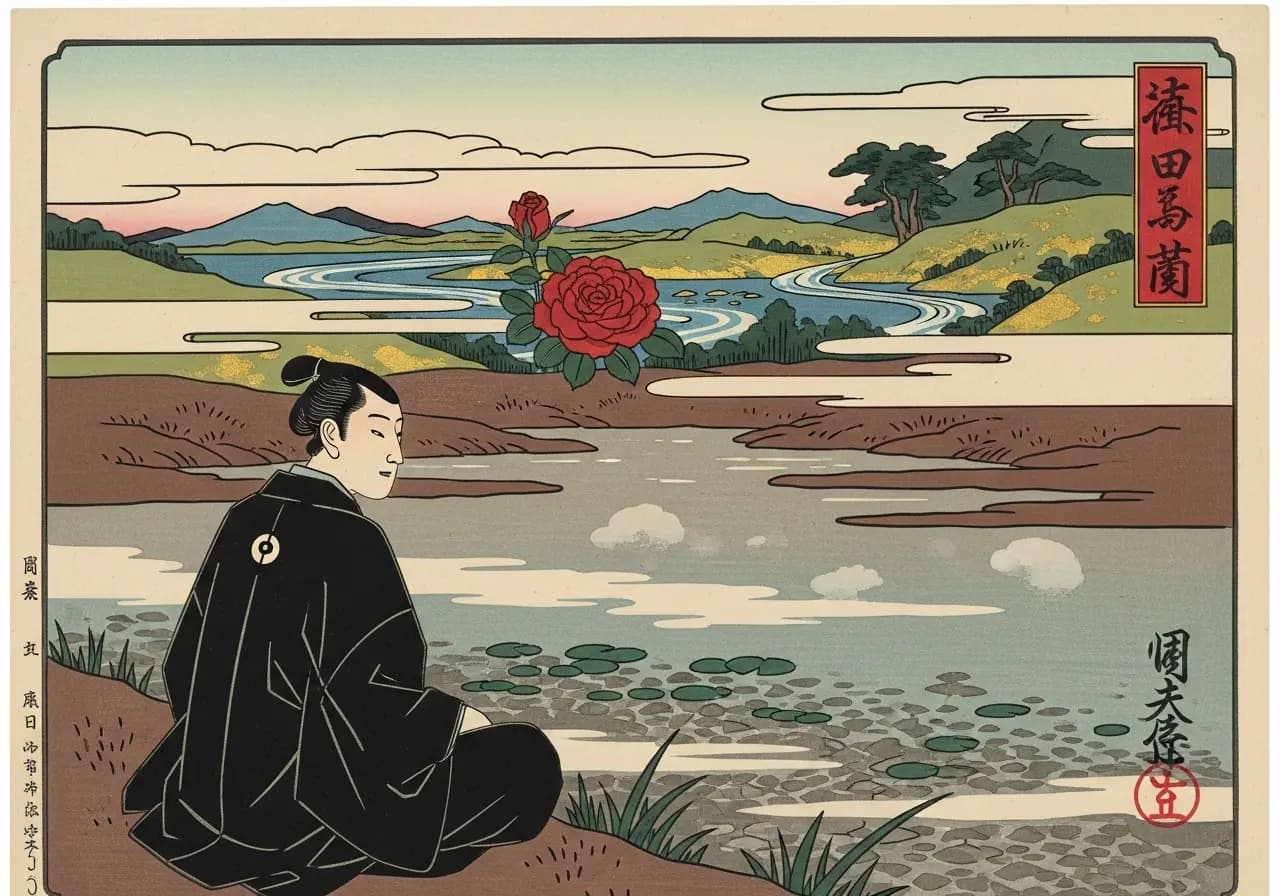
When I teach mindfulness meditation to someone, I usually explain it by imagining a pond. There's a pond that has muddy water, and what would have to happen for that muddy water to become clear? Alan Watts says, "Muddy water is best cleared by leaving it alone."
You can picture this with a muddy pond. If you take a jar and put dirt in the water and shake it up, the water is going to be really muddy. But if you put it down and leave it alone, give it time, all of that mud settles to the bottom, and what you have is clear water again.
This is the first level of meditation, which I call calm and settling meditation. It's learning to still the muddy waters. What happens as a consequence of learning to still those waters is that the water becomes clear. Then we move into the phase of insight meditation. You're able to look into that pond and see what's actually there. This is looking into the nature of awareness and the nature of the mind, and seeing what's really there.
Where Concepts Become a Hindrance
But something happens when you learn about meditation and say, "Okay, I want to start meditating." We start to develop expectations about what meditation is, what it's going to do for me, how I'm going to benefit from it. And that becomes the very thing that Buddhism is trying to eliminate from us—that natural tendency, that reactivity we have, to create meaning around things.
There's this concept that there is what is, and then there's the story that we create around what is. I think this is really common when it comes to meditation, and when it comes to life in general. We create meaning around things. And that's not a bad thing because creating meaning around life is part of life. But with meditation, it can be detrimental to create meaning around what meditation is.
A lot of teachers talk about this concept: the key to meditating is to not meditate. The moment I'm saying I'm going to meditate, that's a concept in my mind. That means something. Whatever that means to me, that's the meaning you give to meditation. It is this, or that, or it causes this, or it causes that. Whatever concept you hold about what meditation is can be useful to the point of helping you be calm and gain that clarity you need. In insight meditation, you start to be able to see the nature of awareness and how the mind works. But when this is done properly, and the mind and thoughts have been calm enough for the mud to settle—for the water to become clear to the point where you can start to see the nature of the mind and how it works—then the concept that you have about what meditation is actually becomes a hindrance to progressing to the full purpose of meditation.
Which is this: with that insight, when you can finally see what's really there, what you're going to gain out of this is the one thing that Buddhism is trying to get you to see, which is seeing things as they are. Again, to clarify, the concept of non-meditation or the key to meditation being non-meditation is that we want to let go of our concept of what meditation is.
The Raft Teaching
I think this becomes very relevant with what I shared earlier about the parable of the raft. What the Buddha taught is that the raft is something that you need. Let's say in this case he taught specifically about the Dharma—the teachings—which in this case we can equate to meditation. It's this tool that you use and your life depends on to accomplish what you're trying to get. But at some point you have to learn to let go.
The concept of letting go, from the sense of meditation, is this: if you really want to get what meditation is all about, then you'll learn that what it's all about is not meditation. That's the difference—it's not something that you do. It's about how you are. It's about being, not doing.
To take meditation to that next level, at some point you have to understand that the whole purpose of meditation is that you don't meditate. You're learning to just be with what is. That's why when I teach mindfulness meditation, what I try to convey is this concept: there's nothing magical happening. Nothing happens. All you're doing is learning to be with what is. It's kind of like the exercise of learning to be comfortable with being uncomfortable.
That can be confusing to people because then it's like, "Well, what's the point of all this then?" Think about this: how often do we really spend time just being with something? Not doing anything, just being with what is. I think one of the sources of all our problems is that the minute we start meditating, or the minute we're doing anything, we're creating meaning. And then we can't allow things to just be as they are.
So meditation is this practice, this technique that's used in different Buddhist traditions. There's the Tibetan meditation where you go through different phases. And the ultimate phase is this phase of non-meditation.
How Does This Work in Practice?
How does this apply to a daily practitioner of meditation in the secular Buddhist lens? If you're new to this and you want to start meditating, how does knowing this help, especially early on in the game? I think the key is grasping this intellectually. At some point in your meditation, the only way you're going to be able to progress in gaining wisdom about the nature of reality is to let go of whatever concept you have about the nature of reality. Hopefully, that makes sense.
Alan Watts talks about this in terms of the attitude of faith. He says, "The attitude of faith is to let go and become open to truth, whatever it might turn out to be." I think this is very relevant with the concept of meditation. Because what you're doing is letting go of whatever you think meditation is, or what it's supposed to do, or how it's going to benefit you. You let go of that. Because there's nothing. It's not supposed to do anything or benefit you in any way. And yet, when you grasp that—that's when it benefits you, because that's when you've let go.
Again, it's like a paradox. I love this. Buddhism in general is like a paradox.
The Mountain Parable
There's a teaching that says: when you first start to study or learn Buddhism, before, mountains are mountains, rivers are rivers, streams are just streams. And then you start to learn a little bit about Buddhism. It's exciting. The more you start to learn, suddenly it's like there's this awe in everything you see. Mountains aren't just mountains anymore. Rivers aren't just rivers, and streams aren't just streams.
The more time you spend with it, the more you start to learn the philosophical understandings and the teachings of Buddhism. Then when you really get it, you realize, "Oh, mountains are just mountains. Rivers are just rivers. Streams are just streams." And yet, that's what makes them so beautiful.
I like to think about this with the teaching of a rose. A rose is beautiful because a rose is just a rose. It doesn't bloom and then wait for someone to come along, pick it up, and say, "Wow, you are a beautiful rose." Because it doesn't care. That's not the reason why a rose exists. It doesn't exist so someone can pick it up and tell it it's beautiful. And yet, that's what makes it beautiful—because it just is what it is.
It's no different with us and our existence and the way we try to see things as they are. When you learn to see something the way it is, then it becomes beautiful and almost magical, simply because it is just what it is. You've detached all the meaning you had behind it. Remember, it's inside these concepts, meanings, and ideas that we attach to things that things get muddy. And muddy water is best cleared by leaving it alone, as Alan Watts says.
We leave things alone, meaning we let go of the meaning we've attached to things, and the things just are what they are. When we can allow things to just be what they are, then we can see them as they really are.
Meditation is that tool. Meditation itself can become a hindrance if we have meaning, ideas, or concepts attached to what meditation is or what it's supposed to be doing for me. I think the biggest mistake around this is spending time thinking, "Meditation is working. Meditation is not working. It's doing this, it's doing that." All of this resides inside of the sphere of meaning that we have around what meditation is or what it's supposed to do.
The whole point is that there is nothing that it's supposed to do, nothing that it's supposed to mean. It's the exercise of just being with what is. Learning to be comfortable with discomfort. It's sitting and observing thoughts in the same way you would sit outside and observe clouds. You notice that the nature of watching clouds in the sky is that they arise, they appear, they linger, and then they go away. That's the nature of observing clouds. That's also the nature of meditation and observing our thoughts.
The nature of things as they are is that things arise, they linger for a while, then they're gone. Isn't that the very nature of life itself? Things arise, they exist for a short time, then they're gone. And when we can allow ourselves to start to see things the way they are, without attaching meaning to things, then we become that much closer to being enlightened.
The Paradox of Enlightenment
This is another concept—the idea of enlightenment carries so much connotation about the meaning we have about enlightenment. If I were to ask you, "What does it mean to be enlightened?" everyone has an interpretation of what that means.
Enlightenment in its purest form is nothing more than what I explained earlier: mountains are mountains, rivers are rivers, streams are streams. Then when we think we start to know what it means to be enlightened, that's when we think, "Oh, mountains aren't just mountains. Rivers aren't just rivers. Streams aren't just streams. It's something more." But then true enlightenment happens and you realize, "Oh, they are just mountains. Rivers are just rivers. Streams are just streams. Life is just life. Happiness is just happiness, sadness is just sadness."
It's in allowing these things to be what they are—this attitude of faith, to let go, to become open to reality whatever it may be—that is the nature of awakening. That is the nature of enlightenment in the secular Buddhist understanding.
This is what makes it all so beautiful. It's inside of that space of allowing things to just be what they are that everything becomes beautiful. The concept of the rose: what makes the rose so beautiful is that it's just a rose. There's nothing more to it. There's nothing that you add to it. A rose is a rose, and that's what makes it beautiful. A human being is a human being, and that's what makes us beautiful.
If we could see all things like that, with that lens of allowing things to be what they are, it would change everything. Meditation is the tool to do that. That's the concept of meditation through non-meditation.
Back to "Dust if You Must"
I hope that resonates with you. I think that's what touches the heart of the concept behind "Dust if You Must." We go through life busy, doing things that we think we need to be doing. These things are meaningful. And yet at the end, we're just dust. We go back to being the one thing we're trying to clean up or trying to avoid all along. That's the one thing we are.
I think it's a powerful message. It's at the heart of why I want to share the things I share as I study, learn, and teach the concept of Buddhism. I want to spread the message and the idea of enlightenment—the idea of learning to see life just the way it is. Learning that there is what is, and then there's the story we create about what it is. We tend to live and go through our entire life inside of the story of what is, and never actually see what is.
The Menu Versus the Meal
Imagine if you were to taste a food one day that you'd never tasted before. Your whole life, you've only seen the menu. You've been in love with the menu and the pictures on the menu and the words that describe the dish. You've been invested in everything around the concept of what is, but you've never actually experienced what is, which would be to taste the food.
It may seem silly, but that's what we do in life. There's what is—the experiential version of living, you're tasting the food. And then there's the intellectual or conceptual version of what is—that's like being in love with the menu, thinking that this whole time what you loved on the menu is actually the meal. It's not. They're two completely different things.
I think we do this a lot with meditation. There's my idea of what meditation is, what it's supposed to do. I know everything from a conceptual understanding of what meditation is. That's the menu. And then one day you experience what meditation actually is—it's learning to see things as they are. That's like tasting the food. And it's a whole different thing. That cannot be conveyed. You cannot convey that in words to someone else. You can only experience it.
Using that menu as an example, I can taste all the food and enjoy the flavors—everything—and try to convey it to you. And maybe all you've ever experienced is what I'm telling you on a menu. You think, "Yeah, yeah, I got it. Yeah, I see what this is. I see the ingredients, I get it." But we can't. Until you taste it yourself, you're not going to know what that really is. That's the difference between meditation and learning that the key to meditation is actually non-meditation. Let go of the concept you have about meditation, and learn to just meditate. Which is: learn to just be with what is. Learn to clear that muddy water by leaving it alone, by not trying, by just being.
Your Practice
Next time you practice your meditation, don't have any expectations about what it is or what it's supposed to do. Just practice sitting there and being with what is. Whatever it turns out to be. Think about this attitude of faith that Alan Watts talks about. The attitude of faith of letting go. Becoming completely open to truth, whatever it might turn out to be. Learning to be with what is, whatever that might turn out to be.
Let me know how that goes for you. I'd love to hear about it. We have the Secular Buddhism Facebook page, which as I mentioned, is exploring. There's the Secular Buddhism study group, which is also a Facebook group. There's the SecularBuddhism.com website where you can comment and post. I post the podcast there, and you can comment on that page. Or feel free to reach out to me directly. A lot of people have been reaching out to me directly, and I respond to every email. I do interact. At some point that becomes something I cannot manage, then I'll stop saying to do that. But for now, feel free to reach out to me directly at Noah at SecularBuddhism.com. I'd love to discuss this concept with you and hear what you think about it.
Hopefully this is useful and helpful information to help you have a more positive life.
I send you my regards, and thank you once again for tuning in. Thank you for being a part of this journey with me. I look forward to seeing where this goes from here. Thank you, and until next time.
For more about the Secular Buddhism podcast and Noah Rasheta's work, visit SecularBuddhism.com